
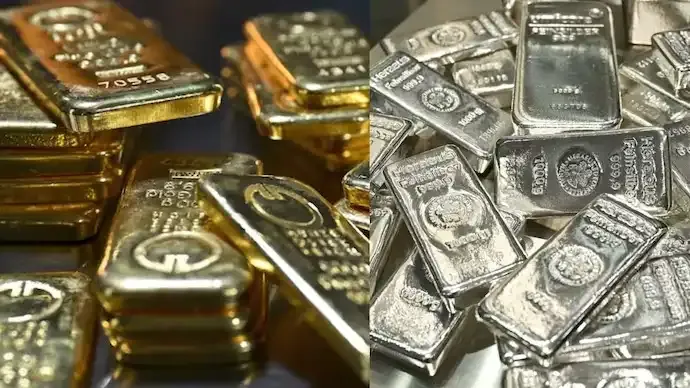
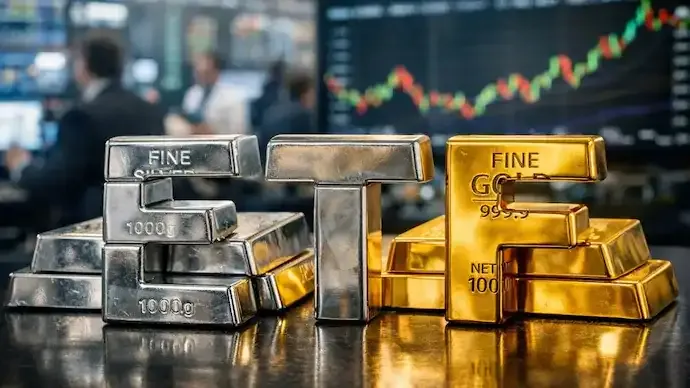
Silver exchange-traded funds (ETFs) witnessed a steep sell-off during early trading hours, with some funds dropping by as much as 15 percent as prices of the metal came under renewed pressure. The decline was significantly sharper than movements seen in gold-focused ETFs, highlighting the higher volatility typically associated with silver investments.
Market data showed that Multi Commodity Exchange of India silver futures traded near ₹2,46,397, marking a notable fall of more than eight percent during the session. In comparison, gold prices showed limited weakness, with futures hovering around ₹1,52,000 and recording only a marginal decline. The divergence between the two precious metals has drawn attention from traders and analysts tracking commodity trends.
Heavy Selling Pressure Hits Silver ETFs
The sudden drop in silver ETFs followed a brief rebound in precious metals earlier in the week. Analysts say the correction reflects shifting investor sentiment and rising volatility across global markets. Unlike gold, which is largely viewed as a safe-haven asset, silver carries a dual identity — serving both as an investment metal and an industrial commodity. This dual demand often amplifies price swings during uncertain market conditions.
Global bullion market movements also influenced investor behaviour. Reports of significant outflows from international gold-backed funds added to cautious sentiment, prompting traders to book profits after recent gains. As silver tends to react more aggressively to changing macroeconomic signals, ETF prices reflected sharper downside movement.
Technical Levels Signal Short-Term Weakness
Market experts indicate that silver futures are currently trading within a broad consolidation range after retreating from previous highs. Technical indicators suggest that prices have slipped below key moving averages, signalling short-term weakness despite a potentially positive long-term outlook.
Analysts identify the ₹2,35,000–₹2,50,000 zone as an important support band. Sustained buying interest within this range could help stabilise prices and pave the way for a gradual recovery. However, a decisive break below these levels may trigger further selling pressure in the near term.
Gold ETFs Show Relative Stability
While silver funds faced heavy losses, gold ETFs remained comparatively stable. Gold’s reputation as a defensive asset often helps cushion sharp corrections, particularly during periods of heightened uncertainty. Experts note that the broader bullish structure for gold remains intact, supported by strong demand from investors seeking portfolio stability.
Technical analysis indicates that gold prices continue to hold above key support zones, suggesting that long-term trends remain positive even as short-term fluctuations persist. Traders are closely watching resistance levels, as a sustained move above them could restore upward momentum.
What It Means for Investors
The sharp decline in silver ETFs underscores the importance of understanding risk exposure in commodity-linked investments. Silver’s sensitivity to industrial demand, currency movements, and investor sentiment makes it more volatile compared to gold. Analysts say that while price corrections may create opportunities for long-term investors, short-term traders should remain cautious due to unpredictable swings.
Market participants are advised to monitor global economic cues, central bank signals, and commodity demand trends, all of which can influence precious metal prices. As volatility continues, the contrasting performance of silver and gold ETFs highlights the need for diversified strategies within the precious metals segment.




Conversation
Be kind and stay on topic. Comments are moderated; abuse, spam and personal attacks are removed. Report a problem