

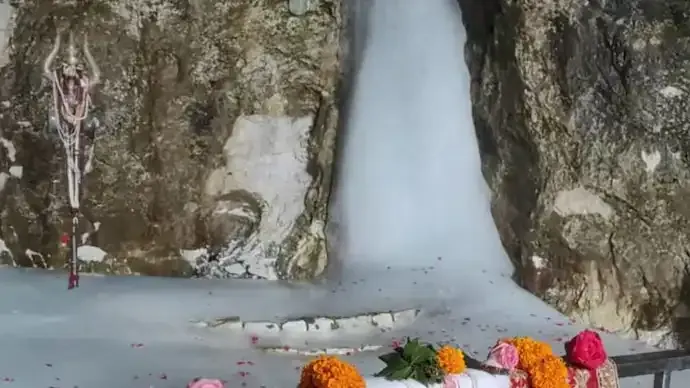

Every year, as thousands of devotees undertake the sacred Amarnath Yatra, one question captures the curiosity of pilgrims and visitors alike: How does the naturally occurring Ice Shivling form inside the Amarnath Cave?
For millions of Hindus, the Ice Shivling is a divine manifestation of Lord Shiva and the central focus of one of India's holiest pilgrimages. Alongside this deep spiritual belief, scientists have also studied the natural phenomenon, explaining that the annual formation can be understood through geological processes without diminishing its religious importance.
Researchers say the Ice Shivling is a naturally formed ice stalagmite, created by freezing water droplets inside the cave under favourable environmental conditions. The scientific explanation complements rather than challenges the faith associated with the sacred site.

What Is the Amarnath Ice Shivling?
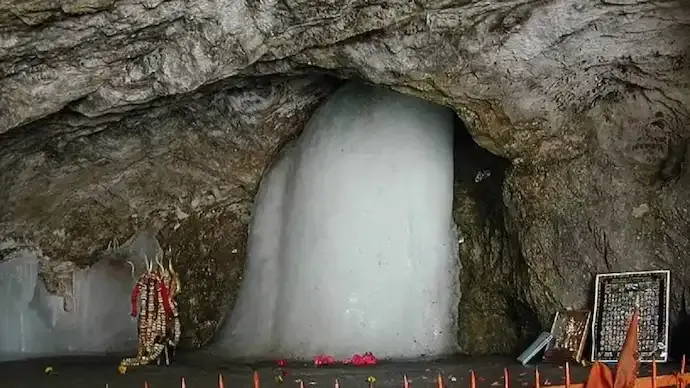
The Ice Shivling is a naturally forming pillar of ice that appears each year inside the Amarnath Cave in the Himalayan region of Jammu and Kashmir.
Unlike sculptures carved by humans, the Shivling develops naturally as water slowly freezes layer by layer inside the cave. Every year, millions of devotees visit the cave during the Amarnath Yatra to offer prayers and seek blessings.
The sacred cave is situated approximately 145 kilometres northeast of Srinagar at an altitude of nearly 4,000 metres above sea level, making it one of India's highest pilgrimage destinations.
How Does the Amarnath Ice Shivling Form?
According to geological research, the Ice Shivling forms through a natural freezing process.
Snow and glacier meltwater from the mountains above the cave gradually seep through cracks and joints in the limestone and gypsum rocks. As the water drips onto the cave floor, extremely low temperatures inside the cave cause each drop to freeze.
Over time, these frozen layers accumulate vertically, eventually forming a cone-shaped pillar of ice known in geology as an ice stalagmite.
Unlike stalagmites found in limestone caves that are created by mineral deposits over thousands of years, the Amarnath Ice Shivling forms from frozen water during the annual pilgrimage season.
Why Does the Ice Shivling Grow and Then Shrink?
One of the most fascinating aspects of the Ice Shivling is that its size changes during the pilgrimage season.
Traditionally, devotees have observed that the Shivling grows larger during the early part of the lunar cycle, reaching its maximum size around the full moon before gradually reducing.
Scientists explain that several natural factors influence this cycle, including:
Temperature
Cold cave temperatures allow more water droplets to freeze, helping the Shivling grow.
Snowfall and Meltwater
The amount of snow accumulated during winter determines how much meltwater reaches the cave during summer.
Humidity
Changes in moisture levels inside the cave can influence freezing conditions.
Human Presence
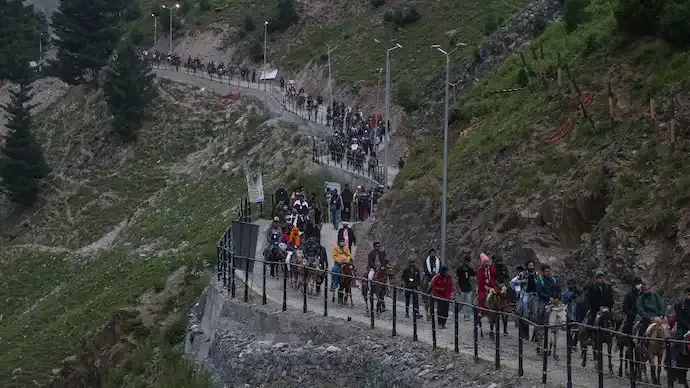
During the Amarnath Yatra, thousands of pilgrims enter the cave daily. Body heat generated inside the enclosed space can contribute to faster melting of the ice formation.
Together, these environmental factors determine how large the Ice Shivling becomes in a particular year.
Scientific Explanation: An Ice Stalagmite
Geologists classify the Amarnath Ice Shivling as an ice stalagmite.
A stalagmite is a vertical formation that develops upward from the ground. In most caves, stalagmites are formed through mineral-rich water depositing calcium carbonate over long periods.
In the Amarnath Cave, however, freezing water replaces mineral deposits, creating a seasonal pillar of ice instead.
This makes the Ice Shivling a unique natural phenomenon influenced by both geology and climatic conditions.
Does Science Contradict Religious Belief?
Scientists and scholars emphasize that understanding the natural formation of the Ice Shivling does not challenge its religious significance.
Science explains how the phenomenon occurs, while faith explains what it represents for millions of devotees.
Throughout history, many sacred places around the world have been associated with remarkable natural features. In India, several pilgrimage sites are linked to mountains, caves, rivers, springs, and other geological formations that inspired spiritual traditions over centuries.
For devotees, the Ice Shivling remains a sacred symbol of Lord Shiva regardless of the natural processes involved in its formation.
Spiritual Significance of the Amarnath Cave
According to Hindu tradition, the Amarnath Cave holds immense spiritual importance because it is believed to be the place where Lord Shiva revealed the secret of creation and immortality to Goddess Parvati.
This belief has made the cave one of Hinduism's most revered pilgrimage destinations for centuries.
Every year, devotees undertake the challenging journey through the Himalayas to seek blessings and witness the naturally formed Ice Shivling.
The annual Amarnath Yatra continues to attract pilgrims from across India and around the world.
Why the Scientific Explanation Matters
Studying the geological processes behind the Ice Shivling provides valuable insights into Himalayan cave systems and changing environmental conditions.
Understanding how snowfall, glacier melt, cave temperature, and humidity influence the formation helps researchers monitor year-to-year variations in the Ice Shivling's size.
The findings also demonstrate how natural geological processes can coexist with ancient cultural and religious traditions, enriching both scientific knowledge and historical understanding.
Faith and Science Can Coexist
The Amarnath Ice Shivling offers an example of how scientific inquiry and religious belief can exist side by side.
While geology explains the physical mechanism behind the formation, the spiritual meaning attached to the Shivling continues to be shaped by centuries of faith, devotion, and tradition.
For millions of pilgrims, the significance of the sacred Ice Shivling extends far beyond its natural origin.
Featured Snippet
The Amarnath Ice Shivling forms naturally when glacier and snowmelt water seeps into the Amarnath Cave and freezes layer by layer, creating an ice stalagmite. Scientists say this geological process explains its annual formation, while its spiritual significance for millions of devotees remains unchanged.
Key Highlights
- The Amarnath Ice Shivling forms naturally inside the Amarnath Cave every year.
- Scientists classify it as a naturally occurring ice stalagmite.
- Snow and glacier meltwater freeze layer by layer to create the formation.
- Temperature, snowfall, humidity, and human presence affect its size.
- The cave is located about 145 km northeast of Srinagar at nearly 4,000 metres altitude.
- The Ice Shivling remains the focal point of the annual Amarnath Yatra.
- Geological explanations do not diminish the site's religious significance.
- The phenomenon highlights the intersection of nature, science, and faith.
Conclusion
The annual formation of the Amarnath Ice Shivling is both a remarkable natural phenomenon and a deeply revered spiritual symbol. Geological studies explain how freezing meltwater creates the seasonal ice stalagmite, while centuries of faith continue to define its sacred significance for millions of devotees. Rather than standing in opposition, science and spirituality offer different perspectives on one of India's most cherished pilgrimage sites.
FAQs
1. Why does the Amarnath Ice Shivling form every year?
It forms naturally when snow and glacier meltwater drips into the cave and freezes layer by layer due to sub-zero temperatures.
2. What is the Amarnath Ice Shivling made of?
The Shivling is made entirely of naturally frozen water, forming an ice stalagmite.
3. Why does the Ice Shivling change in size?
Its size depends on factors such as snowfall, glacier melt, cave temperature, humidity, and the number of pilgrims visiting the cave.
4. Does science dispute the religious belief associated with the Ice Shivling?
No. Scientists explain the natural process behind its formation but do not comment on its spiritual significance, which remains a matter of faith.
5. Where is the Amarnath Cave located?
The cave is located in Jammu and Kashmir, around 145 kilometres northeast of Srinagar at an altitude of approximately 4,000 metres.
6. What is an ice stalagmite?
An ice stalagmite is a vertical pillar of ice that forms upward from the ground as water freezes layer by layer.
7. Why is the Amarnath Cave sacred in Hinduism?
According to Hindu tradition, it is believed to be the place where Lord Shiva revealed the secret of immortality to Goddess Parvati.
8. Why is the scientific study of the Ice Shivling important?
It helps researchers understand Himalayan geological processes, environmental changes, and the natural factors influencing the annual formation of the Ice Shivling.







Conversation
Be kind and stay on topic. Comments are moderated; abuse, spam and personal attacks are removed. Report a problem