Shopping cart
Your cart empty!


Your cart empty!
Terms of use dolor sit amet consectetur, adipisicing elit. Recusandae provident ullam aperiam quo ad non corrupti sit vel quam repellat ipsa quod sed, repellendus adipisci, ducimus ea modi odio assumenda.
Lorem ipsum dolor sit amet consectetur adipisicing elit. Sequi, cum esse possimus officiis amet ea voluptatibus libero! Dolorum assumenda esse, deserunt ipsum ad iusto! Praesentium error nobis tenetur at, quis nostrum facere excepturi architecto totam.
Lorem ipsum dolor sit amet consectetur adipisicing elit. Inventore, soluta alias eaque modi ipsum sint iusto fugiat vero velit rerum.
Sequi, cum esse possimus officiis amet ea voluptatibus libero! Dolorum assumenda esse, deserunt ipsum ad iusto! Praesentium error nobis tenetur at, quis nostrum facere excepturi architecto totam.
Lorem ipsum dolor sit amet consectetur adipisicing elit. Inventore, soluta alias eaque modi ipsum sint iusto fugiat vero velit rerum.
Dolor sit amet consectetur adipisicing elit. Sequi, cum esse possimus officiis amet ea voluptatibus libero! Dolorum assumenda esse, deserunt ipsum ad iusto! Praesentium error nobis tenetur at, quis nostrum facere excepturi architecto totam.
Lorem ipsum dolor sit amet consectetur adipisicing elit. Inventore, soluta alias eaque modi ipsum sint iusto fugiat vero velit rerum.
Sit amet consectetur adipisicing elit. Sequi, cum esse possimus officiis amet ea voluptatibus libero! Dolorum assumenda esse, deserunt ipsum ad iusto! Praesentium error nobis tenetur at, quis nostrum facere excepturi architecto totam.
Lorem ipsum dolor sit amet consectetur adipisicing elit. Inventore, soluta alias eaque modi ipsum sint iusto fugiat vero velit rerum.
Do you agree to our terms? Sign up
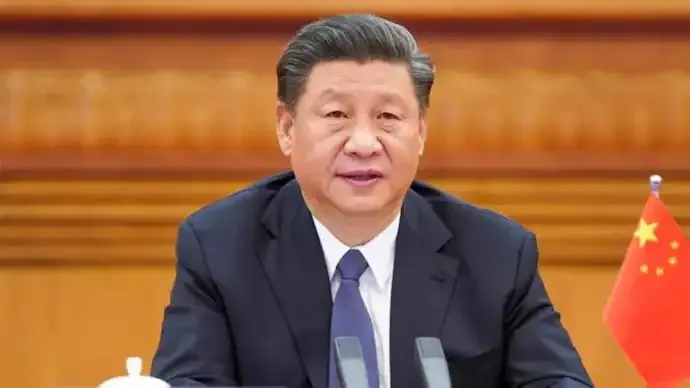
In a significant diplomatic move, South Korean President Lee Jae Myung has urged Chinese President Xi Jinping to assist in reviving talks with North Korea. The appeal came during a high-level summit in Gyeongju, marking Xi’s first visit to South Korea in 11 years. The discussions centered on regional peace, trade, and cooperation in the face of growing security challenges across East Asia.
President Lee expressed optimism that recent exchanges between Beijing and Pyongyang could create favorable conditions for renewed dialogue with the North. He emphasized that both Seoul and Beijing must use this momentum to strengthen strategic communication and pave the way for meaningful engagement.
Lee’s administration has consistently advocated for a phased approach to denuclearization — beginning with engagement and a freeze on further nuclear development. However, Pyongyang remains defiant, dismissing such proposals as unrealistic. The North Korean leadership has reiterated its stance that it will not engage in talks with the South, labeling Seoul as a “main enemy” and demanding the U.S. abandon denuclearization conditions before any future negotiations.
While the summit underscored the deep economic and cultural ties between South Korea and China, it also highlighted the delicate balance Seoul seeks to maintain between its security alliance with the United States and its economic interdependence with Beijing.
Xi Jinping reaffirmed China’s commitment to enhancing cooperation with South Korea, calling for mutual respect, peaceful dialogue, and collaboration on shared challenges. He proposed broadening cooperation in emerging sectors such as artificial intelligence, green industries, biopharmaceuticals, and aging population initiatives.
The two nations signed seven new agreements, including a won-yuan currency swap and pacts related to online crime prevention, innovation, and eldercare industries — signaling a deepening of economic ties despite lingering geopolitical frictions.
The summit also addressed pressing bilateral issues such as Chinese sanctions on South Korean companies and restrictions on Korean entertainment content, which have persisted since the deployment of the U.S.-led THAAD missile defense system in 2017. Both sides agreed to continue discussions at the working level to promote cultural exchange and resolve trade-related disputes.
Lee also raised maritime concerns regarding structures built by China in disputed waters, emphasizing the need for transparent dialogue and adherence to international norms. Separately, South Korean defense officials engaged with their Chinese counterparts at an ASEAN summit in Malaysia to address Chinese military incursions into Korea’s Air Defense Identification Zone.
Outside the diplomatic meetings, hundreds of protesters took to the streets in Seoul, voicing anti-China sentiments and calling for stronger protection of South Korea’s sovereignty. In response to rising domestic tensions, President Lee has ordered a crackdown on protests targeting foreign nationals, saying such actions damage the country’s global image.
Despite the political complexities, the Lee-Xi summit marks a significant step in regional diplomacy. Both leaders emphasized the importance of maintaining peace and stability on the Korean Peninsula while expanding mutual cooperation in trade and technology.
As tensions between the U.S., China, and North Korea continue to shape the geopolitical landscape, Seoul’s diplomatic outreach to Beijing represents a strategic effort to balance alliances and foster dialogue. For South Korea, resuming engagement with the North remains a cornerstone of its foreign policy — one that may depend heavily on China’s influence in Pyongyang.
The meeting between Lee and Xi signals cautious optimism that regional powers may yet find common ground to ensure peace, stability, and shared prosperity in East Asia.
32
Published: Nov 02, 2025

All India Story is your trusted source for comprehensive and up-to-the-minute news coverage across India. Bringing you the latest on politics, business, technology, entertainment, sports, and more, we are dedicated to keeping you informed with accurate, engaging, and insightful stories from every corner of the nation.