

Shopping cart
Your cart empty!
Terms of use dolor sit amet consectetur, adipisicing elit. Recusandae provident ullam aperiam quo ad non corrupti sit vel quam repellat ipsa quod sed, repellendus adipisci, ducimus ea modi odio assumenda.
Lorem ipsum dolor sit amet consectetur adipisicing elit. Sequi, cum esse possimus officiis amet ea voluptatibus libero! Dolorum assumenda esse, deserunt ipsum ad iusto! Praesentium error nobis tenetur at, quis nostrum facere excepturi architecto totam.
Lorem ipsum dolor sit amet consectetur adipisicing elit. Inventore, soluta alias eaque modi ipsum sint iusto fugiat vero velit rerum.
Sequi, cum esse possimus officiis amet ea voluptatibus libero! Dolorum assumenda esse, deserunt ipsum ad iusto! Praesentium error nobis tenetur at, quis nostrum facere excepturi architecto totam.
Lorem ipsum dolor sit amet consectetur adipisicing elit. Inventore, soluta alias eaque modi ipsum sint iusto fugiat vero velit rerum.

Dolor sit amet consectetur adipisicing elit. Sequi, cum esse possimus officiis amet ea voluptatibus libero! Dolorum assumenda esse, deserunt ipsum ad iusto! Praesentium error nobis tenetur at, quis nostrum facere excepturi architecto totam.
Lorem ipsum dolor sit amet consectetur adipisicing elit. Inventore, soluta alias eaque modi ipsum sint iusto fugiat vero velit rerum.

Sit amet consectetur adipisicing elit. Sequi, cum esse possimus officiis amet ea voluptatibus libero! Dolorum assumenda esse, deserunt ipsum ad iusto! Praesentium error nobis tenetur at, quis nostrum facere excepturi architecto totam.
Lorem ipsum dolor sit amet consectetur adipisicing elit. Inventore, soluta alias eaque modi ipsum sint iusto fugiat vero velit rerum.
Do you agree to our terms? Sign up
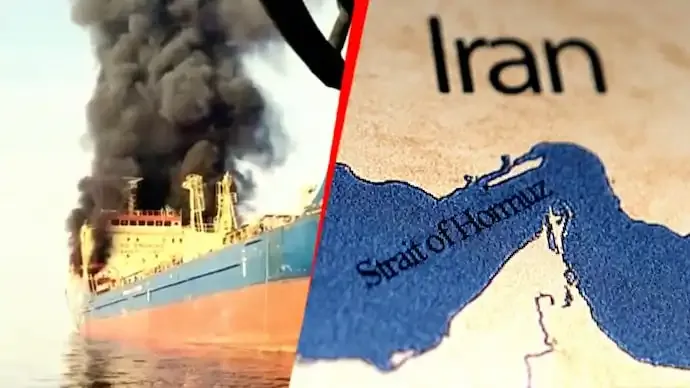
Oil and gas shipments through the Strait of Hormuz have slowed sharply after Iranian forces targeted multiple tankers, raising serious concerns over global energy supply and maritime security.
According to shipping data cited by international agencies, more than 200 vessels — including crude oil and liquefied natural gas (LNG) carriers — are now anchored in Gulf waters near the strait. The congestion follows missile strikes on US- and UK-linked tankers and warnings from Iran’s Revolutionary Guards declaring the passage unsafe amid escalating hostilities.
The Strait of Hormuz is one of the world’s most critical energy chokepoints. Roughly 20 million barrels of crude oil and petroleum products pass through it daily, accounting for nearly one-fifth of global oil supply. It also handles a major share of LNG exports, particularly from Qatar.
The disruption intensified after Iran’s retaliation following the killing of Supreme Leader Ayatollah Ali Khamenei in joint US-Israeli strikes. Iranian officials warned that no American ship would be allowed to enter the Persian Gulf, while maritime advisories urged commercial vessels to avoid the waterway due to ongoing military escalation.
Several commercial vessels have been damaged in recent days. A fully loaded merchant ship was struck by an unidentified projectile about 50 nautical miles north of Muscat, Oman, triggering an engine-room fire that was later contained.
A Marshall Islands-flagged crude tanker was also hit while sailing off Oman. In the UAE, a tanker at Jebel Ali port narrowly escaped damage after falling debris from intercepted aerial threats landed nearby. Another bunkering vessel was reportedly damaged off the UAE coast.
Earlier, a Palau-flagged oil tanker named Skylight was struck near Oman’s Musandam peninsula, injuring four crew members, including Indian nationals. The incident underlined the widening maritime risk across Gulf sea lanes.
Major global shipping companies and oil traders have temporarily suspended crude, fuel and LNG shipments through the strait. Analysts warn that prolonged disruption could push oil prices toward or above $100 per barrel.
Even though Saudi Arabia and the UAE operate alternative pipelines that bypass Hormuz, experts estimate that a full closure could remove 8 to 10 million barrels per day from global markets.
Asian economies, including India, China, Japan and South Korea, are particularly vulnerable due to their heavy dependence on Gulf energy supplies.
With tensions escalating and naval deployments increasing in the region, the Strait of Hormuz crisis has emerged as a major flashpoint with far-reaching economic and geopolitical consequences.
4
Published: 16h ago