
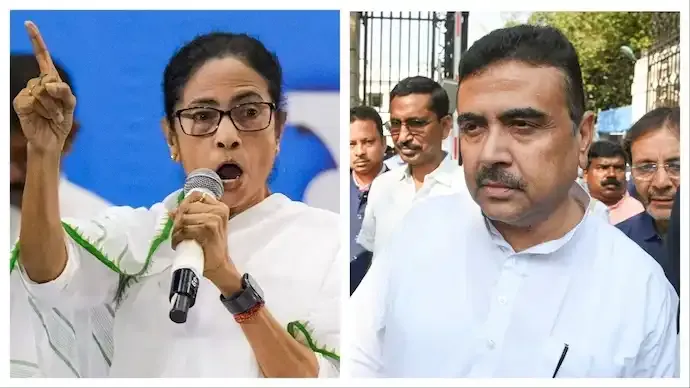
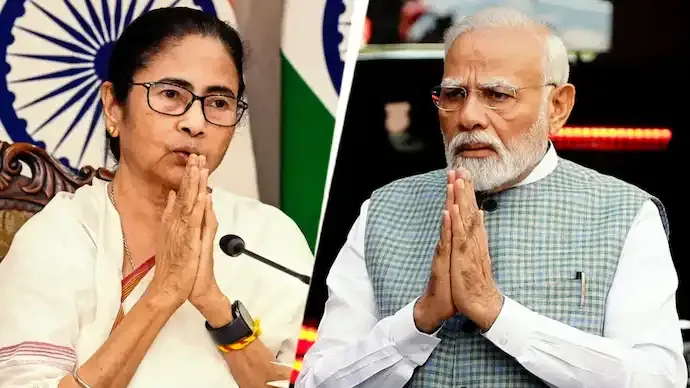
Political rhetoric in West Bengal intensified after Leader of Opposition Suvendu Adhikari stated that traces of Mughal-era references would be removed from public spaces across the state if the Bharatiya Janata Party comes to power in the upcoming Assembly elections. His remarks were directed at the ruling administration led by Chief Minister Mamata Banerjee, whom he accused of allowing the continued presence of names associated with what he described as “foreign invaders” in the state’s public landscape.
Speaking at a political gathering, Adhikari alleged that under the current government, figures such as Babur continue to be referenced in public institutions and locations. He asserted that a BJP government would initiate measures to change such names, framing the issue as part of a broader cultural and historical narrative. According to him, the proposed move would extend across the state, from northern districts like Darjeeling to coastal regions such as Digha.
The statement comes at a time when political tensions in West Bengal are already high ahead of the Assembly elections. Adhikari’s comments were made against the backdrop of ongoing debates surrounding historical identity, public symbolism, and cultural representation in governance. He argued that renaming public spaces linked to Mughal rulers would be part of the BJP’s broader agenda if it secures a mandate from voters.
The Babri Masjid issue has also emerged as a fresh political flashpoint in the state. Controversy recently erupted after former Trinamool Congress leader Humayun Kabir announced plans to construct a structure named after the Babri Masjid in Murshidabad district, prompting strong reactions from multiple political groups. The development added to the already charged atmosphere, with accusations and counter-accusations dominating political discourse.
During his address, Adhikari further alleged that Mughal emperors such as Babur, Humayun, Aurangzeb, Akbar and Shah Jahan were responsible for historical injustices, claiming that their legacy should not be honoured in contemporary public spaces. His remarks have drawn criticism from political opponents, who argue that such statements risk deepening divisions and politicising historical narratives.
The BJP leader also spoke about recent incidents of violence in Murshidabad’s Beldanga area, reiterating his demand for an investigation by the National Investigation Agency. He accused the state administration of attempting to shield those responsible and said legal proceedings would continue in higher courts.
Observers note that historical symbolism has increasingly become a focal point in election campaigns across several states, reflecting broader ideological debates. With Assembly polls approaching, statements related to identity, heritage and governance are expected to play a significant role in shaping political narratives in West Bengal.
Adhikari’s comments are likely to trigger further reactions from rival parties, potentially intensifying the already polarised political climate in the state. As campaigning gains momentum, discussions surrounding history, culture and public policy may remain at the forefront of electoral debates.
Conversation
Be kind and stay on topic. Comments are moderated; abuse, spam and personal attacks are removed. Report a problem