Shopping cart
Your cart empty!


Your cart empty!
Terms of use dolor sit amet consectetur, adipisicing elit. Recusandae provident ullam aperiam quo ad non corrupti sit vel quam repellat ipsa quod sed, repellendus adipisci, ducimus ea modi odio assumenda.
Lorem ipsum dolor sit amet consectetur adipisicing elit. Sequi, cum esse possimus officiis amet ea voluptatibus libero! Dolorum assumenda esse, deserunt ipsum ad iusto! Praesentium error nobis tenetur at, quis nostrum facere excepturi architecto totam.
Lorem ipsum dolor sit amet consectetur adipisicing elit. Inventore, soluta alias eaque modi ipsum sint iusto fugiat vero velit rerum.
Sequi, cum esse possimus officiis amet ea voluptatibus libero! Dolorum assumenda esse, deserunt ipsum ad iusto! Praesentium error nobis tenetur at, quis nostrum facere excepturi architecto totam.
Lorem ipsum dolor sit amet consectetur adipisicing elit. Inventore, soluta alias eaque modi ipsum sint iusto fugiat vero velit rerum.
Dolor sit amet consectetur adipisicing elit. Sequi, cum esse possimus officiis amet ea voluptatibus libero! Dolorum assumenda esse, deserunt ipsum ad iusto! Praesentium error nobis tenetur at, quis nostrum facere excepturi architecto totam.
Lorem ipsum dolor sit amet consectetur adipisicing elit. Inventore, soluta alias eaque modi ipsum sint iusto fugiat vero velit rerum.
Sit amet consectetur adipisicing elit. Sequi, cum esse possimus officiis amet ea voluptatibus libero! Dolorum assumenda esse, deserunt ipsum ad iusto! Praesentium error nobis tenetur at, quis nostrum facere excepturi architecto totam.
Lorem ipsum dolor sit amet consectetur adipisicing elit. Inventore, soluta alias eaque modi ipsum sint iusto fugiat vero velit rerum.
Do you agree to our terms? Sign up

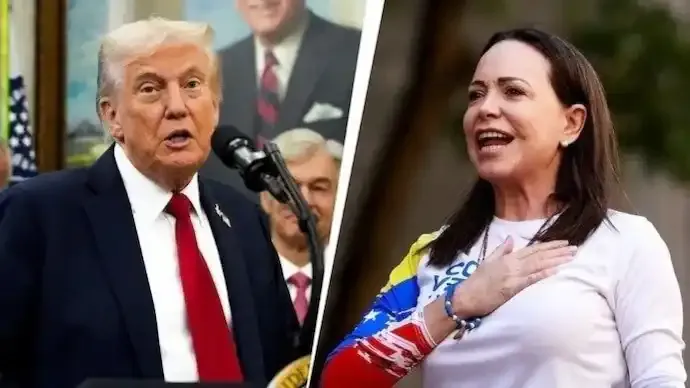
India’s carefully worded response to the dramatic US operation that led to the capture of Venezuelan leader Nicolas Maduro has drawn attention to the delicate diplomatic position New Delhi currently occupies while dealing with an increasingly unpredictable Donald Trump. Unlike several countries that openly criticised the operation, India issued a restrained statement that avoided naming the United States or condemning the military action, signalling a conscious effort to avoid confrontation.
The five-sentence statement released by the Ministry of External Affairs expressed “deep concern” over developments in Venezuela and reiterated India’s support for the safety and well-being of its people. Notably absent were references to sovereignty or territorial integrity—principles India has historically defended strongly, particularly in the context of its own border disputes. The delayed and minimalist response stood in contrast to reactions from several countries in the Global South, many of which openly criticised Washington for violating international law.
The subdued tone reflects the broader strategic dilemma facing New Delhi. The US operation, reportedly codenamed “Absolute Resolve,” saw Maduro captured in Caracas and transferred to New York to face charges related to drug trafficking and narco-terrorism. Images and details of the operation sparked global debate, with countries like Brazil calling it an unacceptable breach of international norms. India, however, chose a path of strategic ambiguity, mirroring its approach during Russia’s invasion of Ukraine in 2022, when it avoided taking sides at global forums.
India’s cautious posture is widely seen as an attempt to avoid antagonising Trump at a time when bilateral ties are under strain. The relationship has been complicated by trade disputes, including steep tariffs imposed by Washington. India is currently grappling with duties of up to 50% on certain exports and has failed to conclude a long-pending bilateral trade agreement despite sustained negotiations.
Adding to the pressure, Trump has once again warned India of further tariffs if it does not halt purchases of Russian oil. While describing Prime Minister Narendra Modi as a “good guy,” Trump made it clear that energy decisions would have trade consequences. US officials have repeatedly argued that India’s Russian oil imports undermine Western efforts to isolate Moscow over the Ukraine war.
These warnings come amid reports that India has already begun diversifying its energy basket. Data indicate that Russian oil imports fell to a three-year low in December, suggesting that New Delhi is quietly adjusting its strategy to reduce exposure to potential US penalties. India, which imports nearly 85–88% of its crude oil, remains highly sensitive to external pressure on energy supplies.
The Venezuela episode has also triggered domestic political backlash. Opposition leaders accused the Modi government of yielding to US pressure. Congress president Mallikarjun Kharge sharply criticised the Prime Minister, likening Trump’s actions to authoritarian behaviour and alleging that India was compromising its national interest by remaining silent.
Despite the criticism, some analysts see a strategic upside for India. Venezuela possesses the world’s largest proven oil reserves, and Trump has indicated that the US intends to take control of the country’s oil sector. Although Venezuela currently contributes less than 1% of global oil production due to sanctions and mismanagement, a restructuring of its energy industry could eventually reopen export channels.
India was once among the largest buyers of Venezuelan crude before US sanctions in 2020 disrupted supplies and stranded nearly $1 billion in payments involving Indian energy firms. A potential revival of Venezuelan oil exports under new management could, in the long run, benefit Indian refiners.
For now, India’s muted response underscores a broader diplomatic strategy: avoiding direct confrontation with Washington while safeguarding long-term economic and energy interests. As Trump’s rhetoric grows sharper and global geopolitics more volatile, New Delhi appears determined to walk a fine line—balancing principle with pragmatism in an increasingly complex international environment.
61
Published: Jan 06, 2026

All India Story is your trusted source for comprehensive and up-to-the-minute news coverage across India. Bringing you the latest on politics, business, technology, entertainment, sports, and more, we are dedicated to keeping you informed with accurate, engaging, and insightful stories from every corner of the nation.