

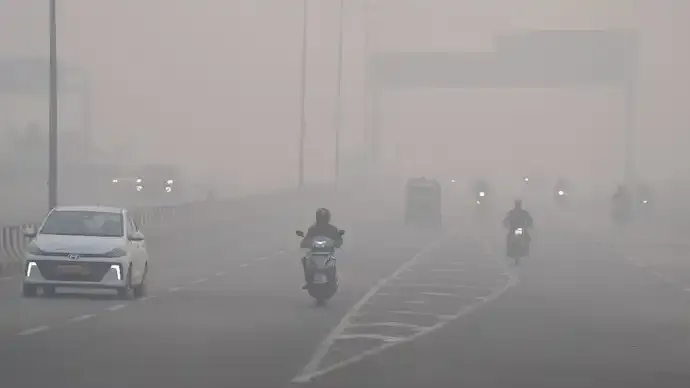
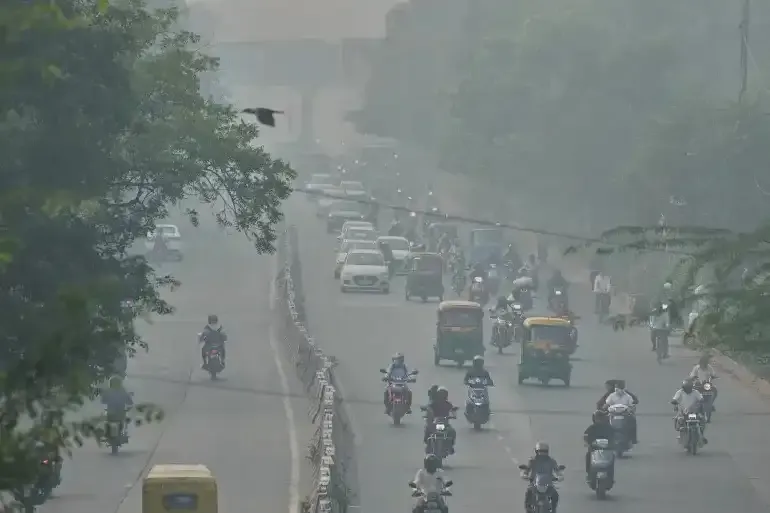
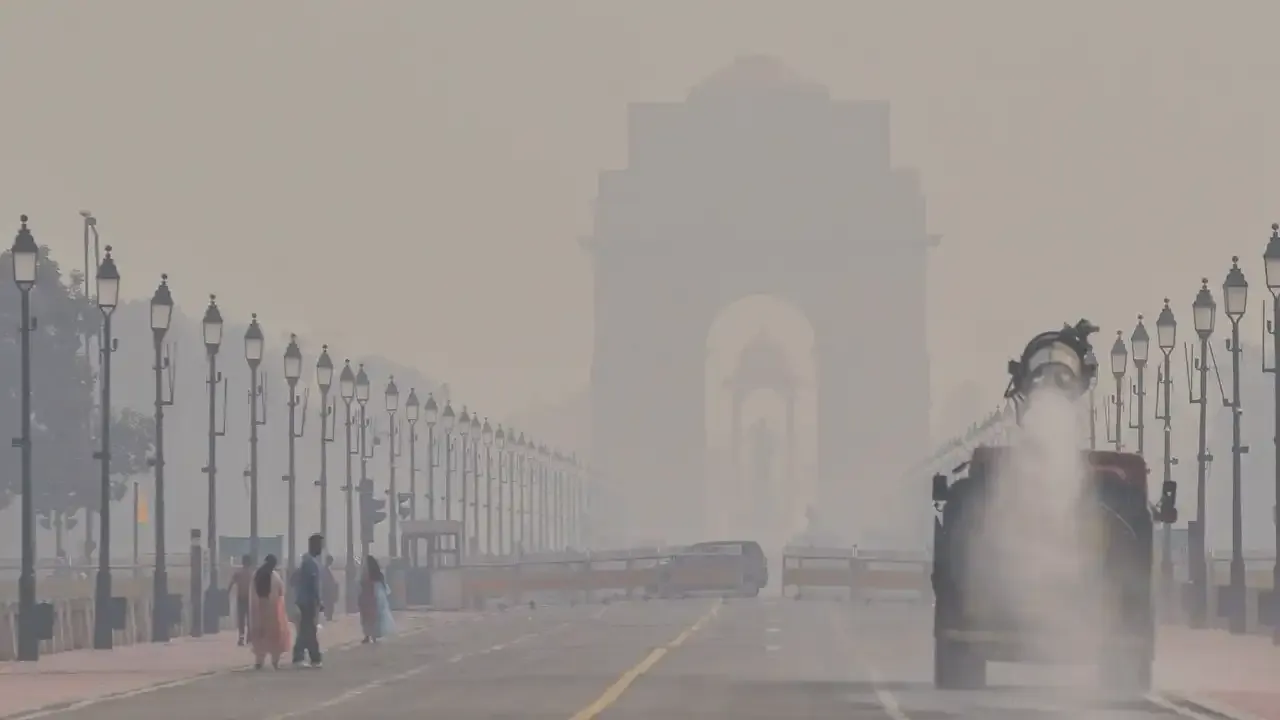
Air quality across Delhi and the National Capital Region deteriorated sharply on Sunday, with the Air Quality Index plunging deeper into the ‘severe’ category amid a thick blanket of toxic smog and dense fog. The worsening conditions severely reduced visibility across large parts of the region and prompted authorities to activate Stage-IV emergency measures under the Graded Response Action Plan (GRAP).
According to data from the Central Pollution Control Board, Delhi’s average AQI stood at 461 at 7 am, worsening from 431 recorded a day earlier. All 40 air quality monitoring stations in the capital reported ‘severe’ pollution levels, with several locations nearing the maximum measurable limit. Rohini recorded an AQI of 499, followed by Bawana at 498 and Vivek Vihar at 495. Industrial and traffic-heavy zones such as Ashok Vihar, Wazirpur, Narela and Anand Vihar also reported alarmingly high readings.
Even traditionally less-polluted areas such as Lodhi Road and Najafgarh failed to escape the impact, recording AQI levels above 400. Pollution levels remained dangerously high across the NCR as well, with Noida registering an AQI of 470 and Ghaziabad at 460. Gurugram remained in the ‘very poor’ category, while Faridabad recorded ‘poor’ air quality.
The deteriorating air quality was accompanied by dense fog, drastically cutting visibility during the early morning hours. At several locations, visibility dropped to near zero, affecting road movement and prompting low-visibility procedures at the Indira Gandhi International Airport. While flight operations continued, pilots were advised to exercise caution due to fluctuating visibility.
The India Meteorological Department attributed the sudden spike in pollution to unfavourable weather conditions, including weak winds, increased moisture levels and a shift in wind direction caused by a western disturbance. These conditions prevented the dispersion of pollutants, allowing smog to accumulate close to the surface.
In response, the Commission for Air Quality Management invoked Stage-IV of GRAP across Delhi-NCR. Emergency measures include a ban on construction and demolition activities, suspension of mining and stone-crushing operations, restrictions on diesel vehicles, and the shift of schools to a hybrid mode for certain classes. Health advisories have urged vulnerable groups to stay indoors and avoid outdoor exposure as hazardous conditions persist.



Conversation
Be kind and stay on topic. Comments are moderated; abuse, spam and personal attacks are removed. Report a problem