

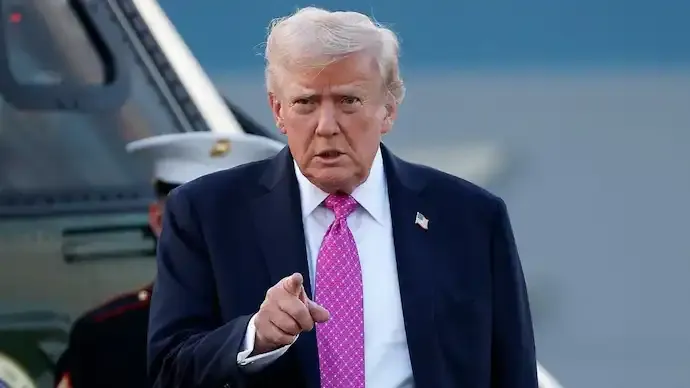

US President Donald Trump has announced a new tariff policy targeting imported generic medicines, a move that could significantly affect global pharmaceutical trade and pose fresh challenges for India's drug manufacturing industry.
The policy is part of the administration's broader effort to expand domestic pharmaceutical production in the United States by encouraging companies to manufacture medicines locally.
What the New Tariff Policy Says
According to the announcement, imported generic medicines will continue to enter the United States without tariffs for a limited transition period.

The proposed timeline is:
- August 1, 2026 – July 31, 2028: 0% tariff
- August 1, 2028 – July 31, 2029: 100% tariff
- From August 1, 2029 onwards: 200% tariff
The policy applies to generic medicines, while the existing framework governing patented and innovative pharmaceutical products is expected to remain unchanged.
Why Trump Introduced the Tariffs
Announcing the decision on his social media platform, Trump said the objective is to encourage pharmaceutical manufacturers to establish production facilities within the United States.
The administration argues that expanding domestic drug manufacturing would strengthen supply chains, improve national security and reduce dependence on imported medicines.
Companies that fail to relocate manufacturing during the transition period could face the higher tariff rates once they come into effect.
Why India Could Be Affected
India is one of the world's largest producers and exporters of generic medicines and supplies a substantial share of pharmaceuticals consumed in the United States.
According to industry estimates, India exported pharmaceutical products worth $9.7 billion to the US in 2025, making the American market one of the country's most important export destinations.
Indian generic medicines play a major role in treating conditions such as:
- Diabetes
- Hypertension
- Cancer
- Infectious diseases
- Mental health disorders
Any significant increase in import duties could affect the competitiveness of Indian pharmaceutical companies in the US market.
Potential Impact on the Pharmaceutical Industry
Industry experts believe the proposed tariffs could reshape global pharmaceutical supply chains if implemented as announced.
Drug manufacturers that rely heavily on exports to the United States may need to evaluate options such as:
- Expanding manufacturing operations within the US
- Diversifying export markets
- Adjusting pricing strategies
- Reconfiguring global supply chains
The long transition period may provide companies with time to adapt before the highest tariff rates take effect.
Wider Trade Strategy
The proposed pharmaceutical tariffs are part of Trump's broader "America First" economic strategy, which seeks to promote domestic manufacturing through higher import duties across multiple sectors.
If implemented, the measures could become one of the most significant policy changes affecting the global generic medicines industry in recent years.
Key Highlights
- Donald Trump has announced tariffs of up to 200% on imported generic medicines.
- Generic drugs will remain tariff-free until July 2028 under the proposed policy.
- Tariffs will increase to 100% in 2028 and 200% thereafter.
- The policy aims to encourage pharmaceutical manufacturing in the United States.
- India, a major exporter of generic medicines to the US, could face significant impacts.
- Industry experts believe the move may reshape global pharmaceutical supply chains.
Frequently Asked Questions (FAQs)
What tariffs has Donald Trump announced?
Trump announced a phased tariff policy on imported generic medicines, with rates eventually rising to 200%.
When will the new tariffs begin?
The proposed policy provides a tariff-free period until July 2028, followed by a 100% tariff for one year and a 200% tariff thereafter.
Why is India likely to be affected?
India is one of the largest suppliers of generic medicines to the United States and depends heavily on the US pharmaceutical market for exports.
Will branded medicines also face these tariffs?
According to the announcement, the policy applies to generic medicines, while existing arrangements for patented and innovative medicines are expected to remain unchanged.
Why has the US introduced this policy?
The administration says the objective is to encourage pharmaceutical companies to manufacture medicines within the United States.
How could the policy affect the pharmaceutical industry?
Experts believe it could lead companies to relocate manufacturing, diversify export markets and restructure global supply chains.






Conversation
Be kind and stay on topic. Comments are moderated; abuse, spam and personal attacks are removed. Report a problem