

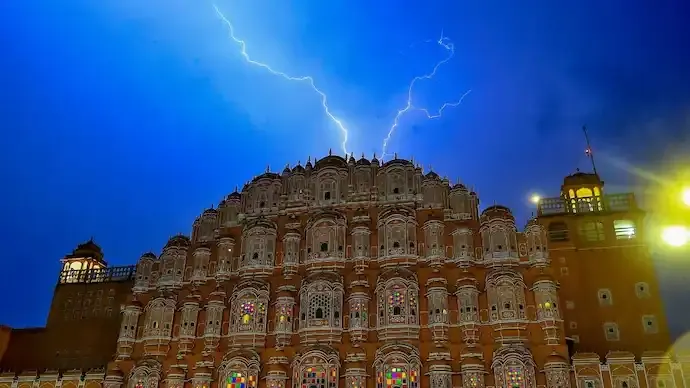

Even as monsoon rainfall has weakened across large parts of the country, the India Meteorological Department (IMD) has warned of thunderstorms accompanied by lightning and gusty winds across nearly every region of India this week.
While many associate heavy rainfall with monsoon dangers, experts say lightning is India's deadliest weather-related hazard, responsible for more fatalities than floods, cyclones and heatwaves combined.
The IMD has advised people to remain alert as hot, humid weather creates ideal conditions for severe thunderstorms.

Why Does Lightning Increase During a Monsoon Break?
A break in the monsoon does not necessarily mean safer weather.
When rainfall reduces, the sun heats the land while humidity remains high. This causes warm, moisture-laden air to rise rapidly into the atmosphere, forming towering thunderclouds known as cumulonimbus clouds.
These clouds can rise more than 12 kilometres into the sky and create ideal conditions for lightning.
According to the IMD, several states are expected to experience hot and humid conditions this week, increasing the likelihood of thunderstorms and lightning strikes.
How Does Lightning Form?
Lightning is produced inside thunderclouds through intense electrical activity.
As ice crystals, water droplets and hailstones collide inside a cloud, they exchange electric charges. Over time:
- Positive charges accumulate near the top of the cloud.
- Negative charges gather near the base.
When the electrical difference becomes too great, it is released as a powerful bolt of lightning.
The lightning channel heats the surrounding air to nearly 30,000°C, making it about five times hotter than the surface of the Sun for a fraction of a second.
Lightning Is India's Biggest Weather Killer
Research shows lightning causes more weather-related deaths in India than any other natural weather hazard.
According to a study published in the journal Natural Hazards, lightning accounted for 46% of all weather-related deaths in India between 2002 and 2022.
Another study based on National Crime Records Bureau (NCRB) data found that:
- 1,01,309 people died due to lightning between 1967 and 2020.
- This translates to an average of 1,876 deaths every year.
Researchers believe the rising number of lightning incidents is linked to climate change, as warmer air holds more moisture, increasing thunderstorm activity.
Which Areas Are Most at Risk?
Studies indicate that Central India records nearly half of all lightning-related deaths.
States reporting the highest fatalities include:
- Madhya Pradesh
- Maharashtra
- Uttar Pradesh
- Odisha
Farmers, agricultural workers and labourers working in open fields are among the most vulnerable during thunderstorms.
How to Stay Safe During Lightning
The IMD recommends taking immediate precautions when thunderstorms are forecast.
Safety Tips
- Move indoors immediately when thunder is heard.
- Avoid standing under isolated trees.
- Stay away from open fields and water bodies.
- Do not lean against concrete walls or lie on concrete floors.
- Unplug electrical appliances where possible.
- Avoid using wired electrical equipment during storms.
- Leave ponds, rivers or lakes immediately if caught outdoors.
People are also encouraged to download the Damini mobile application, developed by the Indian Institute of Tropical Meteorology (IITM), which provides real-time lightning alerts based on location.
Stay Alert During This Week's Weather
Although widespread monsoon rainfall has temporarily weakened, thunderstorms with lightning remain a serious threat across much of the country.
Weather experts advise residents to monitor IMD forecasts, avoid unnecessary outdoor activities during thunderstorms and follow official safety guidelines whenever lightning warnings are issued.
Key Highlights
- IMD has forecast thunderstorms with lightning across most parts of India this week.
- Lightning causes 46% of weather-related deaths in India.
- More than 1 lakh people died due to lightning between 1967 and 2020.
- Monsoon breaks create ideal conditions for severe thunderstorms.
- Farmers and people working outdoors face the highest risk.
- Experts advise moving indoors immediately when thunderstorms develop.
FAQs
Why is lightning more common during monsoon breaks?
Reduced rainfall combined with hot and humid weather creates strong upward air currents that form thunderclouds capable of producing lightning.
How many people die due to lightning in India?
According to NCRB-based research, more than 1,01,000 people died due to lightning between 1967 and 2020.
Which states are most affected by lightning?
Madhya Pradesh, Maharashtra, Uttar Pradesh and Odisha report some of the highest numbers of lightning-related deaths.
What should you avoid during a lightning storm?
Avoid sheltering under trees, staying in open fields, entering water bodies and using wired electrical appliances during thunderstorms.
What is the Damini app?
Damini is a free lightning alert application developed by the Indian Institute of Tropical Meteorology (IITM) that provides real-time warnings about nearby lightning strikes.






Conversation
Be kind and stay on topic. Comments are moderated; abuse, spam and personal attacks are removed. Report a problem