
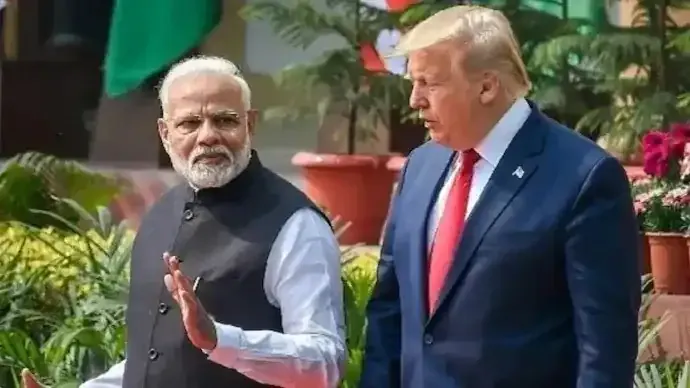
Fresh controversy has erupted over stalled India–US trade negotiations after the United States publicly linked the collapse of a long-pending deal to personal diplomacy between national leaders. In a striking revelation, US Commerce Secretary Howard Lutnick suggested that the agreement failed not due to economic disagreements, but because Prime Minister Narendra Modi did not personally reach out to President Donald Trump.
Speaking in an interview, Lutnick said that the trade framework between India and the US was largely finalised and ready for closure. However, he claimed that the final step required a direct call from Modi to Trump — a move that never happened. According to Lutnick, this absence of personal outreach ultimately derailed the agreement.
“The whole deal was set up. But let’s be clear — it was his deal. He is the closer,” Lutnick said, referring to Trump. “You just had to have Modi call the President. They were uncomfortable doing it. Modi didn’t call.”
The comments have added a personal dimension to what was previously understood as a complex negotiation involving tariffs, market access, and regulatory alignment. Lutnick’s remarks suggest that ego and protocol may have played a larger role than policy differences in freezing progress between the two democracies.
He further pointed out that the US had expected India to be among the earliest countries to finalise a trade pact under Trump’s second term. Instead, Washington went on to conclude agreements with Indonesia, the Philippines and Vietnam.
“We assumed a trade deal with India before them,” Lutnick said, indicating that New Delhi’s hesitation disrupted US expectations and timelines.
The disclosure also sheds light on the transactional nature of Trump-era diplomacy, where personal engagement with the US president is often viewed as critical to finalising deals. Analysts note that Trump has historically placed a premium on direct leader-to-leader communication, sometimes allowing personal rapport to override institutional processes.
Lutnick made it clear that the window for the earlier agreement has now closed. He said the US has stepped back entirely from the arrangement that was previously negotiated.
“The US has stepped back from that trade deal that we had agreed to earlier. We are not thinking about it anymore,” he stated.
The remarks come at a time when India–US ties are already facing strain over trade tariffs, technology restrictions and geopolitical recalibrations. While both sides continue to describe the relationship as a strategic partnership, Lutnick’s comments highlight underlying frictions that may complicate future negotiations.
For New Delhi, the episode underscores the challenge of navigating diplomacy with an administration that places significant weight on personal gestures. For Washington, it raises questions about whether major economic partnerships can be held hostage to leader-level optics.
The Indian government has not officially responded to Lutnick’s claims. However, diplomatic observers suggest that India’s approach reflects an institutional style of engagement rather than personalised deal-making.
Whether the impasse will soften in the coming months remains uncertain. What is clear, however, is that the episode has now publicly exposed how fragile high-stakes trade negotiations can become when diplomacy collides with personal pride.


Conversation
Be kind and stay on topic. Comments are moderated; abuse, spam and personal attacks are removed. Report a problem