
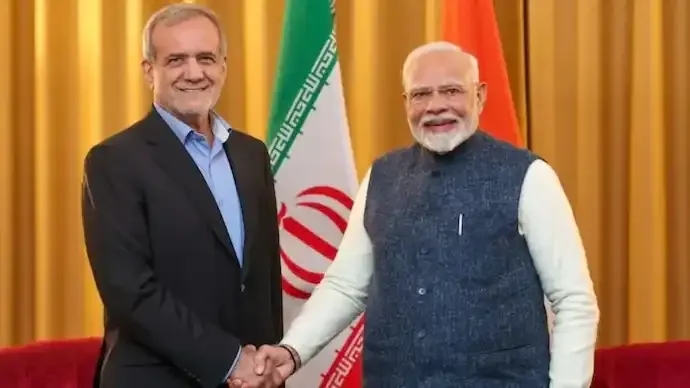
Fresh uncertainty has gripped Indian markets after the United States announced plans to impose a 25% tariff on countries continuing trade with Iran. The move has sparked concerns over whether India could face indirect economic pressure, especially across exports, energy trade and overall investor sentiment.
Market participants are closely tracking the implications of the tariff proposal, particularly after signals from Washington suggested that the levy could be imposed in addition to existing duties, rather than replacing them. If applied cumulatively, total tariff exposure for some countries could rise to as much as 50% or even 75%, significantly increasing trade costs.
India’s exposure to Iran is modest in absolute numbers but remains strategically important for select sectors. According to official commerce data, India-Iran bilateral trade stood at around $1.34 billion during the first ten months of 2025, making it a relatively small component of India’s overall global trade basket.
However, certain export segments are heavily dependent on the Iranian market. India exports basmati rice, fruits, vegetables, pharmaceuticals and drug formulations to Iran. Basmati rice is particularly critical, with India accounting for nearly two-thirds of Iran’s rice imports, making any disruption a key concern for agricultural exporters.
Experts say the tariff announcement has already triggered caution in equity markets. Analysts note that even if the direct trade impact is limited, uncertainty surrounding US sanctions policy tends to weigh on global risk appetite.
Some strategists believe India may escape significant damage due to its limited trade volume with Iran. They point out that larger economies such as China, which have far deeper commercial ties with Tehran, are likely to face a heavier impact if the tariff framework is fully enforced.
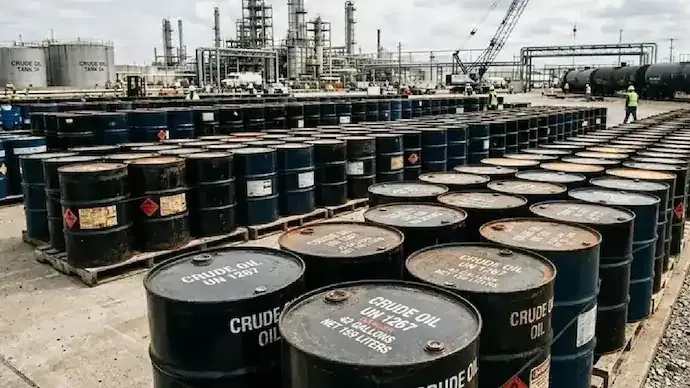
Nevertheless, India’s historical energy ties with Iran continue to draw attention. In the past, New Delhi imported substantial volumes of Iranian crude and even explored alternative payment mechanisms, including rupee-based settlements. While oil imports from Iran have declined sharply due to sanctions, any escalation in restrictions could still influence energy diplomacy and long-term trade planning.
Market experts also highlight that global oil supply dynamics may cushion the impact. With increased supply from countries like Venezuela and ample global inventories, oil prices may remain relatively stable, reducing inflationary spillovers for India.
Another major source of investor anxiety lies in the stacking effect of tariffs. Analysts explain that the proposed 25% tariff is designed as a secondary trade penalty, intended to pressure countries into aligning with US foreign policy objectives. If layered on top of existing import duties, it could sharply raise effective tariff rates and disrupt global supply chains.
This approach, experts warn, introduces policy unpredictability and could fuel volatility across currencies, commodities and equity markets worldwide.
For now, Indian investors are expected to remain cautious as clarity emerges on how the US implements the tariff regime and how major economies respond. While India’s direct exposure remains limited, broader consequences will depend on developments in Iran, global oil prices and Washington’s next moves.




Conversation
Be kind and stay on topic. Comments are moderated; abuse, spam and personal attacks are removed. Report a problem