
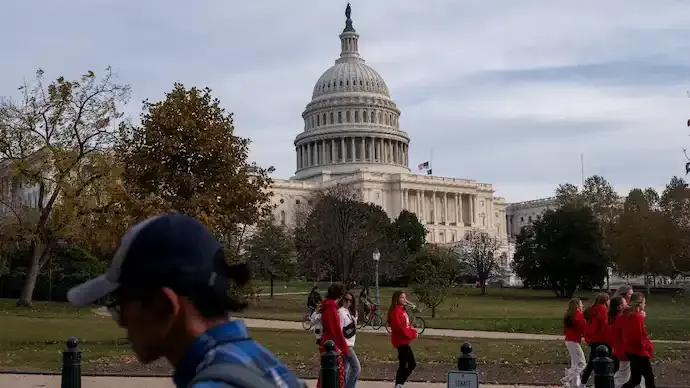
After 40 days of political paralysis that froze federal operations, delayed paychecks, and disrupted public services, the US Senate has taken a decisive step to end the nation’s longest-ever government shutdown. On Sunday night, senators voted 60–40 on a key procedural motion to advance a bipartisan funding bill — a breakthrough move that nonetheless exposed deep divisions within the Democratic Party over health care subsidies.
The measure, negotiated between moderate Democrats, Republican leaders, and the White House, aims to reopen government departments and restore funding for essential federal services. However, the exclusion of Affordable Care Act (ACA) subsidies from the immediate plan has ignited backlash among progressives, threatening party unity as the deal moves to the House of Representatives.
A Compromise Amid Crisis
The proposal was spearheaded by New Hampshire Senators Maggie Hassan and Jeanne Shaheen, alongside Maine Independent Angus King. Their agreement with Republican leaders allows the government to resume normal operations through January 30, 2026, while preventing President Donald Trump’s administration from proceeding with its controversial plan to cut 300,000 federal jobs.
At the start of Trump’s second term, roughly 2.2 million civilians were employed by the federal government. The bill not only protects these jobs but also promises back pay for all furloughed employees, including members of the military, Border Patrol, and air traffic control staff, who have gone unpaid since the shutdown began.
What the Bill Covers
The interim funding bill will keep key federal agencies open and ensure:
-
Continuation of essential services and employee salaries.
-
A pause on Trump’s federal downsizing directive.
-
Temporary funding until a full-year spending plan is finalised.
-
Back pay for over two million federal employees.
Republican leaders plan to attach amendments for a comprehensive funding package, developed in consultation with moderate Democrats, before final approval by the President.
Healthcare Subsidies Divide Democrats
While the bill marks progress toward reopening the government, it also deepens a philosophical divide within the Democratic Party. The compromise does not include extensions of ACA health care subsidies, a sticking point that has long divided moderates and progressives.
Senate Minority Leader Chuck Schumer voted against the measure, saying he could not “in good faith” support a deal that compromises healthcare protections.
“While reopening the government is urgent, sacrificing healthcare for millions is unacceptable. We will not give up this fight,” Schumer said after the vote.
Senator Bernie Sanders went further, calling the omission “a horrific mistake,” while Chris Murphy argued that Democrats must hold their ground, pointing to recent voter sentiment favouring strong social protections.
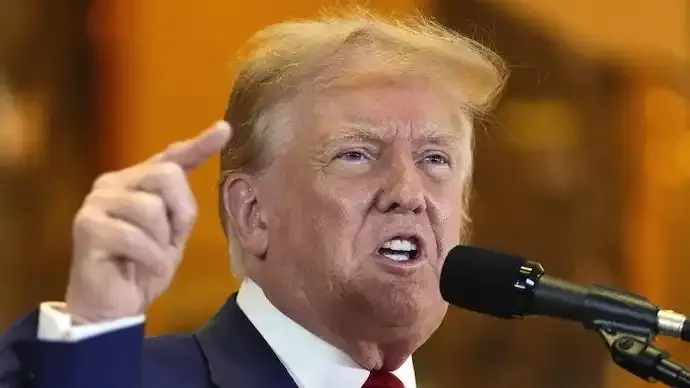
The Affordable Care Act subsidies, which doubled enrolment to nearly 24 million Americans since 2021, remain a flashpoint in Washington. President Trump has repeatedly called the programme a “windfall for insurance companies,” pushing instead for direct payments to individuals once the shutdown ends.
“These subsidies are a disaster for the American people,” Trump wrote on Truth Social. “Once the government is open, I stand ready to work with both parties to fix this broken system.”
The Human and Economic Toll
The 40-day shutdown — the longest in US history — has had widespread effects. Air travel was severely disrupted as air-traffic controllers and Transportation Security Administration (TSA) agents worked without pay. Food assistance programmes were delayed, and federal loan processing for small businesses ground to a halt.
Economists estimate the shutdown has already cost the US economy billions of dollars in lost productivity and delayed tax refunds, with long-term consequences for public confidence in government institutions.
Next Steps: House and White House Approval
The bill now moves through final procedural votes in the Senate before heading to the House of Representatives for approval. If cleared, it will be presented to President Trump for signing, paving the way for federal workers to return and agencies to resume operations within days.
However, with healthcare subsidies excluded and partisan tensions high, the road to full funding remains fraught. Progressive Democrats have signalled that they may push for additional amendments once the government is back on its feet.
A Fragile Victory
The Senate’s vote represents a fragile moment of bipartisanship in an otherwise divided Washington. While the deal promises immediate relief to millions of Americans affected by the shutdown, it also sets the stage for renewed battles over healthcare, spending, and the scope of federal governance.
As lawmakers head into another round of negotiations, the United States faces a familiar question: can political compromise coexist with ideological conviction?



Conversation
Be kind and stay on topic. Comments are moderated; abuse, spam and personal attacks are removed. Report a problem