
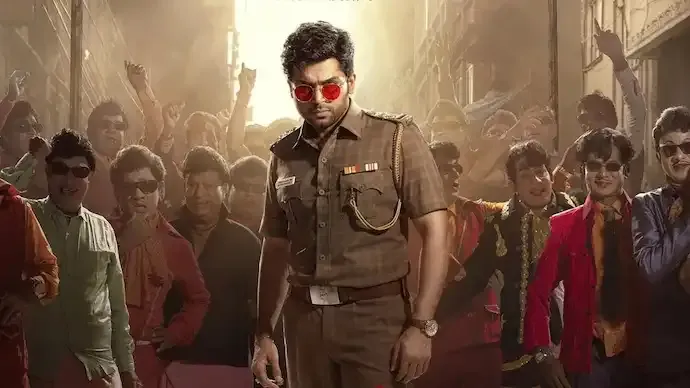
Vaa Vaathiyaar, directed by Nalan Kumarasamy and headlined by Karthi, arrives in theatres as a Pongal release with an intriguing blend of political satire, dark comedy and superhero drama. While the film introduces a refreshingly unconventional idea and benefits immensely from Karthi’s energetic performance, it ultimately stops short of fully exploring its own creative potential.
Set in the fictional town of Maasila, the story follows Ramu, a police officer whose life is shaped by an unusual coincidence—he was born on the same day and at the same time as legendary actor-politician M. G. Ramachandran. Ramu’s grandfather, played by Rajkiran, is a devoted admirer of MGR and raises the boy on the ideals propagated through the icon’s films and political life. Ironically, this rigid moral upbringing fuels Ramu’s rebellion, pushing him towards the influence of cinematic villains instead, particularly the archetypes popularised by Nambiar.
As an adult, Ramu grows into a corrupt police officer entangled in the web of an influential businessman, Periyasamy, played by Sathyaraj, and the state’s political leadership. When a deeply personal loss shakes his moral compass, Ramu undergoes a psychological shift that transforms the film into a quasi-superhero narrative, layered with themes of alter ego, guilt and redemption.
Director Nalan Kumarasamy once again demonstrates his flair for conceptual storytelling. The film confidently juggles genres—political satire, fantasy, psychological drama and comedy—particularly in its first half, which remains engaging and unpredictable. The idea of a flawed man unconsciously channeling the larger-than-life persona of MGR is inventive and culturally resonant, grounding a borrowed superhero trope firmly within Tamil cinema’s socio-political context.
Karthi is the film’s biggest strength. He approaches Ramu with visible enthusiasm, seamlessly transitioning between swagger, satire and vulnerability. His portrayal, especially during sequences where Ramu mirrors MGR’s mannerisms, is both entertaining and convincing, making it easy for viewers to invest in the character’s journey. The arc of Ramu’s transformation stands out as the most compelling stretch of the narrative.
However, once the central concept is established, Vaa Vaathiyaar struggles to evolve beyond it. The second half lacks narrative urgency, and the alter-ego theme remains largely unexplored at a psychological level. Characters with interesting setups, including Krithi Shetty’s Wu, a mystic figure who becomes Ramu’s ally, feel underwritten and underutilised.
The supporting cast delivers functional performances, but few leave a lasting impact. Santhosh Narayanan’s music is a mixed bag—while the background score effectively heightens key moments, the songs occasionally interrupt the film’s pacing rather than enhancing it.
The climax arrives hastily, resolving conflicts that deserved more depth and emotional weight. Despite its strong foundation, the film opts for a safer, more predictable resolution, diluting the impact of its bold premise.
In the end, Vaa Vaathiyaar remains an engaging but uneven experience. Karthi’s performance and the film’s quirky first half make it watchable, but the restrained execution ensures it never quite becomes the genre-defying standout it aspires to be.



Conversation
Be kind and stay on topic. Comments are moderated; abuse, spam and personal attacks are removed. Report a problem