Shopping cart
Your cart empty!


Your cart empty!
Terms of use dolor sit amet consectetur, adipisicing elit. Recusandae provident ullam aperiam quo ad non corrupti sit vel quam repellat ipsa quod sed, repellendus adipisci, ducimus ea modi odio assumenda.
Lorem ipsum dolor sit amet consectetur adipisicing elit. Sequi, cum esse possimus officiis amet ea voluptatibus libero! Dolorum assumenda esse, deserunt ipsum ad iusto! Praesentium error nobis tenetur at, quis nostrum facere excepturi architecto totam.
Lorem ipsum dolor sit amet consectetur adipisicing elit. Inventore, soluta alias eaque modi ipsum sint iusto fugiat vero velit rerum.
Sequi, cum esse possimus officiis amet ea voluptatibus libero! Dolorum assumenda esse, deserunt ipsum ad iusto! Praesentium error nobis tenetur at, quis nostrum facere excepturi architecto totam.
Lorem ipsum dolor sit amet consectetur adipisicing elit. Inventore, soluta alias eaque modi ipsum sint iusto fugiat vero velit rerum.
Dolor sit amet consectetur adipisicing elit. Sequi, cum esse possimus officiis amet ea voluptatibus libero! Dolorum assumenda esse, deserunt ipsum ad iusto! Praesentium error nobis tenetur at, quis nostrum facere excepturi architecto totam.
Lorem ipsum dolor sit amet consectetur adipisicing elit. Inventore, soluta alias eaque modi ipsum sint iusto fugiat vero velit rerum.
Sit amet consectetur adipisicing elit. Sequi, cum esse possimus officiis amet ea voluptatibus libero! Dolorum assumenda esse, deserunt ipsum ad iusto! Praesentium error nobis tenetur at, quis nostrum facere excepturi architecto totam.
Lorem ipsum dolor sit amet consectetur adipisicing elit. Inventore, soluta alias eaque modi ipsum sint iusto fugiat vero velit rerum.
Do you agree to our terms? Sign up
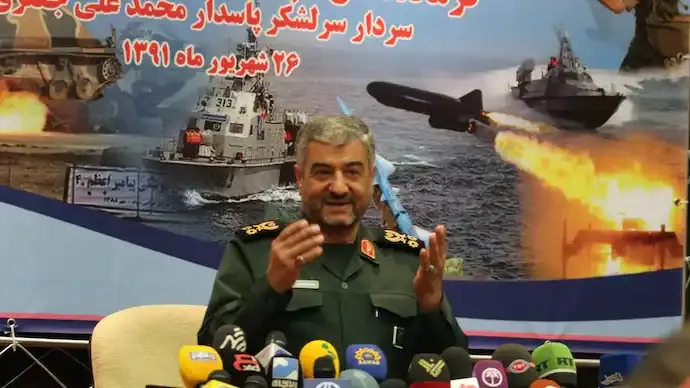
Mohammad Ali Jafari, also known as Ali Jafari, is a former commander-in-chief of the Islamic Revolutionary Guard Corps (IRGC) and one of the most influential architects of Iran’s modern military strategy.
Born in 1957 in Yazd, Iran, Jafari joined the IRGC during the early years of the Islamic Republic and rose through the ranks after gaining battlefield experience during the Iran–Iraq War.
He later became commander-in-chief of the IRGC from 2007 to 2019, a role in which he reshaped Iran’s defence strategy to prepare the country for potential conflict with technologically superior enemies such as the United States and Israel.
Jafari is widely known for creating Iran’s “Mosaic Defence Doctrine”, a military strategy designed to prevent the rapid collapse of Iran’s military leadership during war.
The doctrine emerged after Iranian strategists studied the 2003 invasion of Iraq, where US forces toppled Saddam Hussein’s government within weeks.
Iran concluded that a similar “decapitation strike”—killing top leaders and commanders quickly—could be used against Tehran. To counter this, Jafari designed a system that decentralises command and spreads military power across the country.
The Mosaic Defence Doctrine reorganised Iran’s military into 31 provincial command units, each capable of operating independently if central leadership is disrupted.
Key elements of the doctrine include:
Decentralised command: Local commanders can operate without waiting for orders from Tehran.
Distributed military assets: Weapons, logistics, and communication systems are spread across regions.
Guerrilla-style resistance: The strategy relies on “defence in depth” to wear down invading forces over time.
Use of terrain: Iran’s mountains, deserts, and urban areas are integrated into defence planning.
This structure ensures that even if top leaders or central command centres are destroyed, military operations can continue from multiple autonomous nodes.
Analysts say this strategy makes Iran extremely difficult to defeat quickly.
Instead of a single central military command that can be eliminated, the Mosaic Defence system turns the country into a network of semi-independent battle zones capable of launching attacks, coordinating resistance, and sustaining prolonged conflict.
Experts note that decentralised units are harder for enemies to locate and neutralise, though they may operate with less coordination.
Mohammad Ali Jafari’s reforms fundamentally reshaped Iran’s military doctrine. His approach focuses on asymmetric warfare, missile power, drones, and decentralised command structures, designed specifically to counter stronger military powers.
Today, many defence analysts believe that Iran’s ability to continue fighting even after leadership losses is largely due to the military framework created by Jafari.
His Mosaic Defence Doctrine remains one of the most important pillars of Iran’s modern war strategy.
106
Published: Mar 13, 2026

All India Story is your trusted source for comprehensive and up-to-the-minute news coverage across India. Bringing you the latest on politics, business, technology, entertainment, sports, and more, we are dedicated to keeping you informed with accurate, engaging, and insightful stories from every corner of the nation.