



Recent claims by US President Donald Trump that India sought expedited delivery of 68 Apache attack helicopters have brought renewed attention to why New Delhi chose not to expand its Apache fleet. Indian defence officials have clarified that India ordered only 28 AH-64E Apache helicopters in two tranches, with all deliveries completed on schedule by December 2025. Beyond factual inaccuracies, the episode has highlighted deeper strategic and operational reasons behind India’s limited acquisition.
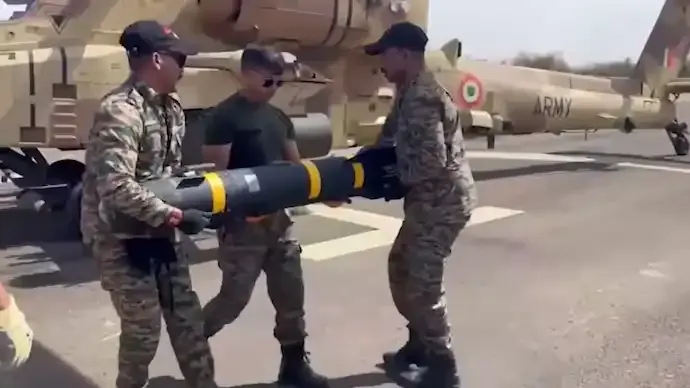
India inducted the Apache after a long evaluation process to replace ageing Mi-35 gunships. The helicopter is among the most advanced attack platforms in the world, equipped with sophisticated radars, night-fighting sensors, and an array of weapons including Hellfire missiles, Hydra rockets, a 30-mm chain gun, and air-to-air missiles. These capabilities make it highly effective in close air support and anti-armour roles.
However, such performance comes at a steep price. Each Apache, fully equipped with weapons and support systems, costs roughly $150 million. In contrast, India’s indigenous HAL Prachand costs about one-third of that amount. The high unit cost forced the Indian military to scale down its original plan of acquiring 39 Apaches to just 28. The Army, which had initially planned for 17 helicopters, ultimately inducted only six.

Cost is only one part of the equation. Modern battlefields are increasingly dominated by drones, portable air defence systems, and dense air-defence networks. The Apache was conceptualised during the Cold War for large-scale armoured warfare in Europe, a scenario very different from today’s contested airspace environments.
Operational lessons from recent conflicts have raised concerns about the survivability of attack helicopters near the frontline. During the Iraq War, Apache units suffered damage from small arms and rocket-propelled grenades in urban combat. More recently, data from the Russia-Ukraine war showed heavy losses of helicopter gunships, many shot down by man-portable air defence missiles and low-cost weapons.
While drone shoot-downs of helicopters remain relatively rare, they are no longer unthinkable. Even inexpensive FPV drones have demonstrated the ability to destroy high-value rotary-wing assets. As drones become faster, smarter, and more autonomous, the “air littoral” — the low-altitude zone where helicopters operate — is becoming increasingly hostile.
Senior Indian military planners acknowledge that such environments limit the Apache’s frontline utility. Rather than leading assaults close to enemy positions, Apaches may need to be used deeper behind the front or assigned specialised roles where airspace control can be ensured.
Global trends reinforce this reassessment. The United States itself has slowed Apache procurement and is shifting towards a mix of next-generation helicopters and unmanned systems. While over 2,700 Apaches have been built worldwide, even their original operator is rethinking how and where they should be deployed.
For India, the decision not to buy more Apaches reflects a broader doctrinal shift. Emphasis is moving towards cost-effective platforms, indigenous development, and unmanned systems better suited to modern, drone-saturated battlefields. The Apache remains a potent asset, but one whose role is now carefully constrained by cost, survivability, and evolving warfare realities.





Conversation
Be kind and stay on topic. Comments are moderated; abuse, spam and personal attacks are removed. Report a problem