As Mumbai goes to the polls, the revival of Marathi language politics once again features in political discourse. Yet, despite repeated attempts to mobilise voters around linguistic identity, the city’s evolving social and cultural realities suggest that such narratives no longer resonate with a majority of its electorate.
Mumbai has, over decades, grown into one of India’s most diverse and cosmopolitan urban centres. Built through successive waves of migration, the city has absorbed people, languages, and cultures from across the country. This diversity is not incidental but foundational to Mumbai’s economic and social character. From its earliest transformation into a unified landmass to its emergence as a global financial hub, the city has been shaped by communities far beyond any single linguistic group.
Against this backdrop, periodic calls to enforce Marathi linguistic identity appear increasingly disconnected from everyday life in Mumbai. The latest push comes amid civic elections, with the rhetoric of Marathi pride once again finding space in public debate. However, electoral data and ground sentiment suggest limited traction. Parties foregrounding linguistic politics have struggled to convert rhetoric into sustained political influence, particularly in a city where livelihoods, infrastructure, and governance dominate voter concerns.
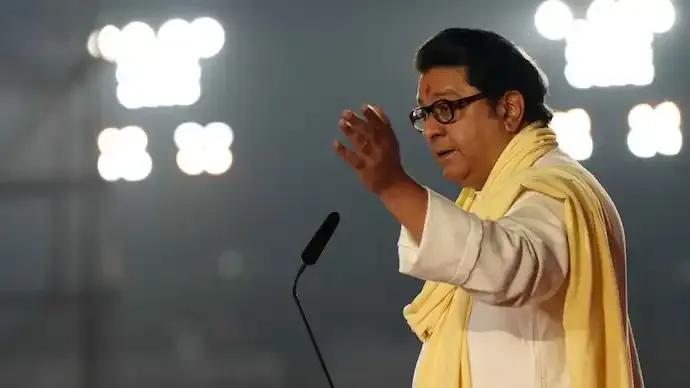
The renewed emphasis on Marathi Asmita has largely been driven by the Maharashtra Navnirman Sena, led by Raj Thackeray. While the party has repeatedly attempted to position itself as the custodian of Marathi interests, its electoral footprint in Mumbai and the state has remained marginal over the years. Despite high-decibel campaigns, its performance in legislative bodies and the Brihanmumbai Municipal Corporation has been limited.
Incidents linked to language-based confrontations — from public transport altercations to viral videos involving migrants — have periodically sparked debate. Yet these episodes often generate more backlash than support among residents who view Mumbai’s pluralism as its greatest strength. For many long-time Mumbaikars, the insistence on linguistic conformity feels outdated in a city where professional mobility and multicultural coexistence define daily life.
Historically, language politics in Mumbai is not new. Earlier decades saw similar assertions by regional parties, sometimes escalating into hostility against specific migrant communities. Over time, however, the city’s demographic and economic realities diluted the appeal of such movements. Mumbai’s workforce today includes people from Maharashtra, Gujarat, Uttar Pradesh, Bihar, Tamil Nadu, Kerala, and several other regions, all contributing to the city’s growth.
Interestingly, while migrants from economically weaker backgrounds often face the brunt of linguistic hostility, affluent business communities have largely remained insulated. This uneven application of identity politics has further weakened its moral and political legitimacy in the eyes of voters.
Scholars and urban historians have long argued that Mumbai resists singular identity labels. Its layered history — spanning indigenous communities, colonial powers, traders, and post-independence migrants — makes exclusivist claims difficult to sustain. The city’s success has always depended on its ability to integrate differences rather than police them.
Importantly, this reality does not undermine the significance of Marathi language and culture. Marathi literature, theatre, cinema, and festivals are integral to Mumbai’s cultural landscape and deserve encouragement. However, promoting culture is fundamentally different from weaponising language as an electoral tool.
As Mumbai votes, pressing civic issues are likely to outweigh symbolic identity debates. Housing shortages, overcrowded transport, flooding, infrastructure decay, and employment opportunities cut across linguistic lines. These are concerns that affect every resident, regardless of the language they speak.
For a city built by migrants and sustained by diversity, linguistic pride alone is unlikely to dictate electoral outcomes. Mumbai’s political choices today reflect its lived reality — one that values coexistence, opportunity, and governance over exclusionary identity politics.
Prev Article
ED Seeks Suspension of Bengal DGP Rajeev Kumar Ahead of Supreme Court I-PAC Hearing
Next Article
Two SAI Trainees Found Dead at Hostel in Kerala’s Kollam, Probe Underway