
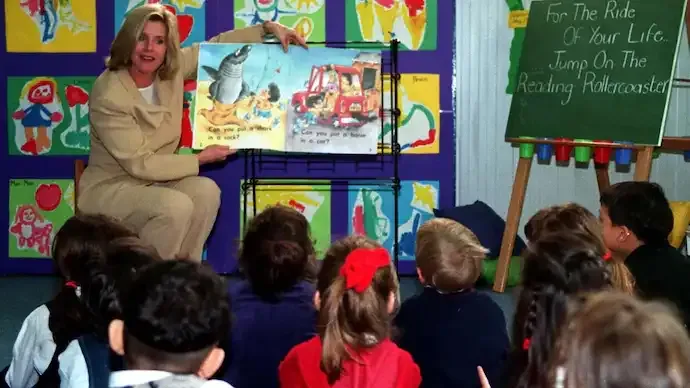
The H-1B visa programme, long associated with Silicon Valley and tech hiring, is increasingly being used by American school districts to recruit teachers — a shift driven by a deepening education workforce crisis across the United States.
The trend came into sharp focus after data from the California Department of Education revealed that school districts in the state filed more than 300 H-1B visa applications for teachers during the 2023–24 academic year. This marked a twofold increase compared to applications filed just two years earlier.
The growing reliance on foreign teachers coincides with a renewed push by the Donald Trump administration to sharply increase the cost of hiring H-1B workers. A proposed $100,000 fee on certain new H-1B visas has alarmed education officials, who warn it could choke one of the few remaining channels for filling vacant classrooms.
Teacher Shortage Driving Visa Dependence
The US is facing a nationwide teacher shortage affecting all 50 states and Washington, DC. According to education research bodies, tens of thousands of teaching positions remain unfilled, while hundreds of thousands of classrooms are staffed by teachers working outside their area of qualification.
California alone reported more than 10,000 vacant teaching posts and over 32,000 classrooms staffed by out-of-field educators in 2025. The shortfall is particularly acute in special education, mathematics, science and dual-language instruction — the very areas where H-1B teachers are most frequently hired.
School districts say domestic recruitment has failed to keep pace with retirements, resignations and rising student needs, forcing administrators to look overseas for qualified educators.
Why Teachers Are Leaving US Classrooms
Low and declining pay remains the single biggest factor behind the shortage. Studies show US teachers earn significantly less than professionals with comparable education levels, with real wages falling sharply since 2021 after adjusting for inflation.
Funding cuts have compounded the problem. Federal programmes supporting teacher training, development and compensation — including initiatives worth nearly $200 million annually — have been eliminated or reduced, further discouraging new entrants to the profession.
The Covid-19 pandemic accelerated burnout, attrition and early retirements, leaving many districts unable to rebuild staffing levels through domestic pipelines alone.
States Push Back Against Visa Fee Hike
The proposed $100,000 H-1B fee has triggered legal action. California, along with 19 other states, has filed a lawsuit against multiple US federal agencies, arguing that the policy would disproportionately harm public institutions such as schools, colleges and hospitals that already operate under tight budgets.
State attorneys general contend that while private corporations may absorb higher visa costs, public school systems — especially in rural and high-poverty areas — cannot. Education officials warn the fee could effectively eliminate H-1B hiring for teachers, worsening staffing gaps nationwide.
California Attorney General Rob Bonta has said the lawsuit aims to protect access to quality education and prevent further erosion of public services.
Impact on STEM and Special Education
The teacher shortage has had its most severe impact on STEM education. A majority of US high schools report difficulty filling physics and chemistry teaching positions, raising concerns about long-term workforce readiness and economic competitiveness.
Special education faces an even sharper crisis, with nearly all US school districts reporting hiring difficulties. Education experts warn that continued shortages will lead to larger class sizes, increased use of substitutes and declining student outcomes, particularly in disadvantaged communities.
Why H-1B Matters for Schools
As domestic recruitment falters, the H-1B programme has become a stopgap solution. Hundreds of school districts across the US collectively hired thousands of teachers through the visa route in recent years, particularly in specialised subjects where local supply is scarce.
Education leaders argue that sharply raising visa costs without addressing low pay and funding gaps risks cutting off a critical lifeline for understaffed schools. With teacher shortages already at crisis levels, they warn that further restrictions on H-1B hiring could deepen inequality and weaken the US education system.



Conversation
Be kind and stay on topic. Comments are moderated; abuse, spam and personal attacks are removed. Report a problem