

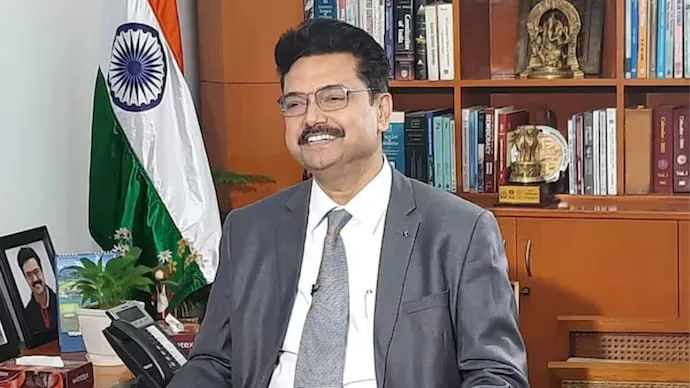

Yogesh Singh has begun his second term as Delhi University Vice-Chancellor, becoming the first incumbent to secure reappointment under the university’s amended statutes. His new five-year tenure started on October 8, 2026, and will continue until October 2031, ensuring continuity in the university’s academic and administrative leadership.
Singh first took charge as Delhi University’s 23rd Vice-Chancellor on October 8, 2021. His reappointment was approved by President Droupadi Murmu in her capacity as the university’s Visitor. The Union Ministry of Education communicated the approval in July 2026.
His second term comes as Delhi University continues to implement academic changes introduced during his first tenure, particularly those linked to the National Education Policy (NEP) 2020. These reforms have affected undergraduate admissions, degree structures, curriculum design and opportunities for multidisciplinary learning.

CUET and Four-Year Undergraduate Degrees Among Key Reforms
During Singh’s first term, Delhi University expanded its use of the Common University Entrance Test (CUET) for undergraduate admissions and introduced the Four-Year Undergraduate Programme (FYUP) in line with the NEP 2020 framework.
The university also introduced curriculum changes and established new academic centres, alongside restructuring initiatives across colleges and departments. These measures formed part of a broader effort to modify how students enter, pursue and complete their university education.
The Undergraduate Curriculum Framework 2022 introduced multiple entry and exit options, multidisciplinary learning and the Academic Bank of Credits. These provisions were intended to offer students greater flexibility in selecting subjects, managing their academic progress and planning degree pathways.
As Singh begins his second term, the implementation and continued development of these reforms are expected to remain important aspects of Delhi University’s academic direction.
Why Yogesh Singh’s Reappointment Is a First
The reappointment follows an amendment to Delhi University’s statutes in 2023. The revised provisions made a serving Vice-Chancellor eligible for another five-year term. Previously, an incumbent seeking a second term had to apply afresh alongside other candidates.
Singh is the first Vice-Chancellor to begin a second consecutive five-year tenure under the amended provision, marking a change in the university’s leadership appointment framework.
Before joining Delhi University, Singh served as Vice-Chancellor of Delhi Technological University from 2016 to 2021. He also headed Maharaja Sayajirao University of Baroda and served as director of Netaji Subhas Institute of Technology.
What Lies Ahead for Delhi University Until 2031?
Singh’s second term will extend the university’s current phase of academic and administrative transformation. CUET-based admissions, four-year undergraduate courses and the NEP framework have already reshaped several aspects of university education.
The coming years will involve continued implementation of these initiatives and managing changes across Delhi University’s colleges and departments. His reappointment provides leadership continuity as the institution navigates its evolving academic framework.
The next five years will be significant for assessing how these reforms develop and how effectively the university addresses the academic and administrative needs of its students and faculty.
Delhi University official website: https://www.du.ac.in/







Conversation
Be kind and stay on topic. Comments are moderated; abuse, spam and personal attacks are removed. Report a problem