



The Top 2% Scientists List 2026 includes 6,954 researchers affiliated with Indian institutions in its single-year category and 3,898 in its career-long category, according to figures reported by TOPSCINET. Although both numbers come from the Stanford-Elsevier global database, they measure different aspects of research impact. The distinction is important because the label “Top 2%” reflects citation-based indicators rather than a definitive assessment of scientific excellence.
Developed by Stanford researcher John P. A. Ioannidis and collaborators, the database is published through Elsevier's Data Repository. It uses standardised citation indicators to assess researchers across scientific disciplines, with separate datasets for recent and cumulative research impact.
Two Lists Measure Different Types of Research Impact
The single-year list measures citation impact during one calendar year. For the 2026 edition, the assessment uses citations received in 2025. It can highlight researchers whose recent work has attracted substantial attention, even if their cumulative career impact is comparatively lower.

The career-long list, meanwhile, measures citation impact accumulated over a researcher's professional career, with the 2026 data updated through the end of 2025.
A scientist may appear on either list or both. The single-year category reflects more recent citation activity, while the career-long category recognises accumulated influence across a longer period.
India's Numbers Have Increased Across Both Categories
TOPSCINET's reported figures show an increase in the number of India-affiliated researchers appearing in both lists over four editions.
| 2023 | 4,635 | 2,578 |
| 2024 | 5,351 | 2,939 |
| 2025 | 6,236 | 3,371 |
| 2026 | 6,954 | 3,898 |
The figures indicate growth in both categories, although they do not establish the reasons behind the increase. Changes in research output, citation activity, institutional affiliations and the underlying dataset may all warrant examination before drawing broader conclusions.
The figures refer to researchers associated with Indian institutions or affiliations in the database, not necessarily Indian citizens. Researchers from other countries working at Indian institutions may be included, while Indian scientists working abroad may be counted under another country's affiliation.
Which Indian Institutions Have the Most Researchers?
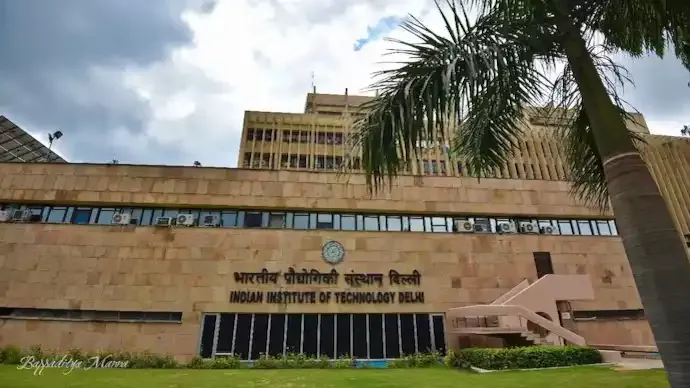
According to the reported career-long figures, the Indian Institute of Science (IISc), Bengaluru, leads with 140 researchers. IIT Delhi follows with 114, while IIT Kharagpur has 98. IIT Madras has 81, IIT Bombay has 73, IIT Roorkee has 62 and IIT Kanpur has 55. Banaras Hindu University, Jadavpur University and SIMATS also feature among the top 10 institutions in this category.
The single-year list presents a different institutional picture. SIMATS leads the reported ranking with 144 researchers, followed by IISc Bengaluru with 114 and IIT Delhi with 104. IIT Kharagpur has 85, while VIT has 78. IIT Roorkee, IIT Bombay, AIIMS New Delhi, IIT Madras and Banaras Hindu University complete the reported top 10.
These differences underline why institutional performance can vary depending on whether recent citation activity or cumulative career impact is being measured.
What Does “Top 2%” Actually Mean?
The database uses multiple indicators to assess citation impact. Total citations measure how frequently other research papers refer to a scientist's work. A highly cited study may have influenced its field, but citation frequency alone does not prove that its findings are correct or groundbreaking.
The h-index combines publication output with citation counts. For example, a researcher with an h-index of 20 has at least 20 papers that have each received at least 20 citations.
The co-authorship-adjusted hm-index attempts to account for the number of researchers contributing to a publication. This can help distinguish citation records involving large research teams from those produced by smaller collaborations.
The database also uses a composite citation score, known as the c-score, which combines several citation-based measures. Researchers are classified across 20 broad scientific fields and 174 subfields to account for differences in citation practices.
According to the described selection criteria, researchers may qualify by ranking among the top 100,000 scientists worldwide by composite score, calculated with and without self-citations, or by reaching the top two-percentile threshold within a subfield.
Can Citation Counts Be Inflated?
Citation manipulation is a recognised concern in academic research. Self-citation occurs when researchers cite their own earlier work. It can be legitimate, particularly when a new study builds on previous findings, but excessive or unnecessary self-citation may inflate citation counts.
Reciprocal citation arrangements between researchers and pressure from journals to include unnecessary references can also affect citation patterns.
The Stanford-Elsevier database provides metrics calculated both with and without self-citations, allowing users to examine how these citations affect a researcher's position. However, a high self-citation rate does not automatically prove misconduct. Citation indicators can identify patterns for further scrutiny, but they cannot independently establish manipulation.
Does Making the List Mean a Scientist Is Among the World's Best?
Not necessarily in every sense. The lists help identify researchers whose work has attracted substantial citation attention, but scientific quality involves more than citation numbers.
Research can receive citations because it introduces an important discovery, provides a useful method or becomes central to a debate. Some papers are cited by researchers attempting to challenge or correct their findings.
Citation metrics also cannot fully capture originality, reliability, practical value to society, teaching contributions or mentorship.
The Top 2% lists therefore offer a useful citation-based measure of research impact, rather than a final verdict on who the world's best scientists are. Understanding the methodology and its limitations is essential when interpreting the rankings.








Conversation
Be kind and stay on topic. Comments are moderated; abuse, spam and personal attacks are removed. Report a problem