Shopping cart
Your cart empty!


Your cart empty!
Terms of use dolor sit amet consectetur, adipisicing elit. Recusandae provident ullam aperiam quo ad non corrupti sit vel quam repellat ipsa quod sed, repellendus adipisci, ducimus ea modi odio assumenda.
Lorem ipsum dolor sit amet consectetur adipisicing elit. Sequi, cum esse possimus officiis amet ea voluptatibus libero! Dolorum assumenda esse, deserunt ipsum ad iusto! Praesentium error nobis tenetur at, quis nostrum facere excepturi architecto totam.
Lorem ipsum dolor sit amet consectetur adipisicing elit. Inventore, soluta alias eaque modi ipsum sint iusto fugiat vero velit rerum.
Sequi, cum esse possimus officiis amet ea voluptatibus libero! Dolorum assumenda esse, deserunt ipsum ad iusto! Praesentium error nobis tenetur at, quis nostrum facere excepturi architecto totam.
Lorem ipsum dolor sit amet consectetur adipisicing elit. Inventore, soluta alias eaque modi ipsum sint iusto fugiat vero velit rerum.
Dolor sit amet consectetur adipisicing elit. Sequi, cum esse possimus officiis amet ea voluptatibus libero! Dolorum assumenda esse, deserunt ipsum ad iusto! Praesentium error nobis tenetur at, quis nostrum facere excepturi architecto totam.
Lorem ipsum dolor sit amet consectetur adipisicing elit. Inventore, soluta alias eaque modi ipsum sint iusto fugiat vero velit rerum.
Sit amet consectetur adipisicing elit. Sequi, cum esse possimus officiis amet ea voluptatibus libero! Dolorum assumenda esse, deserunt ipsum ad iusto! Praesentium error nobis tenetur at, quis nostrum facere excepturi architecto totam.
Lorem ipsum dolor sit amet consectetur adipisicing elit. Inventore, soluta alias eaque modi ipsum sint iusto fugiat vero velit rerum.
Do you agree to our terms? Sign up
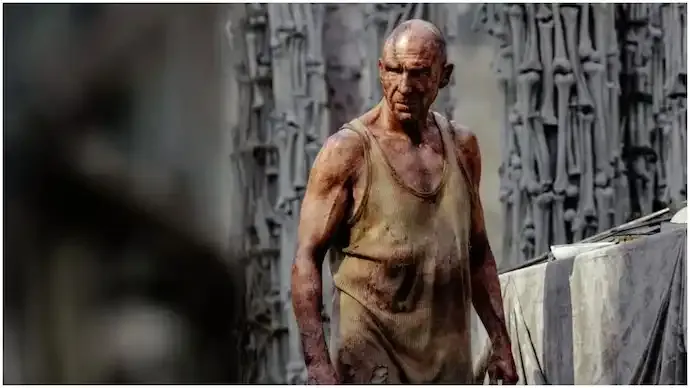
28 Years Later: The Bone Temple arrives as a rare achievement in franchise cinema — a sequel that not only justifies its existence but meaningfully expands the emotional and thematic scope of its universe. Released globally on January 16, the film marks a confident shift in tone and focus under the direction of Nia DaCosta, who injects fresh urgency into the long-running saga by reframing horror through human ambition, ideology, and moral decay.
Set years after the collapse depicted in earlier chapters, the film follows Spike, played with aching vulnerability by Alfie Williams. Raised in the fragile safety of Holy Island, Spike ventures onto the mainland in search of answers surrounding a mysterious figure known only as the architect of the Bone Temple — a monument constructed from the remains of the dead. What begins as a journey of curiosity slowly transforms into an unsettling confrontation with belief systems forged in catastrophe.
At the centre of the film stands Ralph Fiennes as Dr Ian Kelson, a character who quietly steals the narrative without raising his voice. Fiennes delivers a restrained yet deeply affecting performance, portraying a man who refuses to surrender meaning to extinction. Kelson’s self-treated iodine-stained skin and eccentric rituals signal a scientist shaped as much by grief as by intellect. His Bone Temple is not merely a structure but a philosophy — a refusal to let death erase memory.
In sharp contrast is Jack O'Connell as Sir Lord Jimmy Crystal, the film’s most volatile presence. Leading a feral cult that blends savagery with grotesque pop-culture worship, O’Connell channels menace with unnerving charm. His performance is unpredictable, laced with dark humour and cruelty, making his character far more frightening than any infected creature. Violence here is ideological, not instinctive.
Crucially, the film sidelines zombies as the primary threat. Instead, horror emerges from the choices humans make when order disappears. The infected exist on the periphery — ever present, yet secondary to the chaos created by belief, leadership, and fanaticism. This shift gives The Bone Temple its emotional weight and philosophical depth.
A standout subplot involves Samson, an alpha infected portrayed by Chi Lewis-Parry. Rather than reducing him to a monster, the film explores Dr Kelson’s attempt to understand Samson as something more than an enemy. These scenes are among the film’s most haunting, challenging the audience to confront where humanity truly ends.
Visually, DaCosta blends kinetic urgency reminiscent of the franchise’s origins with moments of quiet reflection. Desolate landscapes and ruined cityscapes are captured with stark beauty, while the Bone Temple itself emerges as one of the most striking symbols the series has produced — a chilling reminder of remembrance twisted into obsession.
The screenplay, penned by Alex Garland, refuses familiarity. It oscillates between brutality and tenderness, often within the same scene. One of the film’s most discussed moments — Dr Kelson’s unexpected dance to Iron Maiden’s The Number of the Beast — encapsulates this tonal audacity, balancing madness with sorrow in equal measure.
As a middle chapter in a planned trilogy, 28 Years Later: The Bone Temple resists the trap of narrative filler. Instead, it stands as a fully realised work, confident in its themes and unafraid of discomfort. It is a film less concerned with survival than with what survival costs.
Brutal, unsettling, and unexpectedly humane, the film proves that the franchise’s greatest evolution lies not in its monsters — but in its people.
Rating: 3.5/5
85
Published: Jan 16, 2026

All India Story is your trusted source for comprehensive and up-to-the-minute news coverage across India. Bringing you the latest on politics, business, technology, entertainment, sports, and more, we are dedicated to keeping you informed with accurate, engaging, and insightful stories from every corner of the nation.