

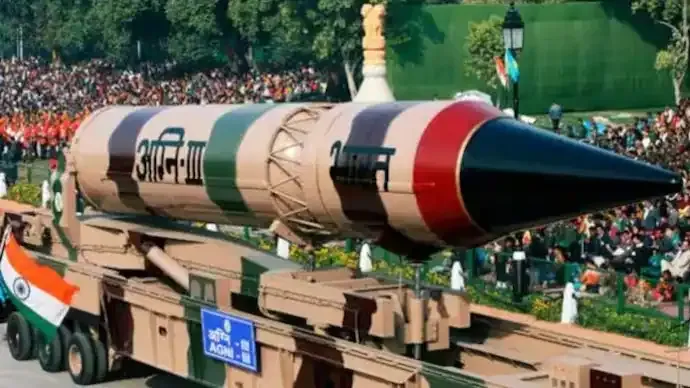

India successfully carried out the test firing of the Agni-3 intermediate-range ballistic missile on February 6, 2026, from the Integrated Test Range in Chandipur, Odisha. The launch marked another important step in strengthening the country’s strategic defence capabilities, as all operational and technical parameters of the missile were validated during the exercise.
The test was conducted under the supervision of the Strategic Forces Command, highlighting the missile system’s readiness for operational deployment. Officials confirmed that the launch achieved its intended objectives, reinforcing confidence in India’s indigenous missile development programmes and long-range deterrence capabilities.
Agni-3 is a crucial component of India’s strategic arsenal, designed to strike targets at distances of up to 3,000 kilometres. Its successful testing demonstrates improved precision, reliability, and the ability to maintain credible deterrence across a wide geographical range. The Agni missile family forms the backbone of India’s land-based nuclear delivery systems, with each variant covering different operational distances.

The Agni series includes multiple missiles tailored for varied defence needs. Agni-1 is capable of targeting locations within a range of about 700 kilometres, while Agni-2 extends coverage up to 2,000 kilometres. Agni-3 bridges the gap between medium and longer-range strike capabilities with its 3,000-kilometre reach. Beyond this, Agni-4 can hit targets at distances of around 4,000 kilometres, and Agni-5 represents the longest-range system in the series, capable of striking targets up to 5,000 kilometres away.
Defence sources have also highlighted the versatility of shorter-range systems within the Agni family. For instance, the Agni-1’s operational flexibility allows it to cover ranges previously addressed by earlier missile systems. This adaptability strengthens India’s layered defence structure by providing multiple options for strategic response.
Alongside the Agni missiles, the supersonic BrahMos cruise missile continues to play a significant role in India’s tactical strike capability. While BrahMos is designed for precision strikes within shorter ranges, the Agni series covers longer-distance targets, ensuring that India maintains a comprehensive strike spectrum ranging from tens of kilometres to several thousand kilometres.
The latest test demonstrates India’s ongoing commitment to enhancing defence preparedness through advanced technology and indigenous innovation. Regular trials of strategic systems help maintain operational efficiency and ensure that the country’s deterrence posture remains credible amid evolving regional security dynamics.
With successful validations like the Agni-3 launch, India continues to reinforce its position as a nation with robust missile capabilities, capable of safeguarding national security while maintaining strategic balance in the region.







Conversation
Be kind and stay on topic. Comments are moderated; abuse, spam and personal attacks are removed. Report a problem