



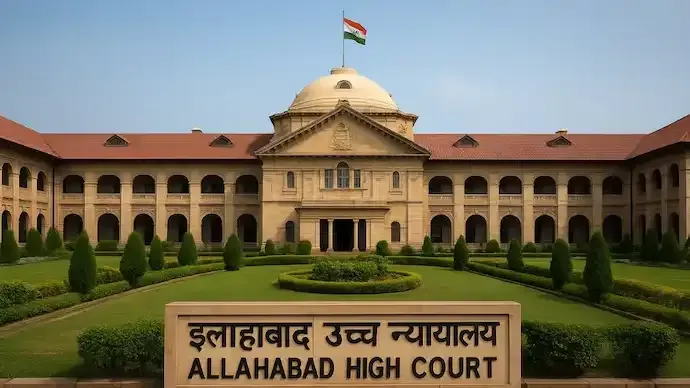
A judge of the Allahabad High Court reserved judgment in a case after a prolonged hearing, recording in his order that he was “feeling hungry, tired and physically incapacitated to dictate the judgment.”
The development occurred on February 24 at the Lucknow bench of the high court. Justice Subhash Vidyarthi made the remark while hearing a petition filed by Chandralekha Singh.
According to court records, a total of 235 matters were listed before the bench that day, including 92 fresh cases. By around 4:15 pm, the court had been able to hear only 29 fresh matters due to the heavy workload.

Supreme Court Timeline Pressure
The case in question had earlier been remanded by the Supreme Court of India, which directed the high court to decide the petition afresh and preferably within six months. That six-month deadline was set to expire on the same day the matter was heard.
The petition was originally filed in 2025 challenging an order passed by the Debt Recovery Tribunal (DRT). The high court had earlier set aside the DRT’s order and directed it to reconsider the matter after providing an opportunity of hearing to the petitioner. However, this decision was later overturned by the Supreme Court on the grounds that one of the respondents had not been heard.
In compliance with the apex court’s direction, Justice Vidyarthi began hearing the matter at 4:15 pm and continued proceedings until approximately 7:10 pm. Senior advocates representing both sides presented detailed arguments during the extended session.
Judge Cites Physical Exhaustion
After concluding arguments, Justice Vidyarthi noted the extensive cause list handled during the day. In his order, he observed that along with 92 fresh matters, there were 101 regular cases, 39 miscellaneous applications, and additional matters listed in supplementary lists.
Given the volume of cases and the extended hearing hours, the judge recorded that he was physically exhausted and unable to dictate the verdict immediately from the bench. He therefore reserved the judgment for a later date.
The incident has drawn attention to the workload faced by judges in higher courts, particularly in benches handling large daily cause lists. Legal observers note that courts across the country often manage significant case backlogs, leading to extended working hours for judicial officers.
The judgment in the matter will now be pronounced on a later date.





Conversation
Be kind and stay on topic. Comments are moderated; abuse, spam and personal attacks are removed. Report a problem