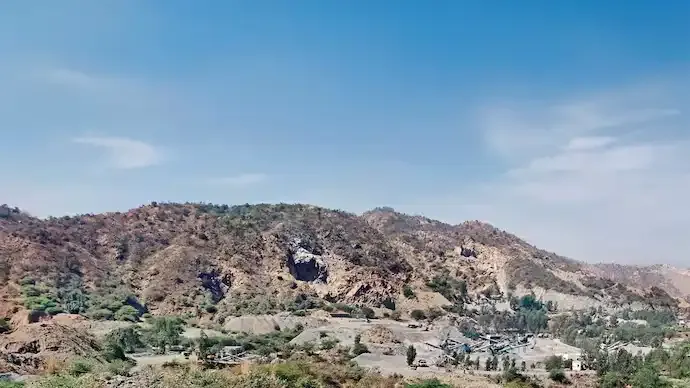
The debate over the future of the Aravalli Hills, one of the world’s oldest mountain ranges, has intensified after the Supreme Court of India accepted a revised definition proposed by the Centre. Amid mounting criticism from environmental activists and a social media storm alleging that large parts of the Aravallis could be opened up to mining, Union Environment Minister Bhupender Yadav has been under pressure to clarify the government’s position.
The controversy centres on a new classification under which only landforms rising 100 metres or more above local relief would qualify as Aravalli hills. Additionally, two or more such hills located within 500 metres of each other — along with the land between them — would collectively be recognised as part of the Aravalli range. The hills span Rajasthan, Gujarat, Haryana and Delhi.
Given the Aravallis’ role in preventing desertification, recharging groundwater and acting as Delhi’s “green lungs”, the revised definition has triggered concerns over conservation, mining and real estate development. Over the past two days, the government has attempted to respond to these concerns — with mixed clarity.
The Aravalli Debate: Claims vs Government Responses
1. Will 90% of the Aravallis be excluded and opened to mining?
Allegation: Activists claim the new definition excludes nearly 90% of the Aravalli hills, paving the way for mining and construction.
Government’s response: Bhupender Yadav offered differing figures. In one statement, he said only 0.19% of the total Aravalli area would be eligible for mining. A day later, he told the media that about 217 sq km, or nearly 2%, could be mined.
Assessment: Inconsistent. The two figures do not align. A Forest Survey of India report from 2010 noted that only about 8% of the 12,000 hills in the range rise above 100 metres, raising questions about the government’s estimates.
2. Are lower but ecologically important hills being left unprotected?
Allegation: Critics argue that scrub-covered, low-height hills crucial for groundwater recharge and biodiversity may lose protection.
Government’s response: The Centre has said nearly 90% of the Aravalli area remains protected, with no new mining leases allowed in notified hill or range areas. Existing mining can continue only under sustainable mining norms.
Assessment: Partially addressed. While current protections remain, the final impact will depend on the proposed Management Plan for Sustainable Mining (MPSM), which is still being drafted.
3. What exactly does the 100-metre definition mean?
Allegation: Activists say the definition is vague and may expose surrounding ridges and ecologically linked landforms.
Government’s response: The minister clarified that the measurement is based on local relief, meaning the elevation difference between the hill and its base. According to the Centre, the entire landform — including slopes and base — would be protected, not just the peak.
Assessment: Half-clear. While the definition extends beyond just the summit, the government has not clarified whether adjacent ridges and connecting landforms will also receive protection.
4. How will illegal mining be tackled?
Allegation: Environmental groups warn that illegal mining — already rampant in parts of the Aravallis — could worsen.
Government’s response: The Centre acknowledged illegal mining as the biggest threat and promised stronger monitoring, including the use of drones.
Assessment: Unanswered. The government has not explained how long-standing enforcement gaps will be addressed, leaving doubts over implementation.
A Debate Far From Settled
As allegations, clarifications and counter-clarifications continue, the Aravalli Hills controversy underscores the tension between development and conservation. While the Centre insists ecological protection remains intact, activists argue that ambiguity in definitions and enforcement could irreversibly damage a fragile and vital ecosystem.
Prev Article
Red Fox Spotted Near Pangong Tso: IFS Officer Warns Against ‘Sympathy Conservation’
Next Article
₹7-Crore Thars, ₹5-Crore Modifications: Odisha Forest Department Faces Audit