
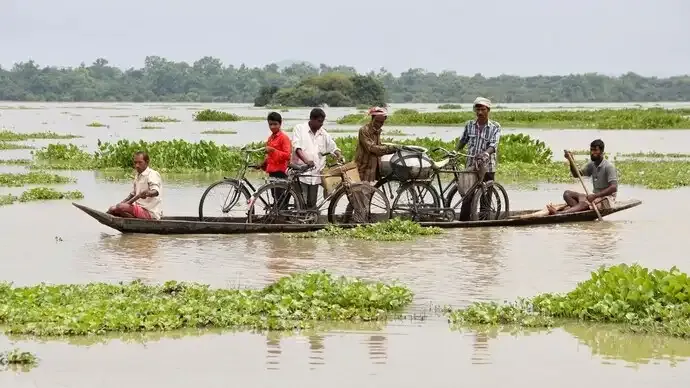
Every year during the monsoon, large parts of Assam face devastating floods that destroy homes, damage crops and contaminate drinking water sources. Millions of people struggle with unsafe water after floodwaters mix with sewage, chemicals and other pollutants.
Scientists believe a solution may come from an unexpected place — India’s nuclear research programme. Researchers from the Bhabha Atomic Research Centre (BARC) have developed advanced membrane-based water purification systems that could help provide safe drinking water in flood-affected regions.
These technologies are originally derived from research conducted for nuclear applications but are now being adapted for civilian use, including water purification.
Floods Continue to Disrupt Life in Assam
Flooding has long been one of the biggest environmental challenges in Assam. Heavy rainfall and overflowing rivers during the monsoon season regularly submerge villages and farmland.
The floods not only cause infrastructure damage but also severely affect drinking water supplies. Wells, ponds and other water sources often become contaminated, increasing the risk of water-borne diseases.
Providing clean water quickly during such emergencies has remained a major challenge for authorities.
How Nuclear Research Is Helping
Scientists at BARC have developed specialised membrane filtration technology that can remove contaminants from water.
The purification systems are capable of filtering harmful substances including bacteria, suspended particles and other pollutants commonly found in flood-affected water.
The technology was originally created as part of research related to nuclear reactors, where extremely pure water is required for safe operations.
Over time, scientists realised that similar purification methods could be applied to civilian needs such as drinking water treatment.
Portable Systems for Disaster Zones
One of the key advantages of the technology is that it can be deployed in portable purification units. These systems can be installed quickly in flood-hit areas to produce safe drinking water from contaminated sources.
This capability makes the technology particularly useful for regions like Assam where floods repeatedly disrupt water supplies.
Experts say such systems could significantly reduce the risk of disease outbreaks following floods.
Part of India’s Wider Water Innovation Efforts
India has been investing in scientific solutions to address water scarcity and contamination challenges across the country.
Advanced purification systems developed through nuclear research are now being explored for use in multiple regions facing water stress.
Such technologies could help communities access safe drinking water during natural disasters while also supporting long-term water management efforts.
Technology with Broader Impact
Although the immediate focus is on flood-affected areas in Assam, experts say the technology has broader potential.
Membrane-based purification systems can also be used in rural water supply programmes, emergency relief operations and regions facing severe water contamination.
By adapting innovations from nuclear science for everyday use, researchers hope to provide sustainable solutions to some of the country’s most pressing environmental challenges.


