Several international banks operating in Gulf countries have temporarily shut branches and evacuated staff after Iran warned civilians to stay at least one kilometre away from banks and financial centres in the region amid escalating tensions in West Asia.
The warning was issued by Khatam al-Anbiya Central Headquarters, Iran’s joint military command. Authorities said financial institutions linked to the United States and Israel could become potential targets as the regional conflict intensifies.
The statement triggered immediate precautionary measures across major financial hubs in the Gulf region, prompting several global banks to reduce operations or temporarily close branches.
International Banks Take Precautionary Measures
Following the warning, major international financial institutions began taking steps to ensure staff safety. Global banking giant Citigroup reportedly evacuated some employees from offices in Dubai and advised staff to work remotely until the security situation becomes clearer.
Similarly, Standard Chartered asked certain employees in Dubai to shift to remote work as a precautionary measure. Meanwhile, HSBC temporarily closed some of its branches in Qatar.
Other financial institutions and companies across the region have also advised staff to avoid unnecessary travel and work from home while authorities assess the security risks.
Strike on Iranian Bank Building Triggered Warning
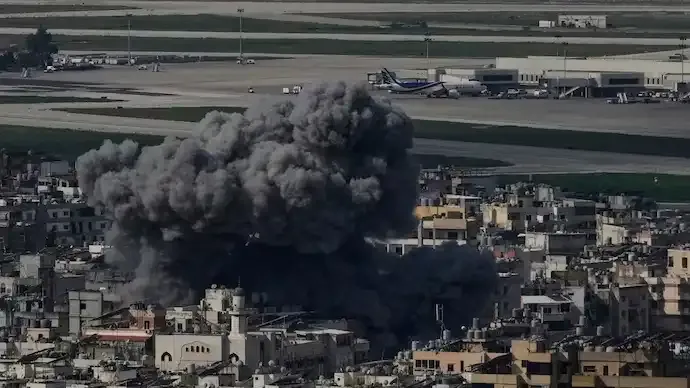
Iran’s warning followed reports that an administrative building connected to Bank Sepah, one of the country’s largest state-owned banks, was struck overnight in Tehran.
Iranian officials accused the United States and Israel of being responsible for the strike and indicated that Tehran may consider retaliatory measures targeting financial or economic infrastructure linked to its adversaries.
Bank Sepah has long been under international scrutiny and sanctions due to allegations that it has connections with Iran’s military programs, including nuclear and missile development.
Concerns for Major Gulf Financial Hubs
The warning has raised concerns across major financial centres in the Gulf region, where banks are often located in densely populated commercial districts.
Cities such as Dubai, Doha, and Manama host hundreds of international banks, multinational corporations and financial institutions.
Because these banks are typically located near shopping centres, office towers, residential buildings and hotels, the instruction for civilians to remain at least one kilometre away from banks could affect large areas within these urban business districts.
Growing Economic Impact of the Conflict
Analysts say the latest developments suggest that the conflict in West Asia could begin affecting economic and financial infrastructure beyond traditional military targets.
If financial institutions become part of the geopolitical confrontation, it could disrupt business activity, banking operations and investor confidence across the region.
Global markets are already closely monitoring the situation, as instability in the Middle East can influence oil markets, financial systems and international trade.
For now, banks and companies operating in Gulf countries are taking precautionary steps to ensure employee safety while authorities continue to monitor developments in the region.
Prev Article
Brent Crude Crosses $100: Rising Tensions and Tanker Attacks Push Oil Prices Higher
Next Article
India Revives Kerosene and Coal for Cooking Amid LPG Supply Disruptions