



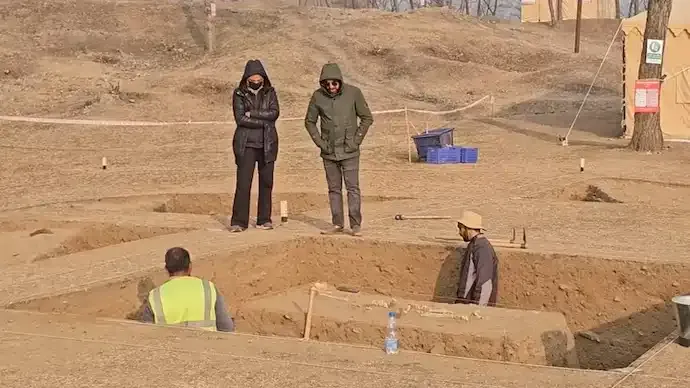
Zehanpora, a quiet village along the banks of the Jhelum River, has emerged as a major archaeological breakthrough after excavations revealed ancient Buddhist stupas and urban-style settlements dating back nearly 2,000 years. The discovery has firmly placed Kashmir within the historic Gandhara Buddhist network.
For decades, several unassuming mounds scattered across Zehanpora had intrigued locals and visiting researchers. Preliminary surveys conducted over the years suggested historical significance, but it was only after systematic drone surveys, aerial mapping, and scientific excavation that the true scale of the site became clear.


A decisive breakthrough came when century-old, blurred photographs preserved in a French museum archive were traced and analysed. The images showed three distinct Buddhist stupas in the Baramulla region, providing visual confirmation that transformed long-held assumptions into verifiable archaeological evidence.
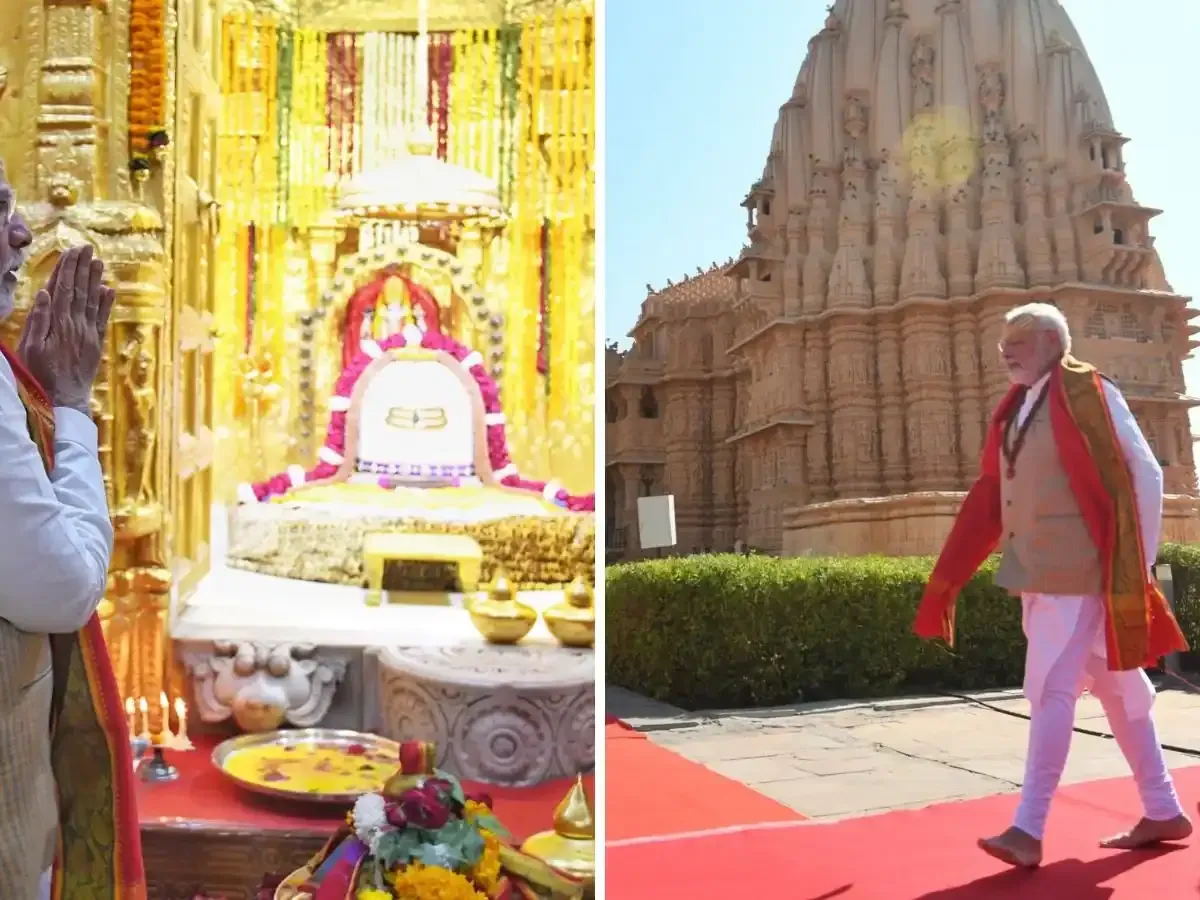
The significance of the find was highlighted by Prime Minister Narendra Modi, who referred to the discovery in a recent public address, noting that it opened an important chapter of Kashmir’s forgotten Buddhist past. According to archaeologists, the site has yielded stupas, remains of possible chaityas and viharas, Kushan-era pottery, copper artefacts, and structural walls, with further discoveries expected as excavations continue.

The findings indicate that Kashmir was not a peripheral region but a central hub of Buddhist learning and monastic activity between the Mauryan and Kushan periods. Buddhism is believed to have reached the Valley during the reign of Emperor Ashoka and flourished under the Kushans between the 1st and 3rd centuries CE, when trade and pilgrimage routes connected South Asia with Central Asia.

Experts say the location of Zehanpora along an ancient Silk Route corridor strengthens evidence that Baramulla functioned as a crucial gateway linking Kashmir to Gandhara and beyond. The scale and layout of the structures point to sustained patronage over centuries and reflect the region’s integration into wider intellectual and cultural networks.
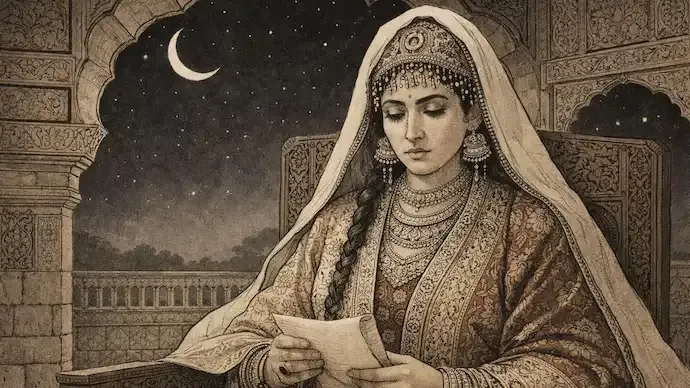
Historical accounts further support the discovery. Ancient travel records of Chinese pilgrim Xuanzang mention entry into Kashmir via Silk Route passages, aligning closely with the geographical and archaeological evidence now uncovered.
Archaeologists involved in the project say all recovered artefacts so far belong to the Kushan period, and more stupas are likely buried beneath surrounding mounds. The excavation has been described as a landmark moment for understanding Kashmir’s layered civilisational history and its role in the spread of Buddhism across Asia.




Conversation
Be kind and stay on topic. Comments are moderated; abuse, spam and personal attacks are removed. Report a problem