

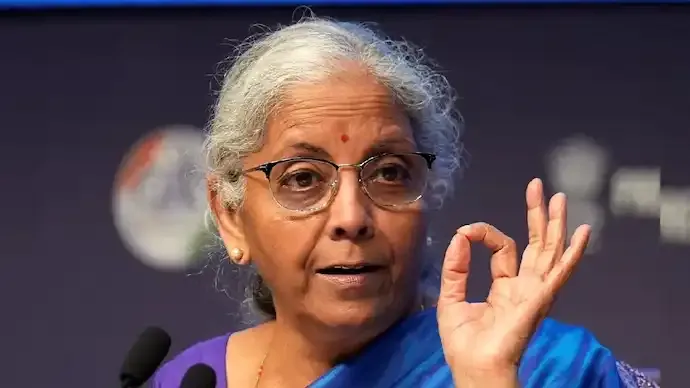

The Union Budget presented in 2025 delivered meaningful income tax relief to salaried individuals and middle-class families, easing pressure on household finances. Changes to tax slabs, an increased exemption threshold and a continued policy push towards the new tax regime helped reduce tax outgo for a wide section of taxpayers. It was the eighth Budget presented by Nirmala Sitharaman, and it set the tone for a gradual transition to a simpler taxation framework.
As expectations now shift towards Union Budget 2026, tax experts are advising caution. While hopes of additional tax relief remain, most analysts believe that large-scale income tax cuts are unlikely this year. The primary reason is that significant concessions were already announced in the previous Budget, leaving limited fiscal space for further reductions.
Tax professionals point out that the government’s approach in recent years has been focused less on aggressive tax cuts and more on simplifying compliance and improving transparency. This direction is expected to continue in Budget 2026, with reforms aimed at strengthening the structure of the new tax regime rather than offering headline-grabbing relief.

One possible move under consideration is the inclusion of select deductions within the new tax regime. Currently, many popular deductions are available only under the old regime, which discourages some taxpayers from switching. Allowing limited deductions in the new system could make it more attractive and accelerate its adoption across income groups.
Experts also believe the old tax regime may eventually be phased out. With an increasing number of taxpayers already opting for the new regime and policy signals clearly favouring it, the government may gradually reduce reliance on the dual-system approach.
While sweeping tax cuts may not be on the table, Budget 2026 could still bring meaningful changes through targeted reforms. One of the most discussed expectations is a revision in the effective exemption limit to ensure fairer taxation across income brackets. Analysts argue that some changes introduced in Budget 2025, including the removal of traditional graduated slabs and the introduction of a fixed income benchmark, created distortions.
The concern is that families across different income levels ended up receiving similar levels of relief, which weakened the principle of proportional taxation. To address this, experts have suggested introducing a new tax slab — for instance, a 25% rate for incomes between Rs 30 lakh and Rs 50 lakh — while retaining the 30% rate for the highest earners. Such a structure could provide balanced relief to middle-to-upper-income taxpayers without diluting revenue from top brackets.
Beyond tax slabs, expectations also include higher deduction limits, particularly on interest income from savings instruments like fixed deposits. There is also growing demand for simplification of the TDS and TCS framework to reduce compliance burden while maintaining accountability.
Another key recommendation is regular revision of tax slabs and deduction thresholds to account for inflation. Without such updates, taxpayers risk moving into higher tax brackets due to nominal income growth, even when real purchasing power remains unchanged.
If Budget 2026 prioritises equity, simplicity and inflation-adjusted thresholds, experts believe it could still offer meaningful relief — not through dramatic cuts, but through a fairer and more predictable tax system that supports savings, investment and long-term financial planning.





Conversation
Be kind and stay on topic. Comments are moderated; abuse, spam and personal attacks are removed. Report a problem