

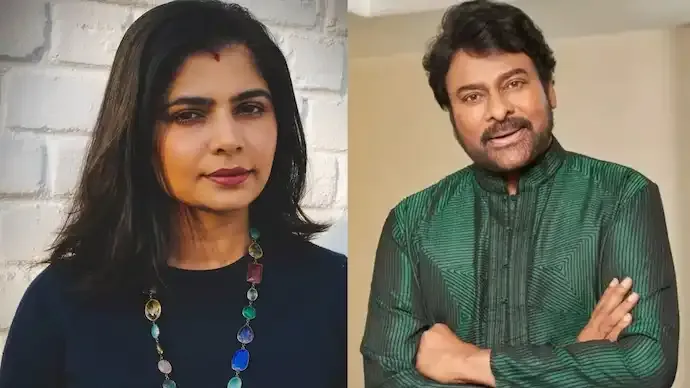

Singer Chinmayi Sripaada has strongly countered veteran actor Chiranjeevi after his recent remarks dismissing the existence of casting couch practices in the Telugu film industry triggered widespread criticism. Chinmayi’s response, shared through a series of detailed posts on social media, reignited conversations around power imbalance, exploitation, and systemic harassment faced by women in the entertainment industry.
The controversy began after Chiranjeevi stated at a public event in Hyderabad that there was “no casting couch culture as such” in the film industry and that outcomes largely depended on individuals. He further remarked that the industry functions as a “mirror” reflecting one’s character. The comments were perceived by many as shifting responsibility onto victims rather than addressing structural issues.
Responding to the remarks, Chinmayi asserted that casting couch practices remain widespread and deeply entrenched. She argued that the problem cannot be reduced to individual morality, as suggested by Chiranjeevi, but is rooted in power dynamics where decision-makers often exploit their positions. According to her, many women are denied professional opportunities unless they agree to what is euphemistically referred to as “full commitment,” a term she explained is often used to imply sexual compliance rather than professional dedication.

Chinmayi also challenged the notion that the industry simply reflects the character of those who enter it. She pointed out that many women today come from educated backgrounds, including those who have lived or studied abroad, and enter the industry with professional intent and awareness. Despite this, they continue to face harassment, coercion, and threats to their careers if they refuse inappropriate demands. She stressed that education, upbringing, or parental presence does not shield women from abuse when perpetrators believe they are entitled to control careers.
Drawing from her own lived experience, Chinmayi reiterated allegations she has previously made regarding sexual misconduct by influential figures. She emphasised that abuse occurs not because women invite it, but because certain men misuse authority and seniority. She highlighted that perpetrators often operate with impunity, protected by industry silence, public adulation, and lack of accountability.
The singer further cited multiple instances shared with her by other women in the industry, including cases involving attempted sexual assault in professional spaces such as recording studios. In some instances, she noted, women were forced to abandon their careers entirely after traumatic experiences. Chinmayi also criticised the continued public acceptance and celebration of repeat offenders, stating that audience apathy enables cycles of abuse to persist.
Addressing generational differences, Chinmayi acknowledged that actors from earlier eras, including Chiranjeevi, worked in environments shaped by different professional dynamics. However, she stressed that this does not negate the realities of today’s industry, where informal hiring, lack of grievance redressal mechanisms, and hero-centric power structures create vulnerabilities for newcomers.
She also reflected on the backlash faced by women who spoke out during the MeToo movement, noting that several survivors were shamed, disbelieved, or accused of dishonouring families rather than being supported. According to Chinmayi, such responses reveal how deeply misogyny and victim-blaming are embedded in cultural attitudes.
Chiranjeevi’s comments have since drawn sharp reactions online, with many voices echoing Chinmayi’s stance that denying systemic issues only deepens harm. The episode has once again underscored the gap between industry narratives and the lived realities of women working within it, renewing calls for accountability, safer work environments, and meaningful reform in Indian cinema.






Conversation
Be kind and stay on topic. Comments are moderated; abuse, spam and personal attacks are removed. Report a problem