

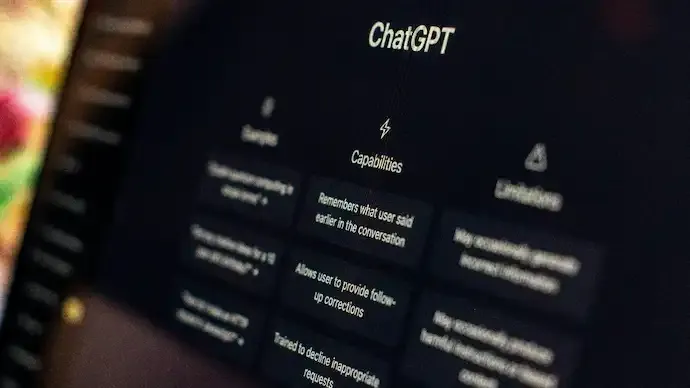

OpenAI has released a comprehensive guide featuring 56 highly effective ChatGPT prompts, directly sourced from students at India's top educational institutions, including the Indian Institutes of Technology (IITs), Manipal Academy of Higher Education (MAHE), and Delhi Technical Campus. The compilation, titled "Chats for Students in India," illustrates how cutting-edge generative Artificial Intelligence is being integrated into the daily routines of elite learners, serving as an advanced study partner, personal coach, and campus life organizer.
The publication of this resource underscores a significant trend: education has emerged as one of the primary use cases for ChatGPT in the Indian market. The strong engagement from young users, many under the age of 24, has not only driven the adoption curve but has also informed the development of features like ChatGPT’s Study Mode, which was rolled out specifically to cater to the learning dynamics observed in India. The prompts are not theoretical but reflect genuine, day-to-day requirements of learners seeking to maximize their efficiency and academic performance.
Strategic Prompts for Academic Mastery

The majority of the listed prompts focus on strategic preparation and deep learning. Students are utilizing the AI to move beyond simple fact-retrieval, instead engaging the model in complex, interactive learning methods. Examples of high-utility academic prompts include:
Exam Preparation: Providing the AI with an exam format (e.g., five Multiple Choice Questions, two scenario-based questions) and asking it to teach all relevant material interactively to secure a full score.
Structured Planning: Generating detailed, day-by-day study plans that balance revision, practice tests, and necessary breaks for major examinations.
Concept Simplification and Role-Play: Requesting explanations of complex topics like the Dining Philosopher Problem or Semiotics from a beginner’s perspective or through engaging analogies. Students also use role-playing—such as having the AI act as a professor grading an assignment or a historical figure like Archimedes—to deepen understanding and practice technical discussions.
Notes Synthesis: Uploading lecture notes to generate compact study guides, highlight keywords, or create visual learning aids like mind-maps.
Assessment Tools: Creating practice quizzes that evaluate responses and provide targeted feedback, or generating likely exam questions based on uploaded notes, complete with justification for the selection.
Campus Life and Career Hacks
Beyond core academics, the prompts reveal students are using the AI to navigate the practicalities of campus life and initial career development. These applications save valuable time, allowing students to prioritize their studies:
Project and Skill Development: Drafting detailed roadmaps for mobile applications, brainstorming innovative ideas like the "CareDot" medical tracking concept, or receiving a blunt, professional critique on design work.
Logistics and Lifestyle: Finding cheap commuting options for exam centres, getting hyper-specific local food recommendations by cross-referencing community forums, or generating personalized workout plans for home use.
Communication: Drafting professional emails for various audiences—from a formal message to a Head of Department to a friendly note for project teammates—in different tones.
Personal Growth: Seeking suggestions for small, impactful habits to foster career growth or outlining a multi-month plan to learn a new skill, such as stand-up comedy or becoming a chess Grandmaster.
The successful application of these prompts relies on a disciplined approach. The advice accompanying the list emphasizes treating the prompts as templates, uploading custom materials like notes and syllabi, and using the AI not as a shortcut, but as a proactive coach. Students are cautioned to use the AI to test and reinforce their own knowledge, cross-check all facts, and adhere strictly to institutional rules regarding the use of proprietary assignment information. This collection serves as a powerful testament to the evolving role of AI as an essential, customisable tool for the next generation of academic achievers.






Conversation
Be kind and stay on topic. Comments are moderated; abuse, spam and personal attacks are removed. Report a problem