
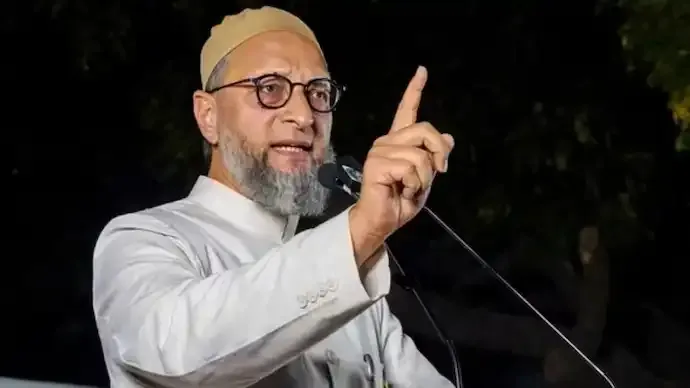
A fresh political controversy has erupted over a demolition drive in Delhi after Asaduddin Owaisi, president of the All India Majlis-e-Ittehadul Muslimeen (AIMIM), alleged that a portion of a mosque standing on Waqf land was demolished during an anti-encroachment operation near Turkman Gate.
The demolition took place in the early hours of Wednesday near the Faiz-e-Elahi Mosque area close to Ramlila Maidan. The operation triggered unrest after claims surfaced on social media that the mosque itself was being targeted. The situation escalated rapidly, with stone-pelting incidents reported and at least five police personnel sustaining injuries. Security forces eventually used tear gas to bring the situation under control.
Addressing a public rally in Chhatrapati Sambhajinagar ahead of the Maharashtra civic body elections scheduled for January 15, Owaisi claimed that the land on which the demolished structure stood was officially notified as Waqf property in a government gazette issued in 1970. He alleged that the demolition was carried out around 1.30 am and warned that similar actions could follow elsewhere.
Blame on Amended Waqf Law
The AIMIM chief directly linked the incident to the recently amended Waqf legislation, describing it as a “black law” that, according to him, enables the takeover of Muslim religious properties. Owaisi claimed the demolition was not an isolated administrative action but part of a larger pattern that would intensify following changes to the Waqf Act.
He further alleged that despite documentary evidence of Waqf ownership, legal remedies were not effectively pursued. Owaisi criticised the Delhi Waqf Board for failing to file a review petition against the court order that allowed the demolition to proceed. He stated that the matter would now be taken to the Supreme Court.
Political Messaging Ahead of Civic Polls
Using the incident as a rallying point, Owaisi urged voters to respond politically in the upcoming municipal elections. He appealed to citizens to vote against the ruling establishment in Maharashtra, specifically naming Chief Minister Devendra Fadnavis, Deputy Chief Ministers Eknath Shinde and Ajit Pawar, accusing them of supporting legislation that he claims threatens minority religious institutions.
Owaisi also held Narendra Modi and Andhra Pradesh Chief Minister Chandrababu Naidu responsible for backing the amended law, alleging it undermines constitutional protections.
Constitutional Argument and Broader Debate
Touching upon constitutional values, Owaisi said the Preamble of the Constitution begins with “We, the people,” emphasising citizen sovereignty. He criticised what he described as selective nationalism and alleged that discussions in Parliament often ignore core constitutional freedoms, including freedom of religion and belief.
He reiterated that the Constitution guarantees Muslims the right to worship freely and claimed that voices raising such concerns are increasingly marginalised.
Growing Tensions Over Urban Demolitions
The Delhi incident has once again brought urban demolition drives under sharp political and legal scrutiny. While authorities maintain that the action was taken following court orders and targeted illegal encroachments, opposition leaders argue that minority religious properties are disproportionately affected.
As civic elections approach in several states, the demolition controversy is expected to feature prominently in political campaigns, further polarising debate around governance, law enforcement, and minority rights.



Conversation
Be kind and stay on topic. Comments are moderated; abuse, spam and personal attacks are removed. Report a problem