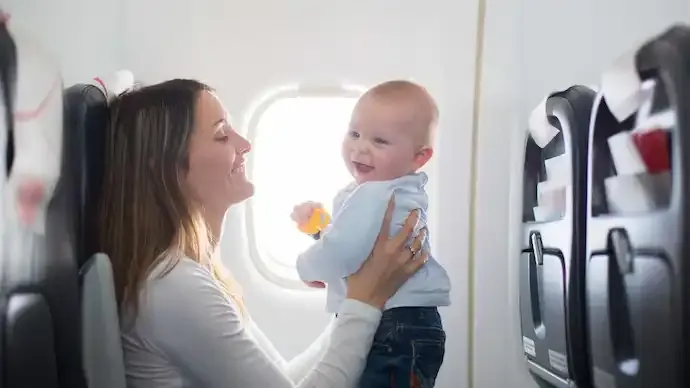
Flying with a baby is one of those experiences that parents approach with equal parts anxiety and anticipation. It is not the turbulence, the delays, or even the logistics that weigh the heaviest — it is the unspoken fear of judgment. The side-eyes when a baby whimpers, the forced smiles when crying stretches longer than expected, and the internal panic that accompanies every tiny sound.
For first-time parents especially, air travel with an infant can feel like stepping into a spotlight. Questions spiral endlessly: What if my baby cries through the flight? What if other passengers get annoyed? What if I can’t calm them down? The reality, however, is simple — no one on that plane is more distressed by a crying baby than the parent holding them.
What often goes unacknowledged is that while some people choose a child-free lifestyle, public spaces cannot and should not be child-free. Babies cry, toddlers explore, and parents learn as they go. Discomfort is not a failure; it is part of the process.
Alongside the judgment, there is also kindness — the stranger who smiles reassuringly, the fellow parent who quietly says, “It gets better,” or the older passenger who plays peekaboo for a few precious minutes. These moments soften the experience and remind parents that empathy still exists, even at 35,000 feet.
Having travelled with my daughter since she was just two months old, I’ve learnt that every stage comes with its own challenges. An infant sleeps through most of the flight; a one-year-old wants to explore everything; a toddler refuses to sit still. Each flight teaches you something new — mostly about patience, preparation, and letting go of perfection.
The first flight is always the hardest because it is filled with unknowns. Ear pressure, feeding schedules, confined spaces, and overstimulation can overwhelm both parent and child. Staying calm is the first and most important step. The second is preparation.
A well-stocked diaper bag can make all the difference. Diapers, wipes, extra clothes, food, toys, and essentials should always be within arm’s reach. Strollers and baby carriers, often allowed free of charge, are invaluable at airports where navigating security, luggage, and boarding gates can otherwise become exhausting.
Timing matters. Feeding during take-off and landing helps ease ear pressure. Dressing babies in layers accounts for unpredictable cabin temperatures. Keeping simple, familiar snacks on hand helps toddlers stay settled when routines inevitably break.
Perhaps the most difficult lesson is learning to release control. Babies will pull safety cards out of seat pockets. Toddlers will wave at strangers. Schedules will fall apart. Trying to enforce perfection often leads to stress — and stress is what truly ruins the travel experience.
Parents tend to expect too much — perfectly timed naps, polite behaviour, and quiet compliance. But children are navigating new environments with limited language and overwhelming stimuli. Lowering expectations does not mean lowering standards; it means extending grace.
Over time, travel with children becomes less frightening, not because it gets easier, but because parents grow more confident. One day, these journeys will be remembered not for the crying or chaos, but for the memories created along the way.
Flying with a baby will never be entirely stress-free. But with preparation, patience, and perspective, it becomes something else entirely — a lesson in resilience, empathy, and love.
Next Article
Healthiest Way to Eat Sweet Potato: Boiled vs Roasted Explained