

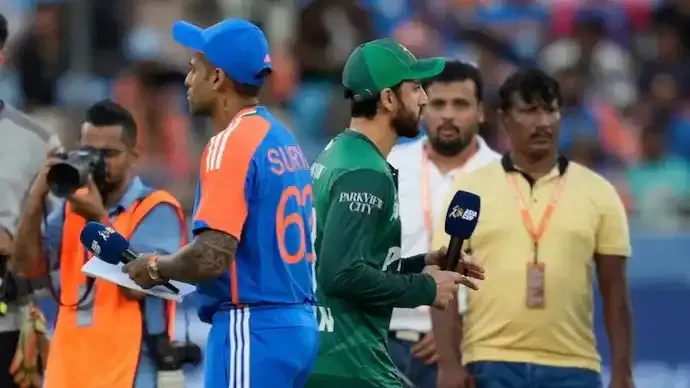

Former International Cricket Council chairman Ehsan Mani has said that the ICC is unlikely to punish Pakistan for boycotting its marquee group-stage clash against India at the ICC Men’s T20 World Cup 2026, arguing that the move was taken on explicit government instructions and therefore lies beyond the governing body’s disciplinary scope.
Pakistan has announced that it will not take the field for its high-profile February 15 match against India cricket team in Colombo. The decision came even as the Pakistani government cleared the national side’s participation in the rest of the tournament, beginning February 7. In an official statement shared publicly, the Government of Pakistan said the team had been permitted to compete in the World Cup but “shall not take the field” for the India fixture.
Mani, who has also served as chairman of the Pakistan Cricket Board, said the ICC’s hands were effectively tied if a member board was acting under state directives. He drew parallels with India’s refusal to travel to Pakistan for the 2025 Champions Trophy, stating that international cricket authorities cannot apply selective standards.

According to Mani, the situation underscores a deeper structural issue within world cricket, where government influence increasingly shapes sporting decisions. He pointed out that the PCB chairman is currently a serving minister in Pakistan’s government, blurring the lines between political authority and cricket administration. In such circumstances, Mani argued, the ICC has little room to impose sporting sanctions without risking diplomatic fallout.
The ICC, however, has expressed unease over the development. In a statement, the governing body said it had not yet received official communication from the PCB but warned that selective participation in a global tournament runs counter to the spirit of international sport. The ICC urged Pakistan to consider the long-term consequences of its decision, noting that it could affect not only Pakistan cricket but the wider global cricketing ecosystem.
While acknowledging that national governments play a role in shaping policy, the ICC said the boycott was not in the best interests of fans, broadcasters, or the tournament itself. It added that it expects the PCB to explore a mutually acceptable solution, with the ICC’s priority remaining the smooth conduct of the World Cup.
Pakistan’s campaign is scheduled to begin against the Netherlands on February 7, followed by matches against the USA on February 10 and Namibia on February 18, all at Colombo’s SSC ground. The boycott of the India match, however, has major sporting and commercial implications. India–Pakistan fixtures are traditionally the most-watched games at ICC events, driving peak global viewership, sponsorship interest, and advertising revenue.
Industry estimates suggest that a walkover could result in advertisement losses of Rs 200–250 crore for the host broadcaster. Under ICC playing conditions, if one team fails to appear for the toss, the opposing side is awarded a walkover and full points. India are therefore expected to be present at the venue, with captain Suryakumar Yadav set to walk out for the toss. If Pakistan captain Salman Ali Agha does not appear, the match referee will officially award the game to India.
While Mani believes formal sanctions are unlikely, he noted that the ICC still retains the option of considering financial measures as it weighs its response to one of the most contentious issues of the tournament.





Conversation
Be kind and stay on topic. Comments are moderated; abuse, spam and personal attacks are removed. Report a problem