

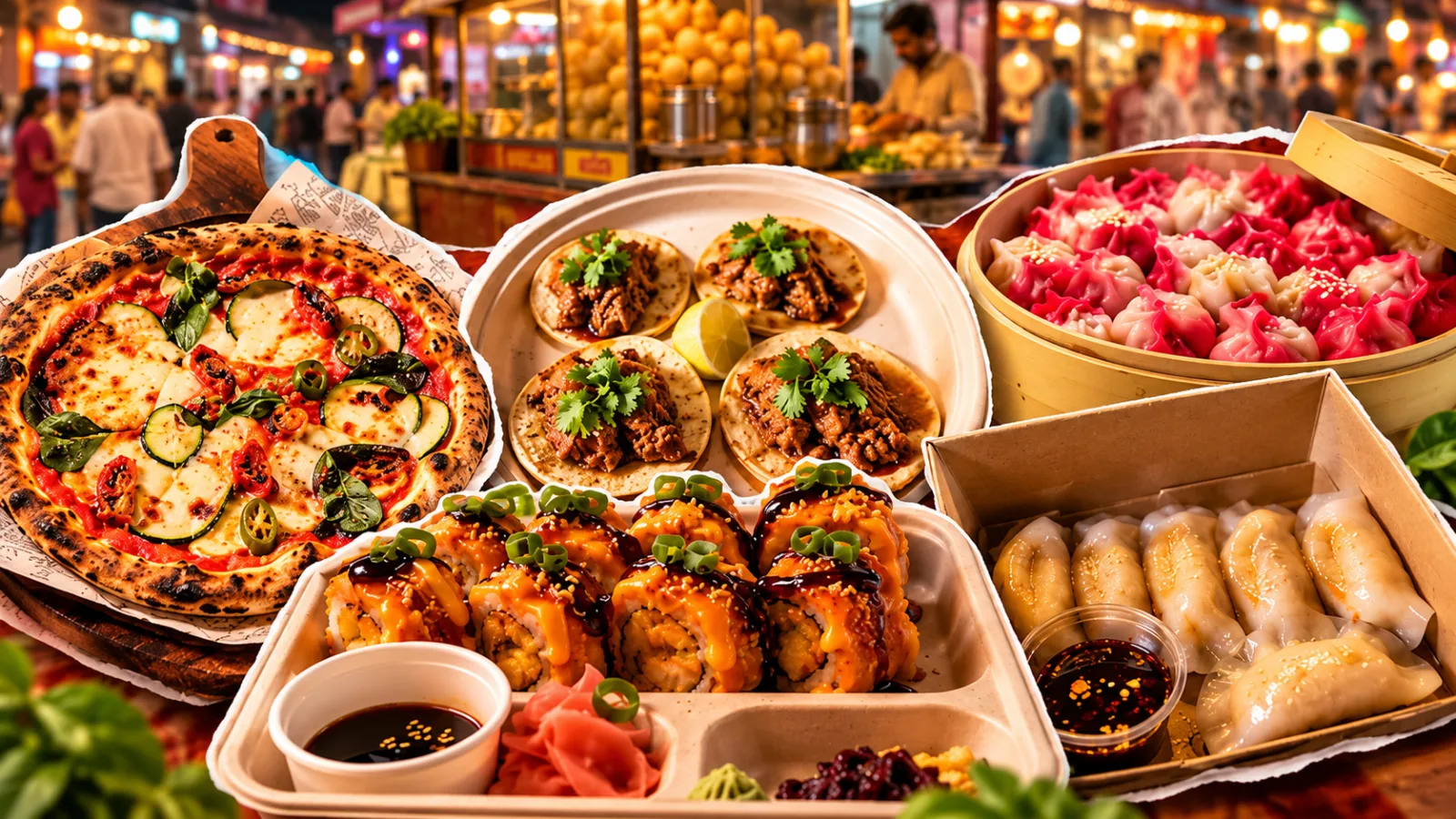

Delhi-NCR’s street food culture is expanding beyond familiar favourites such as golgappe, aloo tikki chaat and momos. In 2026, sushi, delicate dim sum, Neapolitan pizza and international dishes are finding a place on roadside thelas, offering customers a more affordable way to explore gourmet food.
From Noida’s Sector 76 markets to food carts in Gurgaon, small vendors are bringing restaurant-inspired menus to the streets, attracting young customers looking for new flavours without spending heavily at upscale dining establishments.
Sushi and Dim Sum Find a Place on Delhi-NCR Streets
In Noida, Steam Bites, founded by Prachi Bhalla, serves dim sum at prices intended to make the dishes more accessible. Bhalla said the idea emerged after she questioned restaurant prices and began learning to prepare the food herself.

Another Sector 76 venture, Sushi Senpai, was started by Prabal Tiwari and Rohan Kumar after they explored ways to offer sushi at lower prices. The cart reportedly continues serving customers until 3 am.
Gurgaon’s International Food Haven has introduced Korean, Thai and Japanese dishes. Founder Gaurav Bhareja said customers enjoy watching their food being prepared live, making the experience part of the attraction.
Prices vary by vendor. A four-piece vegetarian sushi plate starts at around ₹220, while an eight-piece non-vegetarian portion can cost up to ₹550, according to the supplied report.
Wood-Fired Pizza and Premium Mutton Join the Menu
The gourmet street food trend also includes Neapolitan pizza. Gusto Italiano, run by friends Kartavya and Puneet, serves wood-fired pizzas with charred crusts, alongside garlic bread and calzones. JP Pizzeria is another vendor offering gourmet-style pizza.
Depending on the cart and toppings, an eight-inch pizza costs around ₹280, while a ten-inch option can reach ₹600.
For meat lovers, Laham by Shabfoods serves Namkeen Gosht with bite-sized Malabar parottas. Founded by colleagues-turned-friends Rishabh and Shashikant, the weekend cart offers a half plate for ₹149 and a full plate for ₹250.
The businesses have started with different investment levels, ranging from tens of thousands of rupees to several lakhs. Their founders say their ventures have become profitable, although the figures are based on their own accounts.
Hygiene, Space and Customer Awareness Remain Challenges
Preparing gourmet dishes on a compact cart requires careful planning. Vendors say they prepare sauces and other ingredients in advance, store raw materials in refrigerated areas and use iceboxes to maintain temperatures during service.
Customer awareness is another hurdle. Some first-time visitors mistake dim sum for conventional momos, prompting vendors to explain the ingredients and preparation methods. Certain dishes, including Thai curry, have been dropped from menus when demand proved insufficient.
Finding stable vending locations and managing queues can also be difficult. Some vendors say complaints about traffic and noise have forced them to relocate. Long waiting times are another concern when small teams handle large numbers of orders.
Despite these challenges, gourmet street food is gaining attention, particularly among younger customers discovering vendors through social media. Traditional favourites are not disappearing; they are simply sharing the roadside with a wider range of international flavours.
For more lifestyle and food stories, visit All India Story.









Conversation
Be kind and stay on topic. Comments are moderated; abuse, spam and personal attacks are removed. Report a problem