

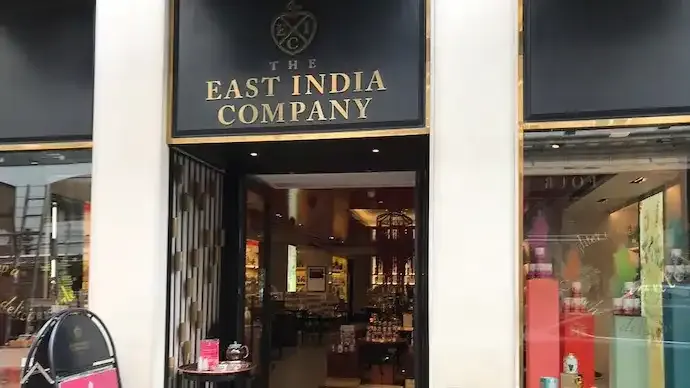

The historic East India Company, once one of the most powerful trading corporations in the world, has shut down for the second time. The modern luxury retail version of the company, revived in the 2000s, has entered creditors’ voluntary liquidation after accumulating debts of more than £950,000.
The original East India Company, founded in 1600 under a royal charter from Queen Elizabeth I, played a central role in British colonial expansion in India and Asia. After the 1857 Indian Rebellion, its powers were transferred to the British Crown in 1858, marking the beginning of direct British rule in India. The company was formally dissolved in 1874.
More than a century later, the brand name was revived by Indian entrepreneur Sanjiv Mehta, who acquired the rights in the early 2000s. In 2010, he opened a flagship luxury store in Mayfair, London, positioning the relaunched East India Company as a premium retailer of fine teas, spices, chocolates, and gourmet foods.

From Colonial Power to Luxury Brand
The revival was widely discussed at the time. Many viewed it as symbolic that an Indian businessman now owned a name once associated with colonial exploitation. The Mayfair store aimed to compete with heritage retailers such as Fortnum & Mason, offering high-end products inspired by historical trade routes.
However, the modern venture has now collapsed financially. Reports indicate that the company owed significant sums to its parent group registered in the British Virgin Islands, alongside unpaid taxes and employee dues. Liquidators were appointed in October 2025, and the flagship store at 97 New Bond Street has reportedly shut its doors.
Several associated entities using the “East India” name have also been dissolved. The company’s website is currently inactive, marking the end of the brand’s second chapter.
A Complex Historical Legacy
The original East India Company evolved from a trading enterprise into a political and military power. By the 18th century, it controlled vast territories in India and maintained a private army larger than the British Army at the time. It monopolised trade in commodities such as spices, cotton, silk, indigo, and tea.
While it reshaped global trade networks, its rule in India was marked by heavy taxation, economic exploitation, and devastating famines. The 1857 uprising ultimately ended its control, leading to the British Raj.
The modern brand sought to reframe that legacy through luxury retail and global commerce. Yet, despite the symbolic revival and prime London location, financial pressures and mounting debts led to its closure.
The second shutdown of the East India Company closes a rare historical loop — from imperial dominance to brand reinvention, and now, financial liquidation. Its story remains a reminder of how commerce, politics, and history are deeply intertwined.







Conversation
Be kind and stay on topic. Comments are moderated; abuse, spam and personal attacks are removed. Report a problem