

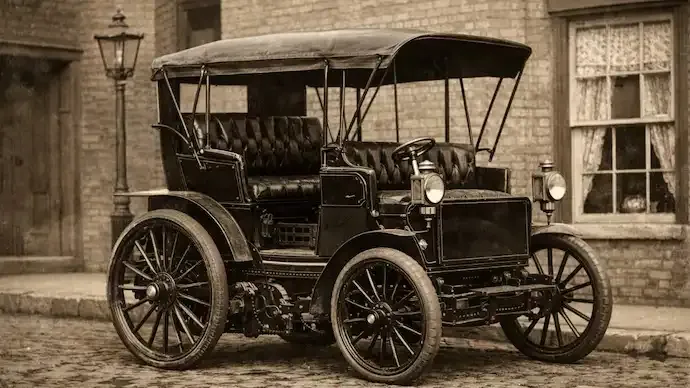

Electric vehicles are often portrayed as a modern invention born out of climate anxiety and rising fuel costs. In reality, electric mobility predates petrol-powered cars by several decades. Long before internal combustion engines came to dominate roads worldwide, inventors were already experimenting with silent, battery-powered transport. Yet, despite their early lead, electric cars faded into the background for more than a century. Understanding why petrol won the first automotive race reveals how technology, infrastructure, and economics shape history.
The Early Birth of Electric Mobility
The story of electric vehicles begins in the early 19th century. In the 1830s, inventors across Europe and the United States were exploring ways to harness electricity for transportation. One of the earliest known electric carriages was developed by Scottish inventor Robert Anderson, who built a crude battery-powered vehicle using non-rechargeable cells. Around the same time, European and American researchers were testing electrically driven models, proving that electricity could move vehicles without steam or combustion.
These early electric vehicles were far from practical. Batteries were heavy, expensive, and incapable of being recharged. Range and speed were severely limited. Still, the fundamental idea worked, and that mattered. Electric propulsion was quiet, mechanically simple, and cleaner than existing alternatives.

The Battery Breakthrough That Changed Everything
A major turning point came in 1859 with the invention of the rechargeable lead-acid battery by French physicist Gaston Planté. Later refinements improved durability and storage capacity, making electric vehicles far more viable. By the late 1800s, electric cars were no longer just laboratory experiments.
In the United States, inventor William Morrison introduced a practical electric wagon around 1890 that could carry multiple passengers. In Europe, electric tricycles and compact city vehicles began appearing on public roads. By the turn of the 20th century, electric cars were especially popular in cities, where short distances, smooth roads, and access to electricity worked in their favour.
When Electric Cars Led the Market
Around 1900, the automotive world had not yet chosen a winner. Steam, petrol, and electric vehicles competed side by side. In the US, electric vehicles accounted for nearly one-third of all cars on the road. They were quiet, easy to drive, and did not require hand-cranking to start—unlike petrol cars of the era.
Electric taxis operated in cities such as New York and London, and brands like Detroit Electric catered to wealthy urban buyers. Even Thomas Edison invested in battery research, convinced that electric transport would dominate the future.
Why Petrol Ultimately Won
Despite their early success, electric vehicles faced structural disadvantages. Battery range was limited, charging infrastructure was virtually non-existent, and long-distance travel was impractical. As road networks expanded and people began travelling farther, these limitations became impossible to ignore.
At the same time, petrol technology advanced rapidly. The invention of the electric starter motor removed the need for manual cranking, while mass production techniques—most notably by Henry Ford—dramatically lowered costs. The Ford Model T made petrol cars affordable for the masses.
Abundant oil supplies, fast refuelling, and expanding fuel stations sealed the deal. By the 1920s, petrol vehicles had taken over, pushing electric cars into obscurity for decades.
The Long Pause and the Modern Revival
For most of the 20th century, electric vehicles survived only in niche roles such as factory transport and delivery carts. Cheap fuel and continuous improvements in internal combustion engines left little room for alternatives.
That changed in the late 20th and early 21st centuries. Oil shocks, pollution concerns, and climate change revived interest in electric mobility. Crucially, lithium-ion batteries transformed the equation, offering higher energy density, faster charging, and longer ranges.
Today’s electric vehicles outperform early petrol cars in efficiency, reliability, and maintenance costs. With charging infrastructure expanding globally and policy support increasing, electric cars are finally fulfilling a vision imagined nearly two centuries ago.
History didn’t reject electric vehicles because they were flawed—it simply wasn’t ready for them. Now, the world may be catching up.









Conversation
Be kind and stay on topic. Comments are moderated; abuse, spam and personal attacks are removed. Report a problem