

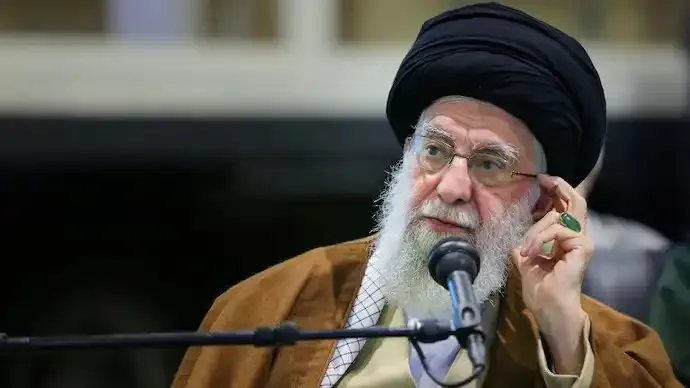

Israel allegedly carried out a long-term surveillance operation targeting Iran’s Supreme Leader Ayatollah Ali Khamenei, using hacked traffic cameras and infiltrated mobile phone systems, according to a report by the Financial Times.
Citing multiple current and former Israeli intelligence officials, the newspaper reported that nearly all traffic cameras in Tehran had been compromised over several years. The operation reportedly enabled Israeli intelligence agencies to monitor the movements of Khamenei and his security detail in the lead-up to the joint US-Israeli strike that killed him.
Traffic Cameras as Surveillance Tools
According to the report, surveillance footage from Tehran’s traffic camera network was encrypted and transmitted to servers outside Iran. Intelligence sources claimed the camera feeds provided valuable insights into daily security patterns, including the movements of bodyguards and vehicle parking arrangements near key government compounds.

One particular camera angle near Pasteur Street in Tehran — where critical government offices are located — was described as especially useful. It allegedly helped track routine movements within the compound housing the offices of Iran’s top leadership.
The long-term access to visual surveillance allowed analysts to build detailed behavioural profiles, mapping patterns of movement, meeting schedules and potential vulnerabilities.
Mobile Network Infiltration
Beyond visual surveillance, the Financial Times report stated that Israeli intelligence infiltrated Iran’s mobile phone systems to gather location data and communications metadata. This reportedly enabled deeper tracking of senior political and military figures.
US and Israeli intelligence officials, cited in separate media reports, had studied Khamenei’s daily routines in detail — including his residences, meeting points and contingency locations in case of security threats.
Officials were also tracking other top Iranian leaders who rarely gathered in one place alongside the 86-year-old cleric, making coordinated targeting more complex.
Timing of the Strike
According to international media reports, intelligence agencies identified a rare opportunity when multiple senior Iranian officials were scheduled to meet within the same compound in Tehran.
Plans for a night-time operation were reportedly altered to a daylight strike to maximise strategic advantage and surprise. Precision-guided munitions were launched in a coordinated assault targeting multiple locations within seconds of each other.
An unnamed Israeli military official was quoted in global reports as saying the simultaneous strikes were intended to prevent dispersal of leadership and ensure operational success.
Wider Implications
If accurate, the revelations point to one of the most sophisticated intelligence operations in recent years, combining cyber infiltration, infrastructure surveillance and strategic military planning.
The reported hacking of municipal systems also raises broader concerns about urban infrastructure vulnerability in modern conflicts, where traffic networks, telecom systems and surveillance grids can become tools of international intelligence operations.
As tensions continue to escalate across the Middle East, the focus remains on the fallout from the strike and the potential for further regional instability.





Conversation
Be kind and stay on topic. Comments are moderated; abuse, spam and personal attacks are removed. Report a problem