

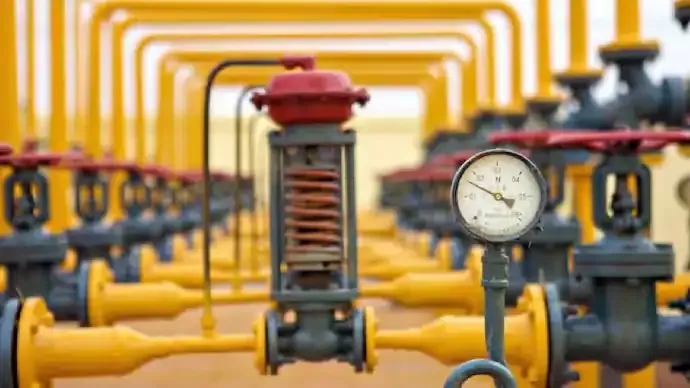

The escalating conflict in West Asia is beginning to disrupt global energy markets, and the impact could soon reach ordinary households in India. Rising tensions around the Strait of Hormuz, one of the world’s most important energy corridors, have already tightened global supplies of Liquefied Natural Gas.
As shipments face delays and uncertainty, global LNG prices have begun to rise. Because LNG is a major fuel used for piped cooking gas in homes and compressed natural gas (CNG) used in vehicles, the disruption could eventually lead to higher energy costs for consumers across India.
Why the Strait of Hormuz Matters
The Strait of Hormuz is a narrow but crucial maritime passage connecting the Persian Gulf to international shipping routes. Around 20 percent of the world’s oil and LNG shipments pass through this corridor every day.

Any instability in the region quickly affects global energy markets. With the ongoing conflict in the Middle East increasing security risks for ships passing through the route, traders and energy companies have become cautious about transporting fuel through the area.
This uncertainty has pushed up LNG prices in global markets.
LNG’s Role in India’s Energy System
India relies heavily on imported LNG to meet its growing energy needs. The fuel is widely used in city gas distribution networks, which supply piped natural gas (PNG) to households and CNG for vehicles in many urban areas.
As cities expand their cleaner fuel infrastructure, LNG has become increasingly important for powering transport and providing cooking gas.
If global LNG prices remain elevated, the additional costs may eventually be passed on to consumers through higher PNG and CNG prices.
Impact on Household Budgets
While changes in global energy prices do not immediately translate into higher bills, prolonged supply disruptions could gradually influence domestic pricing.
Gas distribution companies typically adjust prices based on international fuel costs and supply conditions. If LNG remains expensive for an extended period, city gas providers may have limited options but to revise consumer tariffs.
This means households could face higher cooking gas costs, while motorists using CNG-powered vehicles may also see increased fuel prices.
Broader Energy Market Effects
The current energy market volatility reflects how geopolitical conflicts can influence everyday economic activity.
Energy prices often react quickly to geopolitical tensions, especially when they involve regions that produce or transport large volumes of fuel.
In the current situation, concerns about shipping disruptions in the Gulf have created uncertainty in global energy markets, pushing up prices of both oil and natural gas.
India Exploring Alternative Energy Sources
In response to supply uncertainties, India is also exploring options to diversify its energy imports.
Officials have indicated that India could consider buying LNG from alternative suppliers if competitive prices are available. Countries such as the United States, Qatar, and Australia are among major LNG exporters that could potentially supply additional cargo.
Diversifying energy sources helps reduce dependence on a single region and strengthens energy security.
Consumers Watching Energy Prices Closely
For now, the impact on household gas prices in India remains indirect. However, analysts warn that if global LNG prices continue to climb due to geopolitical tensions, the ripple effect could eventually reach consumers.
As energy markets remain volatile, households and businesses across the country are closely monitoring developments in global fuel prices and supply chains.





Conversation
Be kind and stay on topic. Comments are moderated; abuse, spam and personal attacks are removed. Report a problem