Shopping cart
Your cart empty!


Your cart empty!
Terms of use dolor sit amet consectetur, adipisicing elit. Recusandae provident ullam aperiam quo ad non corrupti sit vel quam repellat ipsa quod sed, repellendus adipisci, ducimus ea modi odio assumenda.
Lorem ipsum dolor sit amet consectetur adipisicing elit. Sequi, cum esse possimus officiis amet ea voluptatibus libero! Dolorum assumenda esse, deserunt ipsum ad iusto! Praesentium error nobis tenetur at, quis nostrum facere excepturi architecto totam.
Lorem ipsum dolor sit amet consectetur adipisicing elit. Inventore, soluta alias eaque modi ipsum sint iusto fugiat vero velit rerum.
Sequi, cum esse possimus officiis amet ea voluptatibus libero! Dolorum assumenda esse, deserunt ipsum ad iusto! Praesentium error nobis tenetur at, quis nostrum facere excepturi architecto totam.
Lorem ipsum dolor sit amet consectetur adipisicing elit. Inventore, soluta alias eaque modi ipsum sint iusto fugiat vero velit rerum.
Dolor sit amet consectetur adipisicing elit. Sequi, cum esse possimus officiis amet ea voluptatibus libero! Dolorum assumenda esse, deserunt ipsum ad iusto! Praesentium error nobis tenetur at, quis nostrum facere excepturi architecto totam.
Lorem ipsum dolor sit amet consectetur adipisicing elit. Inventore, soluta alias eaque modi ipsum sint iusto fugiat vero velit rerum.
Sit amet consectetur adipisicing elit. Sequi, cum esse possimus officiis amet ea voluptatibus libero! Dolorum assumenda esse, deserunt ipsum ad iusto! Praesentium error nobis tenetur at, quis nostrum facere excepturi architecto totam.
Lorem ipsum dolor sit amet consectetur adipisicing elit. Inventore, soluta alias eaque modi ipsum sint iusto fugiat vero velit rerum.
Do you agree to our terms? Sign up
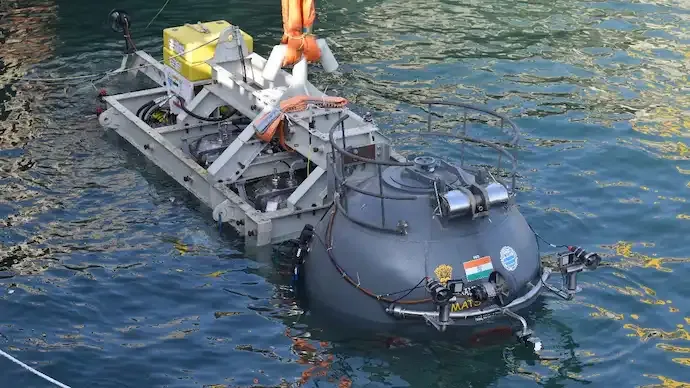
India is rapidly advancing its deep-ocean ambitions as the Samudrayaan mission prepares for its first human-rated dive in May 2026, marking a major milestone in the country’s scientific and strategic capabilities beneath the seas. The inaugural dive is planned at a depth of 500 metres, a critical validation step before India attempts far more challenging descents to 6,000 metres in the coming years.
The mission is being executed by the National Institute of Ocean Technology (NIOT) under the Ministry of Earth Sciences and forms a key pillar of India’s Deep Ocean Mission, launched in 2021 with a budgetary outlay of ₹4,077 crore. Once operational, Samudrayaan will place India in an exclusive group of nations—alongside the US, Russia, China, France and Japan—that possess indigenous manned submersible technology.
At the heart of the programme is Matsya-6000, a 25-tonne, titanium-hulled submersible designed to carry three aquanauts for deep-sea exploration. The vehicle can support 12 hours of normal underwater operations, with emergency life-support extending up to 96 hours. Engineers at NIOT’s Chennai facility are currently completing final integration work, including pressure hull validation, life-support systems, navigation controls and communication sensors.
Unlike traditional step-by-step testing, NIOT is considering skipping a second shallow-water trial and proceeding directly to the 500-metre dive. This approach reflects growing confidence in the indigenous design and allows real-world testing of critical systems under meaningful pressure conditions.
Samudrayaan is not merely a technological showcase. The mission is expected to unlock new possibilities in marine biodiversity research, geological mapping, and resource exploration, particularly for polymetallic nodules located within India’s Exclusive Economic Zone. These nodules are rich in critical minerals such as nickel, cobalt and manganese, which are essential for electric vehicles, renewable energy storage and advanced electronics.
The submersible will be deployed from the research vessel Sagar Nidhi, enabling scientists to conduct precise sample collection and in-situ observations that are impossible through unmanned systems alone.
India’s deep-sea readiness has also been strengthened through recent Indo-French collaborations, including manned dives beyond 5,000 metres using France’s Nautile submersible. These joint missions have helped Indian scientists gain valuable operational experience ahead of Matsya-6000’s first descent.
If the May 2026 dive is successful, NIOT plans to gradually increase operational depth, with full 6,000-metre human dives targeted for late 2026 or 2027. Achieving this would significantly boost India’s blue economy, supporting sustainable seabed mining, climate monitoring, underwater robotics development and even long-term prospects such as deep-sea tourism.
Deep-ocean missions remain among the most complex engineering challenges, involving extreme pressure, corrosion, biofouling and long-duration life-support reliability. However, steady progress at NIOT signals India’s growing mastery of ocean technologies. Complementary innovations, such as underwater fish farming systems and advanced seabed sensors, further underline the broader ecosystem developing around the Deep Ocean Mission.
As global attention turns toward the oceans for resources, security and climate intelligence, Samudrayaan’s first manned dive in May 2026 is shaping up to be a defining moment in India’s scientific journey—one that could permanently expand the country’s footprint from space exploration to the deepest frontiers of Earth.
68
Published: Jan 20, 2026

All India Story is your trusted source for comprehensive and up-to-the-minute news coverage across India. Bringing you the latest on politics, business, technology, entertainment, sports, and more, we are dedicated to keeping you informed with accurate, engaging, and insightful stories from every corner of the nation.