

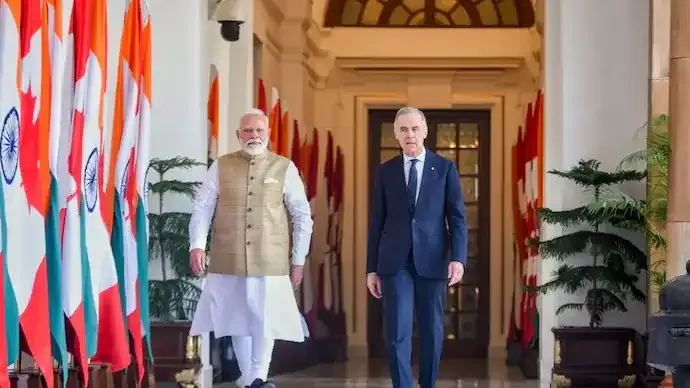

India and Canada on Monday signed a landmark $2.6 billion uranium supply agreement and set an ambitious target to raise bilateral trade to $50 billion annually by 2030, marking a significant reset in ties after years of diplomatic strain.
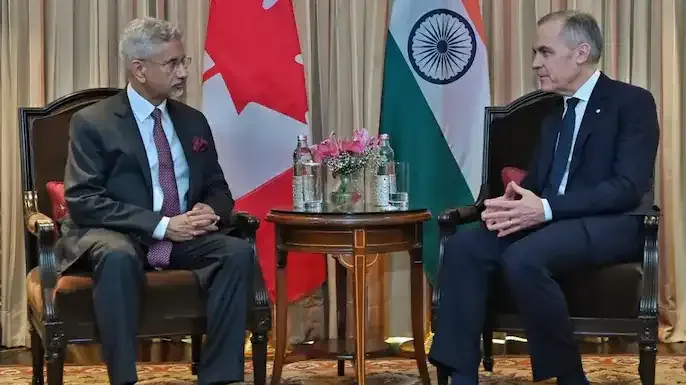
Prime Minister Narendra Modi and Canadian Prime Minister Mark Carney held wide-ranging talks in New Delhi, during which both leaders finalised a new framework aimed at expanding cooperation across nuclear energy, critical minerals, defence, renewable energy and education.
Under the long-term uranium supply deal, Canada will support India’s civil nuclear energy sector, strengthening New Delhi’s push for clean and reliable power generation. The agreement also includes collaboration on small modular reactors and advanced nuclear technologies.

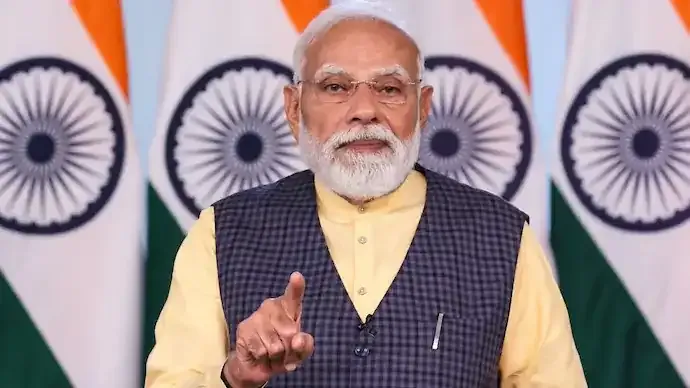
“Our goal is to reach USD 50 billion in trade by 2030. Unlocking the full potential of economic cooperation is our priority,” Prime Minister Modi said, adding that both sides are committed to concluding a Comprehensive Economic Partnership Agreement (CEPA) soon.
Currently, bilateral trade between India and Canada stands at approximately $13 billion annually. Officials said the new roadmap is expected to create fresh investment and employment opportunities in both countries.
Strategic Energy and Critical Minerals Partnership
The two nations also signed a Memorandum of Understanding on critical minerals, an area where Canada holds significant reserves. The partnership will focus on developing resilient supply chains for clean energy technologies, electric vehicles and advanced manufacturing.
Prime Minister Carney described the uranium pact as a reflection of shared commitment to sustainable energy. He said a strategic energy partnership has been launched to expand cooperation in hydrocarbons, renewable energy, green hydrogen and energy storage.
Canada’s pension funds have already invested over $100 billion in India, underscoring Ottawa’s confidence in India’s economic growth trajectory.
Defence, Technology and Education Cooperation
Both leaders agreed to strengthen defence ties, including enhancing defence industries, maritime domain awareness and military exchanges. An India-Canada defence dialogue will be established as part of the expanded security cooperation.
In the technology and education sectors, the two countries announced new university collaborations in artificial intelligence, healthcare, agriculture and innovation. Canadian universities are also expected to open campuses in India.
The leaders discussed global security issues, including the evolving situation in West Asia, with India reiterating its support for dialogue and diplomacy to resolve conflicts.
Resetting Diplomatic Ties
The agreements mark a fresh phase in India-Canada relations, which had been severely strained since 2023 following allegations linked to the killing of a Khalistani separatist. Diplomatic tensions had led to reciprocal expulsions of diplomats in 2024.
However, Carney’s electoral victory last year paved the way for renewed engagement. Both countries have since restored high commissioners and stepped up diplomatic outreach.
The $2.6 billion uranium pact and the $50 billion trade target signal a strategic shift toward deeper economic, energy and security cooperation, positioning India and Canada for a long-term partnership.






Conversation
Be kind and stay on topic. Comments are moderated; abuse, spam and personal attacks are removed. Report a problem