

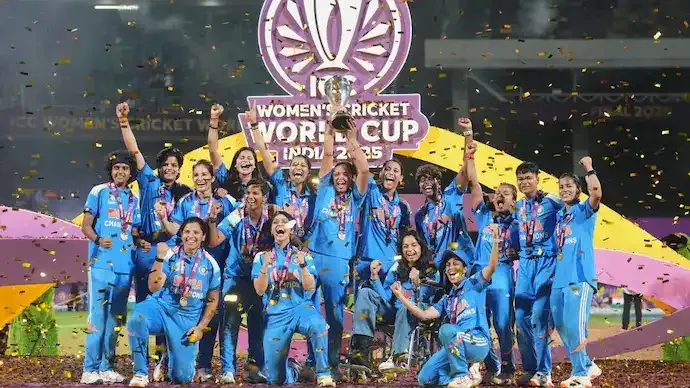

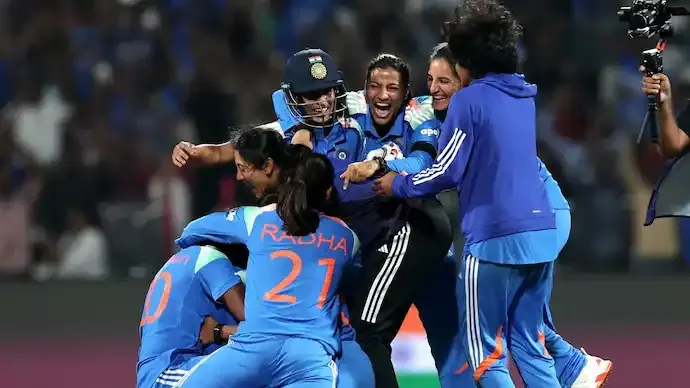
Under the radiant floodlights of the DY Patil Stadium in Navi Mumbai, Harmanpreet Kaur lifted the final catch that sealed India’s first-ever Women’s World Cup victory. Tears of joy, pride, and disbelief flowed freely as the Indian players celebrated a historic moment decades in the making. But beyond the emotion and euphoria lay a deeper story — one about vision, equality, and belief.
The Foundation of Equality
Three years before this defining night, in October 2022, the Board of Control for Cricket in India (BCCI) took a revolutionary decision — to ensure equal pay for India’s men and women cricketers. The move, once considered financially risky and ambitious, has now become the foundation of India’s greatest sporting triumph.
At the time, critics questioned the sustainability of pay parity, citing lower sponsorship revenue and limited audience reach for women’s cricket. Yet, the BCCI leadership stood firm, believing equality was not an emotional gesture but a long-term investment in talent and confidence.

Performance Backed by Policy
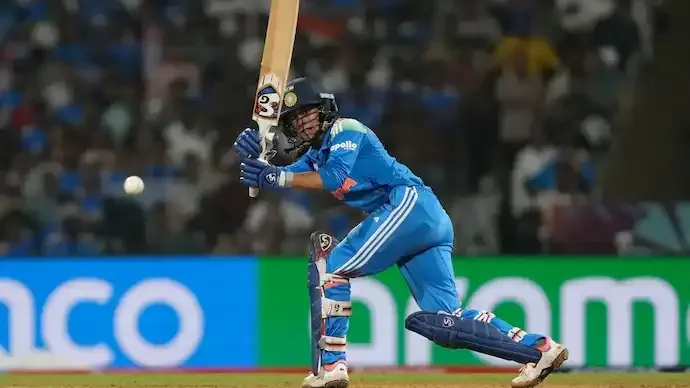
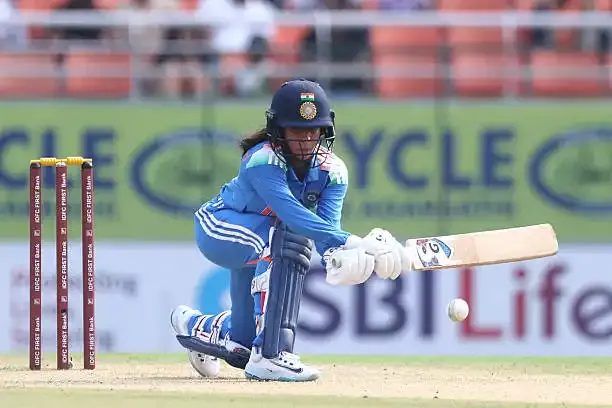
The results of that belief unfolded spectacularly in 2025. India’s women dominated the World Cup with composure and consistency, defeating South Africa in the final by 52 runs. From Shafali Verma’s explosive batting to Deepti Sharma’s all-round brilliance, every player reflected the strength of a system that finally treated them as equals.
BCCI Secretary Jay Shah highlighted this transformation in a congratulatory message, crediting not just the players but also the policy shifts — equal pay, coaching reform, infrastructure upgrades, and exposure through the Women’s Premier League (WPL). These measures collectively turned potential into performance.
A New Ecosystem for Women’s Sport
The creation of the WPL provided India’s women cricketers with consistent access to global competition, helping bridge the gap between domestic and international play. For young players, the assurance of equal pay also meant the freedom to pursue cricket full-time without financial uncertainty.
This holistic approach cultivated a new culture — one that viewed women athletes not as exceptions but as professionals worthy of equal opportunity and investment.
Global Message of Equality
India’s victory sends a resounding message beyond cricket. It demonstrates that equality can be the catalyst for excellence, not merely the reward for it. By choosing to invest in women before success arrived, India flipped the traditional narrative that women’s sports must first “prove” their worth.
The Future of Women’s Cricket
The Women’s World Cup 2025 win has rewritten the story of Indian sport. It showcases that policy-driven equality can create champions, inspire generations, and set new benchmarks for fairness in global athletics.
As the Indian team held the trophy high under the tricolour, it wasn’t just a sporting victory — it was proof that when opportunity and respect are equal, greatness naturally follows.





Conversation
Be kind and stay on topic. Comments are moderated; abuse, spam and personal attacks are removed. Report a problem