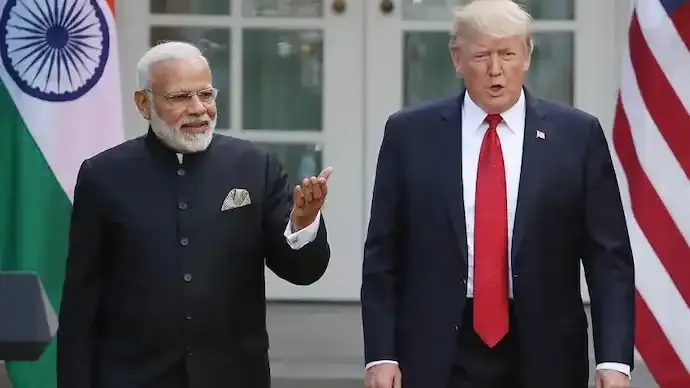
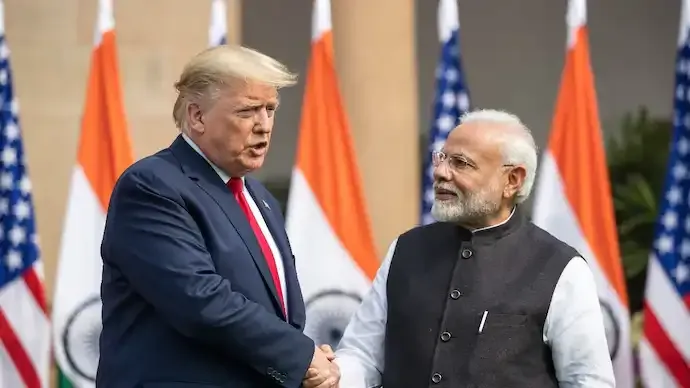
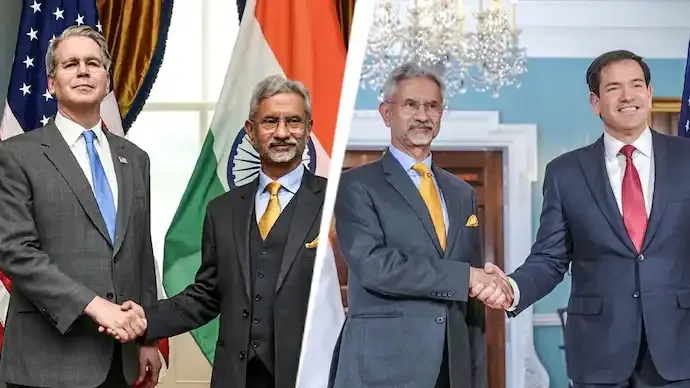
India’s reported commitment to reducing tariffs and non-tariff barriers on American goods—possibly to zero—has emerged as one of the most debated elements of the newly announced trade understanding between New Delhi and Washington. The development follows an announcement by US President Donald Trump, who said the United States would lower reciprocal tariffs on Indian goods from 25 per cent to 18 per cent after discussions with Prime Minister Narendra Modi.
In a post on Truth Social, Trump described the agreement as a product of strong personal ties and mutual respect between the two leaders. He added that India would move toward eliminating tariffs and non-tariff barriers on US products, a statement that has drawn significant attention from trade experts and domestic industry alike.
If implemented as described, the move would represent a substantial departure from India’s long-standing trade strategy. For decades, India has relied on protective tariffs and regulatory barriers to shield domestic sectors—particularly agriculture and small-scale manufacturing—from foreign competition. A shift toward near-zero tariffs would signal a more open trade posture, potentially allowing greater access for US agricultural produce, energy supplies, and manufactured goods.
At the same time, analysts caution that such language in trade diplomacy often reflects an in-principle understanding rather than an immediate or blanket removal of duties. In practice, “zero tariffs” frequently apply to a wide range of product categories while excluding sensitive sectors. Non-tariff barriers, which include licensing requirements, quotas, certification rules, local sourcing norms, and regulatory approvals, are typically addressed gradually through phased reforms rather than eliminated overnight.
Trump also announced that Washington had withdrawn an additional 25 per cent tariff imposed earlier in response to India’s purchase of Russian crude oil. He claimed that PM Modi had agreed to reduce oil imports from Russia and increase purchases from the United States and potentially Venezuela, linking the shift to broader geopolitical efforts surrounding the Russia–Ukraine conflict. While this aspect of the announcement carries geopolitical weight, its direct trade implications remain subject to further clarification.
From India’s side, official confirmation on removing tariffs or non-tariff barriers has been limited. PM Modi welcomed the tariff reduction on Indian exports, calling it a boost for “Made in India” products, but did not publicly comment on the scope or timeline of India’s own concessions. This has fuelled speculation over how far New Delhi is prepared to liberalise its market and which sectors may remain protected.
Several details of the agreement are still unclear. Trump’s announcement did not specify implementation timelines, the exact products covered under tariff reductions, or the mechanisms for easing non-tariff barriers. Officials in both countries have yet to release a detailed framework outlining the obligations and safeguards built into the deal.
Trade experts note that the proposed approach could mirror India’s recent agreement with the European Union, under which tariffs are expected to be reduced or eliminated on over 96 per cent of traded goods, while strategically sensitive farm products remain excluded. If similar principles apply, India may extend zero or near-zero tariffs across a broad spectrum while retaining limited protections in critical areas.
Trump also stated that India had committed to significantly increasing purchases of US goods, including energy, technology, agricultural products, and coal, with figures running into hundreds of billions of dollars. Whether these commitments translate into binding contracts or phased targets will likely become clear only once the formal text of the agreement is released.
For now, India’s zero-tariff pledge remains a signal of intent—one that could reshape its trade policy if fully realised, but whose true impact will depend on the fine print yet to be unveiled.