
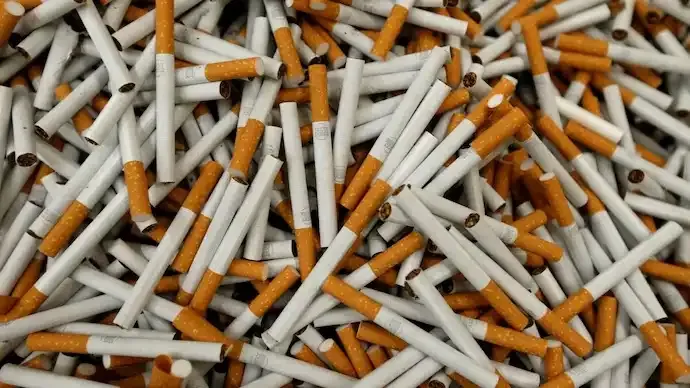
India’s tobacco industry presents a difficult balance between economic dependence and public health concerns. While the sector supports nearly 45.7 million livelihoods, it is also linked to a major health crisis affecting millions across the country.
Experts describe this situation as a “tobacco trap,” where economic reliance on tobacco production makes it harder to implement strong control measures, leaving millions of users without adequate support to quit.
Large-Scale Dependence on Informal Economy
A significant portion of India’s tobacco production operates within the informal sector. Beedi rolling, for example, employs millions of workers, often women and children, under low wages and unsafe working conditions.
Workers typically earn minimal income while being exposed to harmful tobacco dust without proper protection. At the same time, smokeless tobacco production also largely remains unregulated, limiting tax collection and weakening public health policies.
This informal system not only sustains poverty but also increases tobacco consumption among low-income groups.
Health Risks and Economic Burden
Tobacco use continues to pose serious health risks, contributing to premature deaths and increasing the burden on India’s healthcare system. Studies indicate significantly higher mortality rates among tobacco users compared to non-users.
Despite India’s commitment to global frameworks aimed at reducing tobacco harm, policy contradictions remain. In some cases, production policies have been adjusted to boost exports, reflecting a conflict between economic priorities and health goals.
Policy Gaps and Need for Structural Reforms
Experts highlight the need for comprehensive reforms that address both economic and health dimensions. Formalising the tobacco sector is seen as a critical step, which would improve worker safety, increase wages, and enhance regulatory oversight.
Modernisation strategies, including better manufacturing practices and technological innovation, could also help increase value while reducing overall production.
Alternative Livelihoods and Skill Development
Transitioning workers away from tobacco-related jobs is essential for long-term change. Initiatives such as vocational training and micro-enterprise programs have shown promising results, enabling workers to shift to more sustainable and safer sources of income.
Pilot programs in certain regions have demonstrated that workers can successfully move to alternative professions, improving both income stability and quality of life.
Call for Coordinated Policy Action
Experts recommend the creation of a multi-sectoral council to guide tobacco sector transformation. Such a body would ensure coordination between different government departments and stakeholders, focusing on balancing employment, revenue, and public health.
Strengthening regulatory mechanisms and improving monitoring systems are also essential to reduce illicit trade and enforce compliance.
Balancing Growth with Public Health Goals
The future of India’s tobacco sector lies in finding a balance between economic growth and public health priorities. By promoting structured reforms, alternative livelihoods, and stronger regulations, India can reduce tobacco-related harm while protecting jobs.
The challenge is complex, but with coordinated efforts, it is possible to move towards a more sustainable and healthier economic model.




Conversation
Be kind and stay on topic. Comments are moderated; abuse, spam and personal attacks are removed. Report a problem