Shopping cart
Your cart empty!


Your cart empty!
Terms of use dolor sit amet consectetur, adipisicing elit. Recusandae provident ullam aperiam quo ad non corrupti sit vel quam repellat ipsa quod sed, repellendus adipisci, ducimus ea modi odio assumenda.
Lorem ipsum dolor sit amet consectetur adipisicing elit. Sequi, cum esse possimus officiis amet ea voluptatibus libero! Dolorum assumenda esse, deserunt ipsum ad iusto! Praesentium error nobis tenetur at, quis nostrum facere excepturi architecto totam.
Lorem ipsum dolor sit amet consectetur adipisicing elit. Inventore, soluta alias eaque modi ipsum sint iusto fugiat vero velit rerum.
Sequi, cum esse possimus officiis amet ea voluptatibus libero! Dolorum assumenda esse, deserunt ipsum ad iusto! Praesentium error nobis tenetur at, quis nostrum facere excepturi architecto totam.
Lorem ipsum dolor sit amet consectetur adipisicing elit. Inventore, soluta alias eaque modi ipsum sint iusto fugiat vero velit rerum.
Dolor sit amet consectetur adipisicing elit. Sequi, cum esse possimus officiis amet ea voluptatibus libero! Dolorum assumenda esse, deserunt ipsum ad iusto! Praesentium error nobis tenetur at, quis nostrum facere excepturi architecto totam.
Lorem ipsum dolor sit amet consectetur adipisicing elit. Inventore, soluta alias eaque modi ipsum sint iusto fugiat vero velit rerum.
Sit amet consectetur adipisicing elit. Sequi, cum esse possimus officiis amet ea voluptatibus libero! Dolorum assumenda esse, deserunt ipsum ad iusto! Praesentium error nobis tenetur at, quis nostrum facere excepturi architecto totam.
Lorem ipsum dolor sit amet consectetur adipisicing elit. Inventore, soluta alias eaque modi ipsum sint iusto fugiat vero velit rerum.
Do you agree to our terms? Sign up
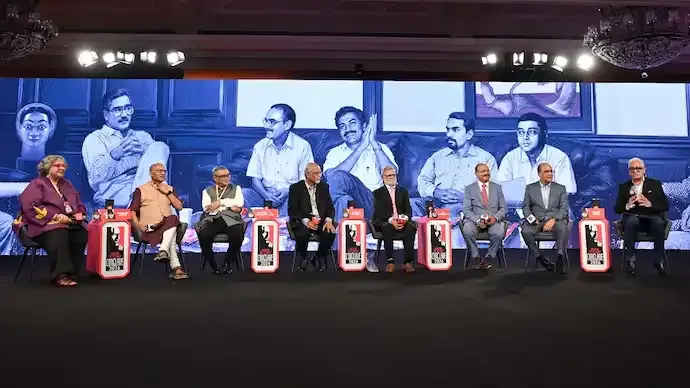
A panel of veteran journalists recreated a traditional newsroom editorial meeting at the India Today Conclave 2026, offering a glimpse into how iconic cover stories were shaped through debate, reporting and editorial judgement.
The session brought together some of the most influential names in Indian journalism, including Aroon Purie, Raj Chengappa, Prabhu Chawla, T. N. Ninan, Swapan Dasgupta, Shekhar Gupta, and Kaveree Bamzai, with the discussion moderated by Rajdeep Sardesai.
Together, the panel represented more than 350 years of combined journalism experience, reflecting on the editorial rigour that shaped the legacy of India Today Group.
During the simulated meeting, the editors recreated how cover stories were planned in the magazine’s newsroom.
They explained that every major story required intense debate, fact-checking and strong editorial judgment before publication.
Discussions in the newsroom often involved disagreements, competing perspectives and careful evaluation of sources, all aimed at ensuring accuracy and depth in reporting.
One light-hearted moment from the session referenced how powerful editorial scrutiny in the newsroom could be.
Veteran editors joked that the intensity of questioning and analysis in the editorial meetings was so sharp that it could have “shot down even Pakistani F-16s.”
The remark was meant as a metaphor highlighting the relentless questioning culture that defined the newsroom’s editorial standards.
The discussion also explored how journalism has changed in the digital age.
Panelists noted that traditional newsroom practices relied heavily on ground reporting, verification and editorial debate, whereas modern journalism often faces pressure from rapid news cycles and social media.
They stressed that despite technological changes, the core values of journalism—accuracy, credibility and accountability—remain unchanged.
The editors also discussed emerging challenges for newsrooms, including the role of artificial intelligence in media, government information control and the impact of digital platforms on public discourse.
While technology is transforming how news is produced and consumed, the panel emphasised that strong editorial judgement continues to be the foundation of credible journalism.
The simulated newsroom discussion highlighted how decades of editorial discipline helped shape some of the most influential cover stories in Indian journalism.
By recreating the process behind those decisions, the session offered audiences a rare behind-the-scenes look at how experienced journalists analyse stories, debate angles and ultimately decide what becomes the headline.
32
Published: Mar 14, 2026

All India Story is your trusted source for comprehensive and up-to-the-minute news coverage across India. Bringing you the latest on politics, business, technology, entertainment, sports, and more, we are dedicated to keeping you informed with accurate, engaging, and insightful stories from every corner of the nation.