

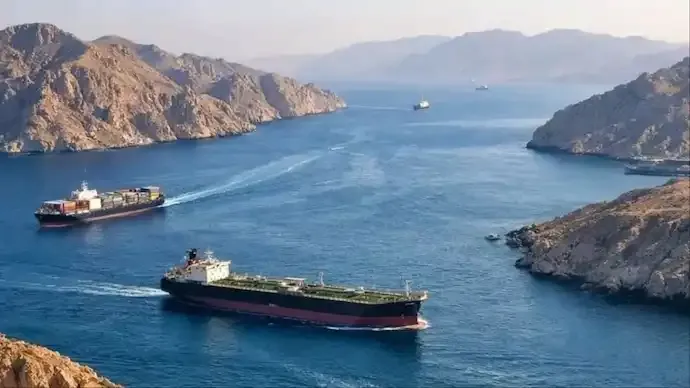

Iran's reported deployment of sea mines in the Strait of Hormuz has triggered intense global concern, but weeks into the conflict, no commercial vessel has struck a mine. The absence of confirmed evidence has raised fresh questions over whether the mines were ever laid or whether uncertainty itself has become part of Tehran's military strategy.
The Strait of Hormuz remains one of the world's most critical energy chokepoints, handling nearly 20% of global crude oil shipments.
US believes Iran has mined the Strait of Hormuz
Senior US military officials continue to maintain that Iran has deployed sea mines in the strategic waterway despite no confirmed discoveries so far.

According to Admiral Daryl Caudle, Chief of US Naval Operations, the mines are likely intended to force commercial ships into routes closer to Iran's coastline rather than directly destroy vessels.
US officials have also suggested Iran may have difficulty locating or removing the alleged mines, complicating international efforts to restore normal shipping through the strait.
No confirmed mine strike despite months of conflict
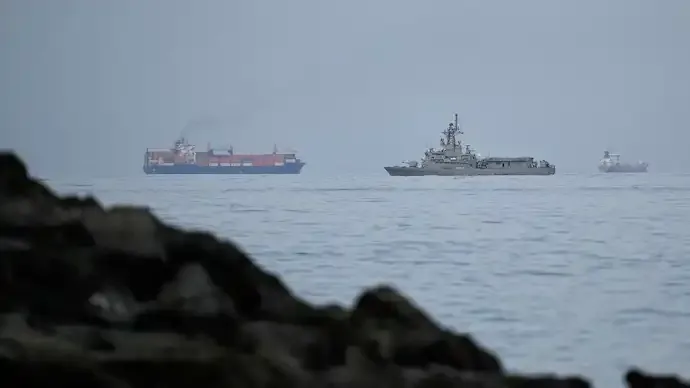
Although commercial shipping through the Strait of Hormuz has reduced sharply since the conflict escalated, no vessel has officially been reported to have struck a sea mine.
Instead, more than 20 commercial vessels have reportedly been damaged through attacks involving:
- Unmanned surface vessels
- Speedboats
- Missiles
- Other unidentified projectiles
The lack of mine-related incidents has fuelled speculation over whether the threat itself is serving as a psychological deterrent.
Why sea mines are considered powerful naval weapons
Sea mines remain among the cheapest and most effective asymmetric naval weapons.
They can be:
- Anchored below the water's surface
- Placed on the seabed
- Activated by pressure, magnetic or acoustic changes created by passing ships
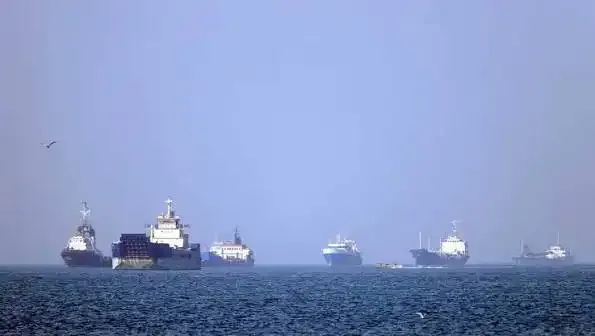
Even the possibility of a minefield is often enough to force shipping companies to reroute vessels, increasing transportation costs and disrupting global trade.
Military analysts believe this psychological impact makes sea mines an effective blockade tool even without active detonations.
Iran's naval capabilities remain significant
Security experts estimate Iran possesses between 2,000 and 6,000 naval mines, including sophisticated rocket-propelled variants capable of striking the underside of ships.
Over the past four decades, the Islamic Revolutionary Guard Corps (IRGC) has also invested heavily in:
- Fast attack boats
- Naval drones
- Unmanned surface vessels
- Anti-ship missile systems
These capabilities have strengthened Iran's ability to threaten maritime traffic in the Gulf region.
Has Iran actually confirmed laying mines?
Interestingly, Iranian authorities have never publicly claimed to have laid sea mines in the Strait of Hormuz.
Instead, the IRGC has repeatedly declared the waterway "closed" and earlier this year released maps marking parts of the shipping channel as restricted or hazardous.
This has created uncertainty without providing direct confirmation of any mine deployment.
Strategic uncertainty may itself be the objective
Defence analysts suggest that ambiguity may be serving Tehran's broader military objective.
If commercial shipping slows because companies fear hidden mines, Iran achieves many of the strategic effects of a blockade without having to prove the mines exist.
This approach has prompted comparisons with "Weapons of Mass Distraction"—using uncertainty as a tool to disrupt global commerce and influence international decision-making.
Whether sea mines are eventually discovered remains unclear, but the fear surrounding them has already altered shipping patterns across one of the world's busiest maritime corridors.
Key Highlights
- Questions remain over whether Iran actually deployed sea mines in the Strait of Hormuz.
- US military officials insist the mines exist despite no confirmed discoveries.
- No commercial vessel has officially struck a sea mine during the conflict.
- More than 20 ships have instead been damaged by missiles, drones and speedboats.
- The Strait of Hormuz carries nearly 20% of global crude oil shipments.
- Experts believe uncertainty itself may be serving Iran's strategic objectives.
- Iran is estimated to possess between 2,000 and 6,000 naval mines.
FAQs
Why is the Strait of Hormuz important?
The Strait of Hormuz is one of the world's most vital energy routes, through which around 20% of global crude oil exports pass.
Has Iran confirmed laying sea mines?
No. Iranian authorities have declared restrictions in the Strait of Hormuz but have not officially confirmed deploying sea mines.
Why do US officials believe mines are present?
US military officials say intelligence assessments indicate mines were deployed to influence shipping routes, even though none have yet been publicly recovered.
Have any ships struck Iranian sea mines?
No confirmed reports indicate any commercial vessel has struck a sea mine during the current conflict.
Why are sea mines considered effective?
Sea mines create uncertainty and force ships to avoid certain areas, making them an inexpensive but highly effective tool for disrupting maritime trade.






Conversation
Be kind and stay on topic. Comments are moderated; abuse, spam and personal attacks are removed. Report a problem