Shopping cart
Your cart empty!


Your cart empty!
Terms of use dolor sit amet consectetur, adipisicing elit. Recusandae provident ullam aperiam quo ad non corrupti sit vel quam repellat ipsa quod sed, repellendus adipisci, ducimus ea modi odio assumenda.
Lorem ipsum dolor sit amet consectetur adipisicing elit. Sequi, cum esse possimus officiis amet ea voluptatibus libero! Dolorum assumenda esse, deserunt ipsum ad iusto! Praesentium error nobis tenetur at, quis nostrum facere excepturi architecto totam.
Lorem ipsum dolor sit amet consectetur adipisicing elit. Inventore, soluta alias eaque modi ipsum sint iusto fugiat vero velit rerum.
Sequi, cum esse possimus officiis amet ea voluptatibus libero! Dolorum assumenda esse, deserunt ipsum ad iusto! Praesentium error nobis tenetur at, quis nostrum facere excepturi architecto totam.
Lorem ipsum dolor sit amet consectetur adipisicing elit. Inventore, soluta alias eaque modi ipsum sint iusto fugiat vero velit rerum.
Dolor sit amet consectetur adipisicing elit. Sequi, cum esse possimus officiis amet ea voluptatibus libero! Dolorum assumenda esse, deserunt ipsum ad iusto! Praesentium error nobis tenetur at, quis nostrum facere excepturi architecto totam.
Lorem ipsum dolor sit amet consectetur adipisicing elit. Inventore, soluta alias eaque modi ipsum sint iusto fugiat vero velit rerum.
Sit amet consectetur adipisicing elit. Sequi, cum esse possimus officiis amet ea voluptatibus libero! Dolorum assumenda esse, deserunt ipsum ad iusto! Praesentium error nobis tenetur at, quis nostrum facere excepturi architecto totam.
Lorem ipsum dolor sit amet consectetur adipisicing elit. Inventore, soluta alias eaque modi ipsum sint iusto fugiat vero velit rerum.
Do you agree to our terms? Sign up

The United States has signalled a possible escalation in its response to Iran as nationwide protests intensify, prompting strong warnings from Washington. US President Donald Trump said the situation inside Iran has “crossed a red line,” confirming that American authorities are actively reviewing a range of military and non-military options in response to the Iranian government’s violent crackdown on demonstrators.
Speaking to reporters, Trump said developments in Iran are being monitored on an hourly basis, with senior officials providing continuous briefings. He indicated that a decision on the US course of action could be taken soon, depending on how the situation unfolds on the ground.
The unrest, described by observers as Iran’s most severe since 2022, has reportedly resulted in significant casualties. Rights organisations monitoring the protests claim that more than 500 people have been killed, including both civilians and security personnel, while over 10,600 individuals have been arrested during sweeping crackdowns across multiple cities. Authorities in Tehran have imposed widespread internet restrictions, limiting the flow of information from inside the country.
Trump stated that Washington is evaluating a spectrum of responses, including diplomatic pressure, economic sanctions, cyber operations, and potential military action. He added that the US military has been instructed to examine various scenarios should further intervention be deemed necessary.
At the same time, Trump revealed that Tehran has made contact with Washington regarding potential discussions on Iran’s nuclear programme. While he did not disclose specifics, the US President suggested that talks could be considered under the right conditions. He also said he remains in communication with Iranian opposition figures, signalling continued political engagement alongside strategic pressure.
Iran’s leadership has reacted sharply to Washington’s remarks. Senior Iranian officials warned that any US military action would be met with direct retaliation, including strikes on American military bases in the region. The threats have raised concerns about a broader regional escalation, particularly amid already heightened tensions in West Asia.
The protests erupted in late December following sharp increases in prices and economic pressures, but quickly evolved into a wider challenge to Iran’s ruling establishment. Demonstrators have been calling for systemic political change, prompting authorities to deploy security forces in major urban centres. Tehran has accused foreign powers, including the United States and Israel, of fuelling the unrest, a claim denied by Washington.
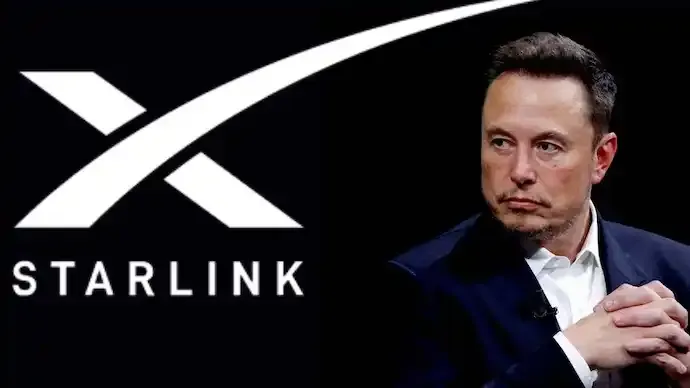
In response to Iran’s internet blackout, Trump said the US may explore options to restore digital access for Iranian citizens. He confirmed that discussions could take place with Elon Musk regarding the use of Starlink satellite services to bypass state-imposed restrictions and enable communication during the crisis.
International reaction has also intensified. United Nations Secretary-General Antonio Guterres expressed alarm over reports of violence, urging Iranian authorities to respect fundamental rights, including freedom of expression and peaceful assembly.
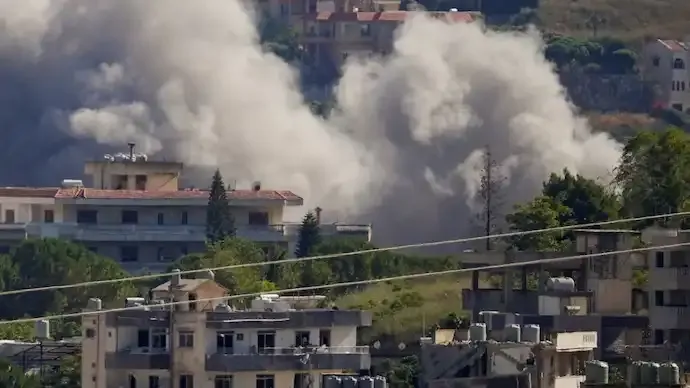
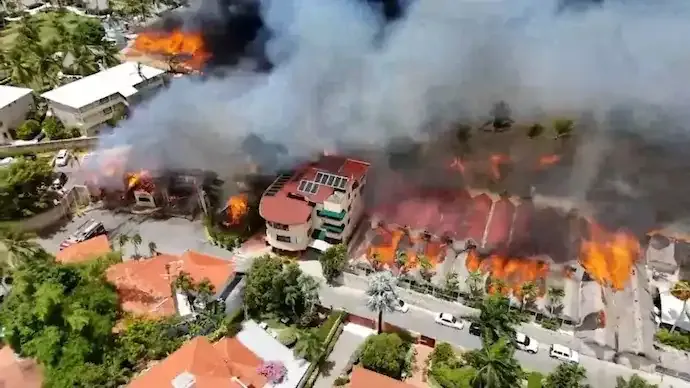
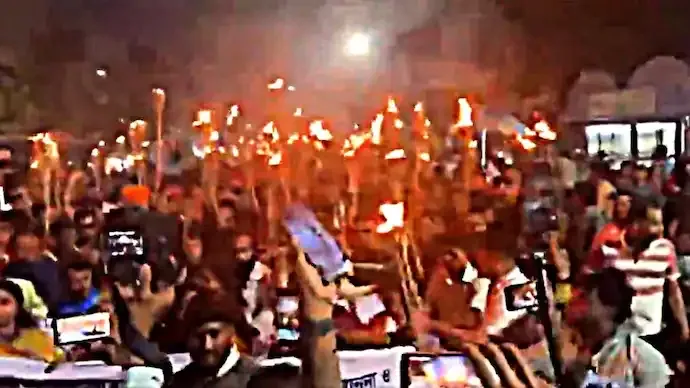
Despite official narratives from Tehran portraying the unrest as acts of terrorism, footage circulating online has shown large crowds marching at night, fires burning in streets, and visible destruction in several cities. The situation remains fluid, with global attention now focused on whether diplomatic engagement or confrontation will define the next phase of the crisis.
57
Published: Jan 12, 2026

All India Story is your trusted source for comprehensive and up-to-the-minute news coverage across India. Bringing you the latest on politics, business, technology, entertainment, sports, and more, we are dedicated to keeping you informed with accurate, engaging, and insightful stories from every corner of the nation.