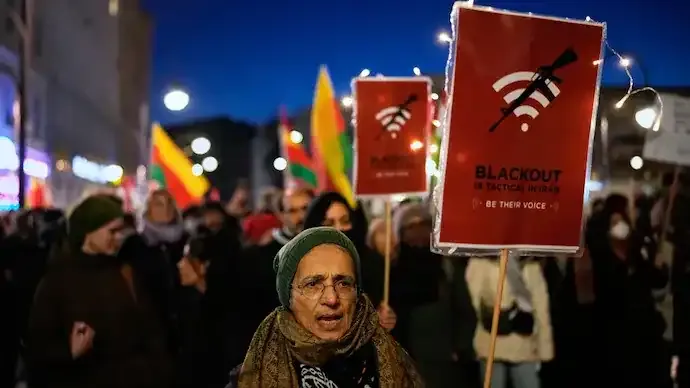
Iran has descended into one of its deadliest internal crises in decades as protesters, cut off from the outside world by a sweeping internet blackout, send desperate SOS messages describing widespread killings, fear and chaos across the country.
What began on December 28, 2025, as protests against economic hardship has rapidly transformed into a full-scale uprising challenging the authority of Ayatollah Ali Khamenei and Iran’s clerical establishment. Demonstrations initially triggered by soaring inflation, rising food prices and the collapse of the Iranian rial have spread to all 31 provinces, drawing in students, workers, traders and families.
Since January 8, Iranian authorities have imposed a near-total shutdown of internet and telecommunications services, effectively isolating the country from global scrutiny. Despite the blackout, fragments of testimony have emerged through risky satellite connections, covert links and smuggled messages.
“It’s a bloodbath here,” said a Tehran-based businessman who managed to briefly connect to satellite internet to relay his account. He described streets filled with armed security personnel and gunfire echoing through neighbourhoods as protesters are met with overwhelming force.
Eyewitnesses across Iran report security forces firing live ammunition into crowds, deploying snipers on rooftops and using automatic weapons during dispersals. Hospitals, according to multiple accounts, are overwhelmed with critically injured civilians suffering gunshot wounds and severe head injuries.
A protester in Tehran recalled witnessing a teenage boy being shot in the leg while marching with his mother. Others described bodies left on streets as panic spread and people scrambled for safety. Similar reports have surfaced from provincial towns, suggesting the violence is not confined to major cities.
According to Iran Human Rights, at least 3,428 protesters have been killed so far, with more than 10,000 detained. The organisation warned that the true toll is likely far higher due to the communication blackout, which has made independent verification nearly impossible.
Fear has extended beyond protest zones. Residents say people have been shot while running errands, returning from work or walking home from medical visits. Messages circulating among activists describe armed patrols, tanks on city streets and security forces firing at gatherings of more than two people.
One message shared by journalist Masih Alinejad quoted an Iranian pleading, “Tell the world we have not given up. We are trapped inside.” Videos recorded by Iranians who managed to flee the country describe the situation as resembling an internal war rather than a protest movement.
The Iranian government has blamed foreign interference, accusing the United States and Israel of orchestrating the unrest. Meanwhile, US President Donald Trump has issued repeated warnings over the killing of peaceful protesters, even as tensions between Washington and Tehran remain high following strikes on Iranian nuclear facilities in 2025.
With Iran effectively sealed off from the world, the full scale of the bloodshed may not be known for weeks. Yet the voices that manage to break through the blackout paint a stark picture — of fear inside homes, gunfire on streets, and a population refusing to fall silent despite bullets, arrests and mass killings.
Prev Article
US Bans Immigrant Visas for 75 Countries: Why Thailand, Bhutan and Kuwait Are on the List
Next Article
Venezuela’s Machado Presents Her Nobel Peace Prize Medal to Donald Trump at White House Meet