

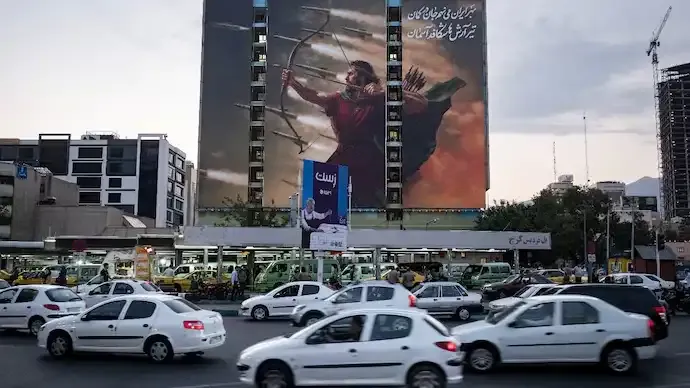

Amid ongoing tensions involving Iran, Israel, and the United States, a deeper cultural narrative is emerging within Iran. The country is increasingly drawing strength from its ancient Persian roots, reviving symbols and stories from pre-Islamic history to reinforce national identity during conflict.
Revival of Pre-Islamic Symbols and Heroes
Across Iran, imagery of ancient Persian warriors and kings has resurfaced in public spaces. Figures like Arash the Archer and legendary warriors from the Achaemenid era are being highlighted as symbols of courage and resilience.
The use of the Faravahar, a key symbol associated with Zoroastrianism, has also gained visibility. Despite religious differences, such symbols are widely accepted and even embraced in modern Iranian society.

Zoroastrian Influence in Modern Iran
Although Iran is predominantly a Shia Muslim nation, elements of its Zoroastrian past continue to shape cultural identity. The coexistence of Islamic and pre-Islamic traditions reflects a layered and complex national character.
Cultural experts note that these ancient influences are not new but have always been present, resurfacing more prominently during times of crisis.
Persian Heritage as a Source of Strength
During conflicts, nations often turn to their historical roots for inspiration. In Iran’s case, the legacy of ancient empires and warriors serves as a reminder of endurance and resistance.
This revival of Persian identity helps unify people and reinforce a sense of pride, especially when facing external pressure.
Beyond Religion: A Broader National Identity
Iran’s identity is not limited to religion alone. The blending of Persian heritage with Islamic traditions creates a unique cultural framework that influences both public sentiment and political narratives.
This dual identity allows the country to project strength rooted in both faith and history.
Cultural Symbolism in Times of Conflict
The resurgence of ancient symbols during wartime highlights the role of culture in shaping national morale. From murals to jewellery, these representations serve as reminders of historical resilience.
Such symbolism can play a powerful role in influencing public perception and unity.
What This Means in the Current Conflict
As geopolitical tensions continue, Iran’s reliance on its cultural and historical identity may influence how it responds to challenges. The integration of ancient heritage into modern narratives reflects a broader strategy of psychological and cultural strength.
This approach underscores how history and identity remain central to understanding present-day conflicts.





Conversation
Be kind and stay on topic. Comments are moderated; abuse, spam and personal attacks are removed. Report a problem