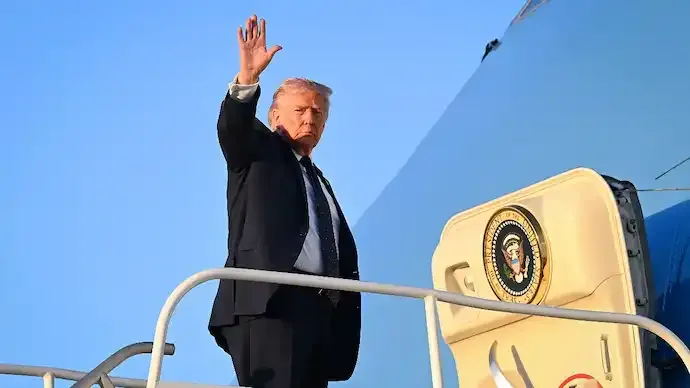
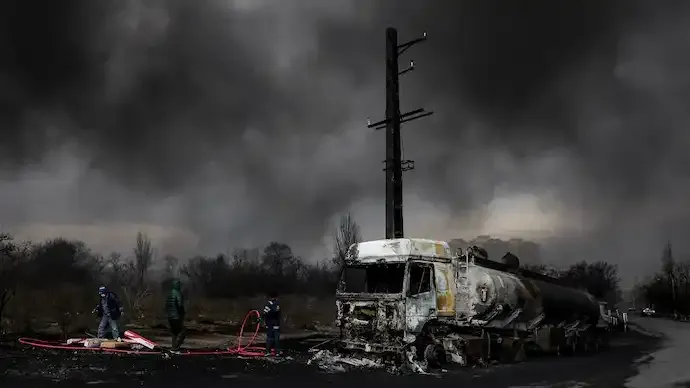
Tensions in the Middle East have escalated sharply after Iran warned that it would block oil exports from the region if military attacks continue. The warning came shortly after US President Donald Trump threatened to take control of the Strait of Hormuz, a critical maritime route for global energy shipments.
The Strait of Hormuz is one of the world’s most important oil transit routes, with nearly 20 percent of global oil supply passing through the narrow waterway. Any disruption in this corridor could have serious consequences for international energy markets.
Iran Issues Strong Warning
Iranian officials stated that if military operations against the country continue, they could prevent oil shipments from leaving the region.
The warning signals a major escalation in the ongoing conflict that has already involved missile strikes, drone attacks, and naval operations across several parts of the Middle East.
Energy analysts say that any attempt to block oil shipments through the Strait of Hormuz would significantly disrupt global supply chains and push oil prices sharply higher.
Trump Threatens Hormuz Takeover
Reacting to the situation, US President Donald Trump warned that the United States could take control of the Strait of Hormuz if Iran continues attacking tankers or targeting American and Israeli assets in the region.
Trump suggested that controlling the strait would ensure the safe movement of global oil shipments and prevent further disruptions to international energy supplies.
The statement reflects the growing seriousness of the conflict and the strategic importance of the maritime corridor.
Trump Comments on Naval Operations
Trump also reacted to reports that 46 Iranian naval ships were sunk by the US Navy during recent operations in the region.
Speaking at an event, he said that he initially wanted the US Navy to capture and reuse Iranian vessels, but naval officials reportedly told him that sinking them was a more practical option.
According to Trump, military personnel joked that it was “more fun to sink them” rather than attempt to capture them.
Global Concerns Over Oil Supply
The ongoing confrontation has already raised serious concerns in global energy markets. The Strait of Hormuz serves as the primary route for oil exports from several Middle Eastern countries, including major producers.
If shipping through the strait is disrupted, countries around the world could face fuel shortages and rising energy prices.
Energy experts warn that even limited disruptions in this region can have immediate impacts on global markets because of the large volume of oil transported through the waterway.
Strategic Importance of the Strait
The Strait of Hormuz connects the Persian Gulf with the Gulf of Oman and the Arabian Sea, making it a crucial corridor for international trade and energy transportation.
Due to its narrow geography and heavy shipping traffic, the strait has long been considered one of the most sensitive strategic chokepoints in global maritime trade.
As the conflict between Iran and its opponents intensifies, governments and energy markets around the world are closely monitoring developments in the region.
Any escalation involving the Strait of Hormuz could significantly influence global oil prices, shipping routes, and geopolitical stability.
Prev Article
Pakistan Orders School Closures, Hybrid Work as Fuel Prices Surge
Next Article
Iran’s Strategy in War: Missiles, Oil Pressure and a Battle of Endurance