

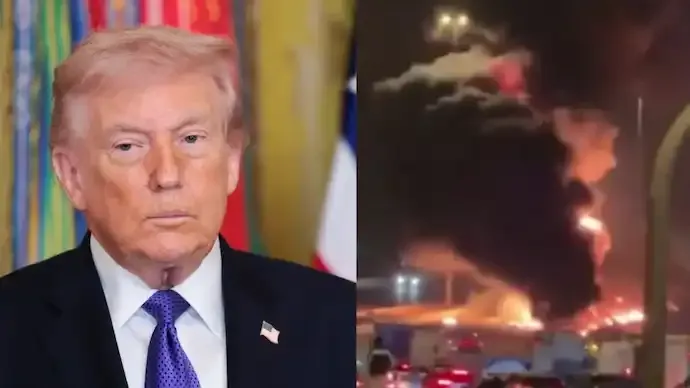

Two Iranian drones struck the US Embassy compound in Riyadh, Saudi Arabia, triggering a fire and causing material damage, Saudi authorities confirmed. The incident marks a sharp escalation in the ongoing US-Iran-Israel conflict, now in its fourth consecutive day.
Saudi Arabia’s defence ministry said an initial assessment indicated that two drones hit the embassy complex late Monday night. Fortunately, no injuries were reported as the building was largely unoccupied at the time of the strike.
Fire and Damage at Diplomatic Mission
According to Saudi officials, the drone impact caused a blaze within the embassy premises. Emergency services responded swiftly, and the fire was brought under control. Authorities have not yet clarified whether the drones were intercepted or how they managed to penetrate air defences over Riyadh.


Videos circulating online appeared to show flames and thick smoke rising from the diplomatic compound, though the authenticity of the footage has not been independently verified.
The US Embassy later issued a “shelter in place” advisory for American citizens in Riyadh, Jeddah and Dhahran. The advisory urged US nationals to avoid visiting the embassy until further notice and to stay alert amid the volatile security situation.
Trump Signals Retaliation
US President Donald Trump reacted strongly to the incident, warning that retaliation would follow. Speaking during a media interaction, Trump said, “You’ll find out soon what the retaliation will be,” referring to both the embassy strike and recent American military casualties in the broader confrontation with Iran.
While Trump did not explicitly name Iran in his remarks, US officials have attributed the drone attack to Tehran amid a series of retaliatory actions across the Gulf region.
Conflict Expands Across Gulf
The embassy strike comes amid a wider wave of Iranian missile and drone attacks targeting Gulf nations hosting US military bases. These developments follow coordinated US-Israeli strikes inside Iran that began on February 28 and resulted in the killing of Iran’s Supreme Leader, Ayatollah Ali Khamenei.
Since then, the conflict has expanded across multiple fronts, affecting regional security, aviation routes and energy markets. Several Gulf countries have experienced airspace disruptions, leading to widespread flight cancellations and delays.
Although Riyadh’s King Khalid International Airport remains operational, aviation across the region continues to face heavy disruption due to ongoing hostilities.
Rising Regional Uncertainty
With diplomatic facilities now directly targeted, security concerns have intensified across the Middle East. Analysts warn that strikes on embassies could further internationalise the conflict and provoke broader military responses.
As tensions remain high, global attention is focused on whether the crisis will move toward further escalation or diplomatic de-escalation in the coming days.




Conversation
Be kind and stay on topic. Comments are moderated; abuse, spam and personal attacks are removed. Report a problem