

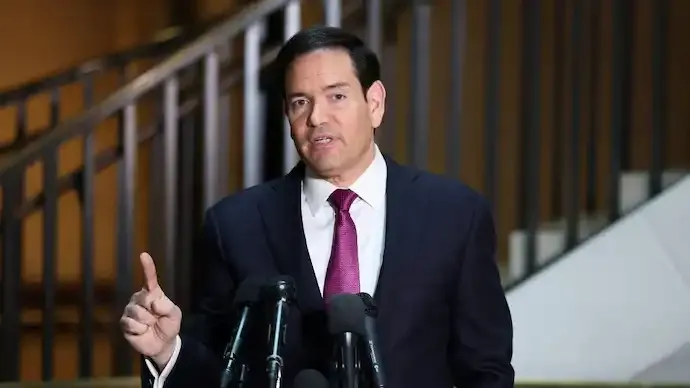

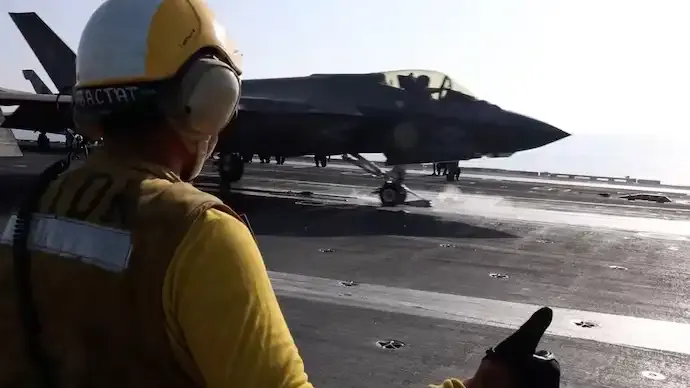
US Secretary of State Marco Rubio has clarified that the ongoing American military campaign against Iran is aimed at dismantling Tehran’s missile and naval capabilities, not at pursuing regime change.
Speaking to reporters on Capitol Hill, Rubio stated that the primary objective of the operation is to neutralise Iran’s ballistic missile infrastructure and prevent it from rebuilding those capabilities.
“The objectives of this operation are to destroy their ballistic missile capability and make sure they can’t rebuild it,” Rubio said. He added that the mission also focuses on countering threats posed by Iran’s naval forces, particularly in strategic waterways.

Not a Regime Change Mission
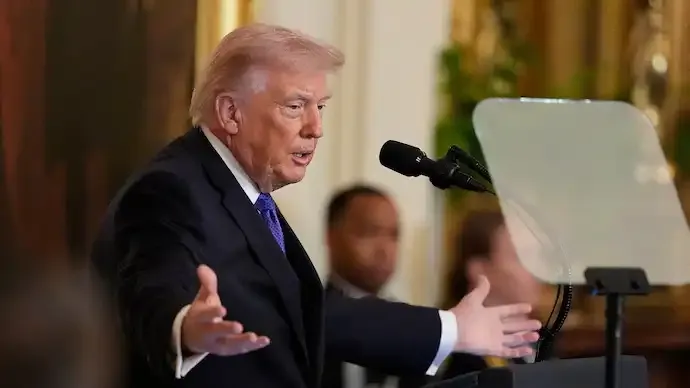
Rubio addressed speculation that the military action is intended to topple Iran’s leadership. While acknowledging comments by President Donald Trump suggesting political change in Tehran, Rubio emphasised that regime change is not the stated military objective.
“We would love for there to be an Iran that’s not governed by radical clerics,” he said. “That’s not the objective.”
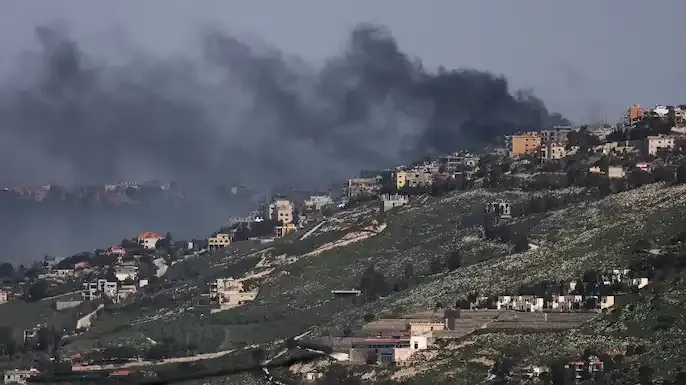
The clarification comes after joint US-Israeli strikes killed Iran’s Supreme Leader Ayatollah Ali Khamenei and several senior officials, triggering widespread retaliation and escalating tensions across the Middle East.
Pre-Emptive Justification
Rubio described the operation as pre-emptive, arguing that intelligence assessments indicated Iran would retaliate if attacked. According to him, waiting for Tehran to strike first could have resulted in significantly higher American casualties.
“The assessment was that if we stood and waited, we would suffer much higher casualties,” he said, defending the timing of the strikes.
Senior officials, including Defense Secretary Pete Hegseth, have briefed key congressional leaders on the evolving situation.
Campaign Could Intensify
When asked about the duration of the military engagement, Rubio declined to provide a timeline.
“We have objectives. We will do this as long as it takes to achieve those objectives,” he said, warning that future phases of the campaign could be more forceful.
He added that “the hardest hits are yet to come,” signalling potential escalation if Iran continues retaliatory actions.
Energy Market Impact
The conflict has already shaken global energy markets. Oil and gas prices surged following Iranian retaliation and disruptions near the Strait of Hormuz, a crucial corridor for global energy shipments.
Rubio said the administration is preparing measures to manage rising energy costs and limit the economic fallout. Officials from the Treasury and Energy departments are expected to outline mitigation steps.
As the conflict deepens, Washington maintains that its focus remains on military threats rather than political restructuring, even as geopolitical tensions across the Middle East continue to intensify.





Conversation
Be kind and stay on topic. Comments are moderated; abuse, spam and personal attacks are removed. Report a problem